


Minnesota Is Passing Opportunities to Other States by Fighting Data Centers
Many of us who have spent our working lives in Minnesota carry a quiet confidence that this state sells itself, that the workforce, the schools, and the civic culture we have built over generations will keep drawing the employers our children will need. I share that pride, and I have also watched enough states lose what they assumed was theirs to know that confidence can curdle into complacency. The bill for losing a major private investment rarely arrives in the moment. It comes due a decade later, when the tax base has not kept up with the schools and the roads, when the building trades are shedding members, and when the project we passed on is paying for a new courthouse one state over.
Our neighbors to the south are living that lesson right now. We can disagree in good faith on whether government should be funding professional sports teams, but Illinois spent six years negotiating with the Chicago Bears, watched a megaprojects bill die in Springfield earlier this month, and woke up to a June 5 vote advancing a $2 billion stadium in Hammond, Indiana, where Gov. Mike Braun said his state “moves at the speed of business.”
New York and California have spent years exporting payroll to Texas, Tennessee, and Florida, and the headquarters maps tell that story plainly. Companies move when the cost and the predictability of doing business somewhere else become better than staying, and the states they leave rarely believe it is happening until it has.
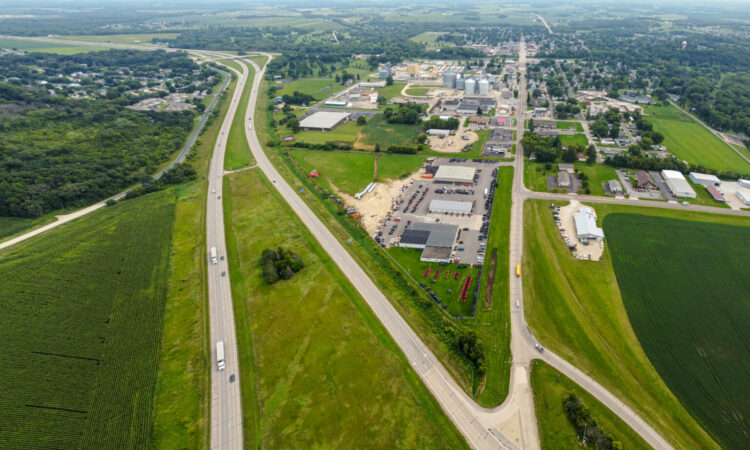
The question I want to put to my fellow Minnesotans is whether we are walking the same road. On May 22, a Goodhue County district judge halted construction of “Project Skyway,” the Google-backed data center campus in Pine Island that was set to break ground in July, after the Minnesota Center for Environmental Advocacy challenged the city’s environmental review. The Court of Appeals issued a similar ruling against a Faribault data center the same week. The next Pine Island hearing is set for July 23, and a full Environmental Impact Statement would push construction to 2027 at the earliest. Whatever the courts decide, the cumulative signal to every operator studying the Upper Midwest is that a project of this scale cannot land in Minnesota and reach construction in the same year.
What makes that signal so costly is everything Minnesota stood to gain. Project Skyway came paired with an Xcel Energy partnership to bring 1,900 megawatts of new generation onto the grid, with the operator covering the cost of new grid infrastructure so none of it lands on the bills of Minnesota families.
The campus would have generated millions in property tax revenue for Goodhue County schools and services, hundreds of construction careers for the building trades, and billions in private investment from a company that has spent nearly two decades and close to $14 billion proving in Iowa that it builds for the long term.
Minnesota is making it hard for partners like Xcel, and I worry about the signal it sends to the next one. The July 23 hearing will not be the last word on Project Skyway, and our review process should run honestly to its conclusion. Our leaders and regulators owe Minnesotans a clear answer: Is the gauntlet Pine Island has run the one every future project will face? If it is, the next announcement of this size will be made in Bismarck or Des Moines. Minnesota spent generations building the conditions that brought this investment to our door. We cannot let this misstep convince every operator watching that our door is closed.