

Congress Is About to Kill the Hemp Industry It Created
On a chilly Monday afternoon in St. Paul last November, I stood behind a podium inside the Minnesota State Capitol. Beside me, shoulder to shoulder, were both of our United States senators, one of our members of Congress, the mayor of Minneapolis, a state legislator, a fourth-generation hemp farmer, and the heads of the largest breweries in the state. There was a good reason for a group that consequential to come together at a press conference that day: Minnesotans were mad as hell.
Twelve days earlier, buried inside the bill to reopen the federal government after the longest shutdown in history, Congress had quietly enacted a provision that would effectively ban nearly every hemp-derived consumer product in America. From beverages and gummies to arthritis lotion for the elderly or sleep support for veterans, the U.S. Hemp Roundtable estimates the new language will wipe out roughly 95% of hemp products currently on the market. Beverages will be capped at a paltry, and largely biologically impossible, 0.4 milligrams per container. A standard hemp beverage today contains 5 or 10 milligrams of THC—still considered “low dose” but between 10 and 25 times higher than the new language allows. Under the new standard, even calming CBD treats for anxious or aging dogs could very well technically contain enough trace THC to push them into federal illegality.
When Congress passed the ban language, it had done so almost inadvertently. There had been no hearings. Zero debate. As Senator Amy Klobuchar put it at that press conference, the language was added “last-minute, in-the-middle-of-the-night.” The industry was both shellshocked and devastated, but most saw the vote as a move by legislators to reopen a government that had been closed for 43 days, not as a vote to ban hemp. That quickly became a distinction without a difference, however, to the small businesses in Minnesota and across the country now mere months from watching the industry they built marched to the proverbial guillotine.
Since that vote and the press conference that followed—for all of the legislative effort, executive orders, trade group noise, vehement lobbying, and consumer outrage—almost nothing has actually changed to save the hemp industry before its impending death. The ban is still slated to take effect on November 12, 2026, and while crisis after crisis, both nationally and internationally, has shuffled the hemp card deeper into the deck of congressional attention and action, the clock has not slowed down.
Most Americans still have no idea the ban is imminent, and even fewer grasp the enormous macro and microeconomic stakes it carries with it: Whitney Economics recently estimated the U.S. hemp-derived cannabinoid industry to account for as much as $64 billion in economic activity, supporting as many as 475,000 jobs across farming, extraction, manufacturing, logistics, and retail. It generates over $1.5 billion in state tax revenue annually, with the potential for vastly more, were it to be regulated and taxed by state and federal laws, as is the case with alcohol.
While the hemp ban may not take effect until November, economic collapses always precede their designated effective dates. They move through any supply chain, slowly at first. Farmers across the country have already been battered by tariffs, drought, and rising supply costs from the Iran war. Those who planted hemp this spring, hoping that Congress would not actually let this industry die, are now watching their buyers vanish before harvest. Many will lose contracts, entire crops, and maybe their farms. Retailers do not want to be caught holding illegal inventory on November 13, and they will stop ordering months earlier. Distributors, watching retailers retreat, will stop buying from brands. Breweries, brands, and manufacturers, with nowhere to send finished goods, will stop producing. A $64 billion industry will not die all at once, nor will it die on the day this new law takes effect. Invoice by invoice, field by field, batch by batch, and store by store, the supply chain will die link by link, well before its stated execution date.
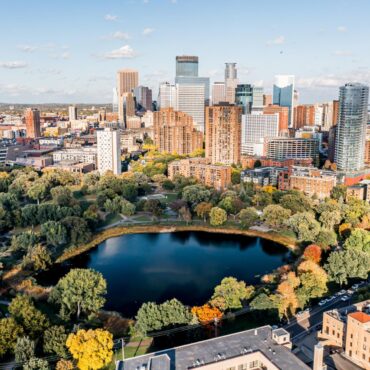
While that wind-down will hurt almost everywhere nationally, the pain will be especially sharp here in Minnesota, where hemp beverages may not have been born, but where they most certainly grew up. Minnesota legalized low-dose hemp-derived THC in 2022 with bipartisan support, capping beverages at 10 milligrams per container and edibles at 5 milligrams per serving. We mandated third-party lab testing, child-resistant packaging, tamper-evident seals, and labeling standards. We banned synthetic cannabinoids. We restricted sales to adults 21 and over, with ID verification on par with alcohol, and prohibited marketing and packaging that could appeal to children. In 2023 we consolidated hemp and marijuana oversight under a single state regulatory body. Senator Tina Smith called the system “one of the strongest and safest and most responsible hemp markets in the whole country.”
The reality is that because of simple, common-sense regulation here in Minnesota, the industry works and businesses have thrived. Our hemp-derived THC market now supports roughly $200 million in annual sales and generates tens of millions of dollars in state tax revenue. There are over 5,300 licensed retailers in Minnesota alone. No public health crisis has materialized. Emergency rooms are not overwhelmed. Children are not buying gummies dressed up to look like popular candy brands, because our laws make it illegal to do so, and they punish anyone who would try to produce, distribute, sell, or possess such an item. The products on our shelves are as safe, regulated, and transparently tested as the alcohol next to them, if not more.
But listen to Senator Mitch McConnell’s statement from the floor of the senate from last November, and you’ll hear scare tactics about underage appeal or consumption, synthetic cannabinoids, lack of testing, or extreme potency. Unfortunately, his arguments used to justify the federal ban of hemp products, which he himself introduced, never saw anything close to a full or robust debate in Congress. And while some of his points have described some real incidents in some unregulated markets around the country, a healthy debate would have revealed that relatively simple legislation has quashed bad actors in Minnesota and many states like it. They are simple regulatory problems we have already solved.
The industry is not asking for the absence of regulation. On the contrary, it is asking Congress to forgo the fruitless act of federal prohibition, and begging for national standards and taxation modeled on what Minnesota, and states like it, already do, and do well. Nearly every business in this industry welcomes both regulation and taxation and is eager to engage in thoughtful discussions about a path forward. They deserve the chance to, at a minimum, have that conversation, rather than be doomed to bankruptcy by a clumsy, hasty, opaquely enacted federal redefinition of a plant.
Whether through Minnesota’s model or otherwise, there is no shortage of ideas for what that path forward might be, and—a rarity in Washington—the vast majority of them have true bipartisan support. The Hemp Planting Predictability Act from Congressman Baird would push the deadline to 2028, giving Congress runway to discuss and enact regulation. The Cannabinoid Safety and Regulation Act from Senators Wyden and Merkley would build a comprehensive federal framework. The Hemp Enforcement, Modernization, and Protection (HEMP) Act from Congressman Griffith would create a similar but different federal regulatory framework. Representative Nancy Mace’s American Hemp Protection Act would repeal the ban outright. The Hemp Safety Enforcement Act, from Senators Klobuchar, Paul, and Ernst, would circumvent the ban language and retain interstate commerce by reclassifying it as a states’ rights issue. Congressman Comer introduced an amendment to the Farm Bill proceedings in the House, with intent to either delay the ban or regulate the industry. Texas Congresswoman Van Duyne is working on a carveout bill to specifically save hemp beverages. Congressman Andy Barr, who is running to replace Mitch McConnell as Kentucky’s next Senator, is rumored to be mere days away from announcing his federal regulatory framework to fix what Senator McConnell broke.
Clearly what is missing from this conversation is not an idea, a plan, or a legislative vehicle. It is the political will to come together, across the aisle, and act. Members of Congress are by now painfully aware that it is an election year, and it is commonly held that most legislators prefer to avoid political risk in these periods of time. While some may see it as a risk to stand up and defend the hemp industry—to actually work in a bipartisan way and vote to save it—there is another risk I hope those in Washington can see.
Congress will go home this summer and fall, to farm towns where hemp farmers are on the brink of bankruptcy, to college towns where breweries that anchor neighborhoods are closing, and to big and small cities where retail shops employing dozens of people are laying off staff and going out of business for good. Those legislators can choose to act now, or they can try to explain at their Labor Day parades why businesses on Main Street are being forced to shut their doors: because of a looming economic extinction event they simply couldn’t make time for.
The 2018 Farm Bill did not create a loophole, as one of its authors has said plainly; instead, it created an industry. You cannot legalize a crop, along with its downstream products, for seven years, let states build regulatory systems around it, let farmers invest in it, let businesses boom because of it, let distributors sell it across the country, let consumers choose it over alcohol by the millions, and then slip a line into a funding bill that kills it overnight. Or, maybe more accurately—and with what has come to pass—you technically can. But the cat is out of the proverbial bag, and a federal ban does not simply put it back in. It sends the industry underground into an unregulated, untested, and untaxed nightmare of bad actors and unsafe products, which is the exact outcome the 38 state attorneys general who urged Congress to act last year said they were trying to prevent.
We do not need Congress to invent a solution here. There are clearly many on the table, the vast majority of which already have bipartisan support. We simply need Congress to realize that a solution already exists, in states like Minnesota, and codify a version of that solution before the ban takes effect. We need them to delay the deadline or pass a framework that regulates this category much in the way we regulate alcohol, with age limits, potency caps, testing, and a functioning tax base.
The impending hemp ban may not be the crisis of the week. And you may hear less about it because the people most directly impacted are the kind of resilient, tough, inventive Americans and Minnesotans who are used to having to pivot and find solutions. Small business owners who have repurposed their brewery’s canning equipment, farmers who have ushered their family’s acreage into the 21st century, and retailers who have overhauled their inventory and licensing to meet consumer demand, are all familiar with hurdles and finding ways to overcome them.
But crisis of the week or not, the impending death of this industry is a crisis nonetheless. And it is a crisis on a timer that is quickly running out.