

First Take: Twin Cities Orthopedics’ New CEO
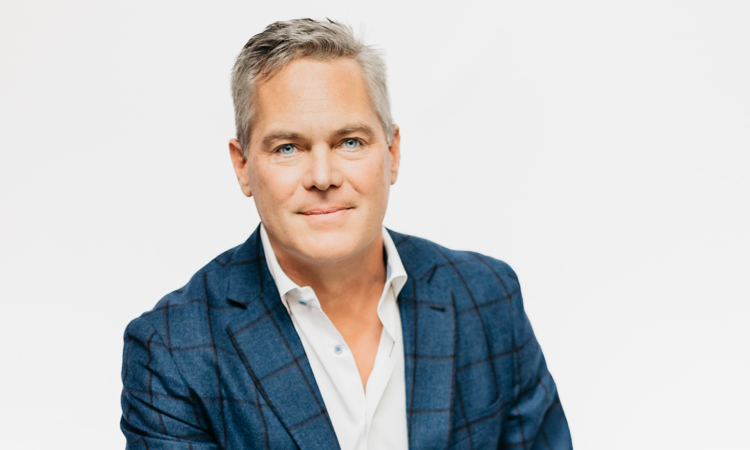
Twin Cities Orthopedics (TCO) has appointed sports medicine orthopedic surgeon Christopher Meyer as its CEO. Meyer’s appointment, announced earlier this month, marks the first time a practicing physician has been named to the role at TCO.
Meyer has served in leadership roles at the Eden Prairie-based company since joining in 2003. He became the TCO president in 2023 and has also served on the board of directors and executive committee.
Meyer will remain a practicing physician four full days a week, he tells Twin Cities Business. According to the TCO website, Meyer performs more than 500 joint replacements a year. He specializes in shoulder arthroscopy and reconstruction, rotator cuff repair, shoulder instability surgery, total shoulder replacement, knee arthroscopy and reconstruction, and total hip and total knee replacement surgeries.
Meyer replaces Aaron Johnson, who was CEO from 2020 to 2024. Meyer led the company in an interim capacity upon Johnson’s departure, during which time, he says, the company hired a consultant to coach him in the role.
This interview has been condensed and edited for clarity.
Tell me about how you got your start in orthopedic surgery and sports medicine.
I went to the University of Minnesota for med school. I was on a track to follow my dad’s footsteps in neurology, and I did an orthopedic rotation as a resident. I really preferred that. It fit my personality. I did a sports fellowship down in Columbus, Georgia. And then I came home [to Minnesota] to work.
You’ve been the president at TCO since 2023. What has been different between the leadership positions you hold?
The biggest change with me being here in the corporate office regularly is that I’m with leadership to give the perspective of a physician and all of [their] decisions. The perspective of physicians is almost always going to center around workflow, which is efficiency for the physicians and, most importantly, patient experience.
One of the strategic goals of TCO is to establish Minnesota as a national leader in enhancing the patient experience. What are some examples of this?
Getting access to the patients. Today’s patient is younger, is much more attuned to look at their phone, make their appointment, be seen same day or next day. We have online scheduling, walk-in clinics—all of those things are very important. Our AI-automated phone system is 24/7. Those are the things that we were trying to do to be as available for the patient to be seen the way they want to be seen.
The other thing that people don’t do that they used to do when I started was, they go in, you see a physician, you get an MRI ordered, you have the MRI, you wait another week or two, and then you come back and you get your results. [Nowadays,] this stuff almost happens real time, same day or next day, with [patients having] access to [their] online medical records, as well as telephone calls from the staff in regards to the results and what to do next.
About 15% of health care CEOs are physicians. What do you believe has led that trend to be so low?
[In this role,] we really have to understand the finances, just because the costs are so great. I was the treasurer for a number of years before some of our groups merged together. So, I’ve been always involved in the finance side of it, and that’s kind of been one of the focuses for me while I’ve been on the board. I’ve had that leadership exposure and experience for all those years, coming up on 20 years now. So, it is a situation where I think I do understand the business as well as the patient experience and the physician experience.
Becoming the first-ever physician CEO at TCO signals a bold commitment to patient-first governance. Talk to me about the importance of TCO appointing a physician for this role.
You look back in history many years ago, the way hospitals were run in the ’70s and ’80s, a physician was almost always the head of the hospital. It was very common, and the reason why wasn’t for business, because they’re obviously not great for the business side of it. But they know the patient care side of it. Finances are very different today. And the margins are fairly slim. So, having a physician in this role kind of puts the patient back in front again. It kind of puts the physician and the patient experience as No. 1, less of just the operation of the business.
What do you hope to accomplish in the next six months in your new leadership position?
The board has tasked me with overhead reduction. We’re a very big system that’s had a lot of growth, and we are really working on efficiencies in the back office and the organization from the leadership standpoint, all the way down to the brick and mortar.
The hospital systems in Minneapolis are struggling, right? Many of them are, you know, in the negative. Sure, we’ve been losing money, as well. So, we are really working on the operations, the business, the efficiency of the business—but, in my role, also keeping the patient first.