

First Take: Protolabs CEO Suresh Krishna
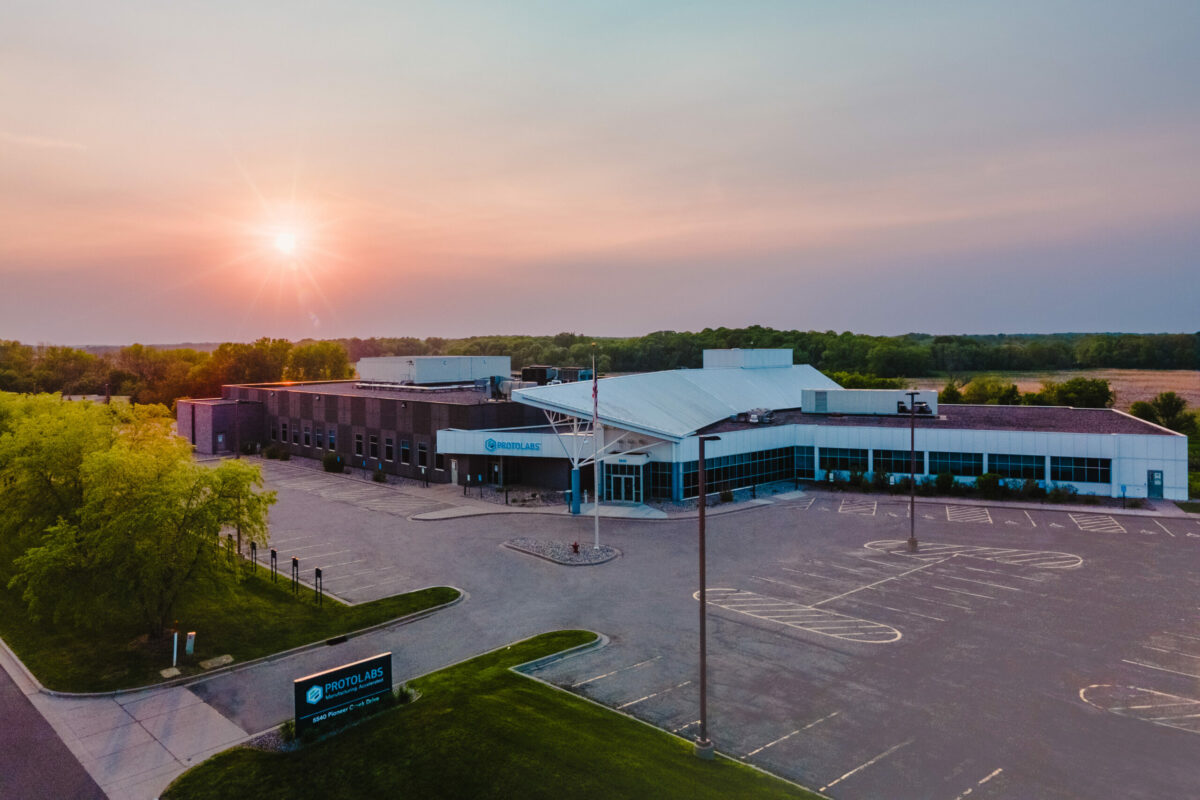
Since 2021, Protolabs’ sales have stagnated. From a record high, its stock has slid more than 80%. In May, the digital manufacturer named Suresh Krishna as its new president and CEO. He replaced Rob Bodor, who took over the Maple Plain–based company as it tumbled from its peak.
In this year’s second quarter, Protolabs exceeded expectations. It reported in late July a 7.5% year-over-year revenue increase, at $135.1 million—a second-quarter record. On Wednesday, its stock notched a 52-week high, trading at nearly $60.
Krishna tells TCB the company lacked strong growth over the past three years. “But people believe in themselves,” he says. “People believe in their customers. They’re resilient. They want to go and win again.”
He attributes the second quarter’s good news to ongoing innovations in the aerospace, defense, drone, and satellite communication industries. “Many of those companies that are in those sectors are [Protolabs’] customers,” he says. “The big growth was in CNC machining and sheet metal fabrication.”
CNC machining is subtractive manufacturing, meaning it uses digitally automated, drill-like cutters to shear solid blocks into desired shapes. Protolabs also does 3D printing and injection molding, which have seen “moderate growth,” Krishna says. The company serves automotive, medical device, electronics, and other industries—all amounting to about 50,000 customers per year.
Having entered the prototyping space more than 25 years ago, Protolabs today counts as customers about 85% of Fortune 500 companies, according to Krishna, and ships 5 million parts per month on average. The company has become “the fastest prototyping company through digital manufacturing,” he says. “If you upload a drawing today, we can even ship the parts same-day.”
The company’s biggest opportunity is in integrating services. “We are great at prototyping, but we can become great at production,” Krishna says. He notes, “We want to serve customers in the entire life cycle of the product.”
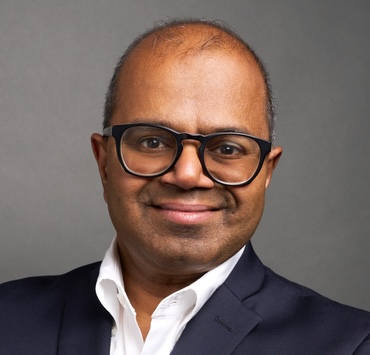
It has been only four months since Krishna assumed the company’s helm. Before joining Protolabs, he served as president and CEO of Northern Tool + Equipment, the Blaine-based manufacturer and retailer of industrial tools. Before that, Krishna held operations and leadership roles at Sleep Number, Polaris, and UTC Fire & Security. He earned a bachelor’s in mechanical engineering from the National Institute of Technology in India and a master’s in business administration from Northwestern University’s Kellogg School of Management.
To his role, Krishna brings a customer-centered business philosophy and a reputation for operations and supply-chain optimization. With TCB, he recently discussed leadership, prior experience, and why Protolabs is the national model for reshoring manufacturing.
The following responses have been edited for length and clarity.
Krishna on his leadership strategy:
My style is servant leadership. I believe in what I call inverting the leadership pyramid. When you think about traditional approaches, you have a pyramid where the CEO is sitting on top. I actually think about it the opposite way. I’m at the bottom of the pyramid. The people in the front lines, serving customers, touching the products that are bought by our customers, are the top of the pyramid. … So, my job really is to spend time with the front lines, listening about the problems they face, and then turn around, within my leadership team and within my organization, to say, ‘How can we remove these barriers so that our frontline teams can be even more successful in their day job?’ Those actions will then result in higher customer satisfaction, better customer experiences for us.
On his experience prior to Protolabs:
I’m an engineer by training, and I’ve held several leadership positions in many engineering-oriented companies. I’ve led operations, supply chain, and general management, and in all of these cases, I have overseen profitable growth and shareholder value creation. Having done this several cycles, I have built a very unique playbook for developing strategy and strategic execution focused on customer centricity.
When I look at Protolabs, it has great DNA. We are an innovator, helping companies accelerate innovation. … When I combine my skill sets, of helping drive significant organic growth, with the DNA the company has, I think my playbook is absolutely replicable in Protolabs. The opportunity for growth is tremendous. We have not grown for the past few years, but I’m beginning to feel that there is a tremendous opportunity for us to grow.
On the U.S. reshoring of manufacturing:
As we think about reshoring of manufacturing to the United States—when that happens, it will be different than what it was when it left the shores of the U.S. It will be a highly technology- and software-enabled manufacturing, which is what will help the U.S. be very good at manufacturing.
In some ways, Protolabs is the model for that. We operate factories with very few people actually moving the widgets. It’s done in a very automated fashion, even though we have 1,500-plus people working in our factories. We have 1,200-plus machines, which are highly enabled with software and what we call cobots [collaborative robots]. It’s not just robots; it’s robots that work alongside our employees.
So, our model factories are, in many ways, dark factories. They work seven days, 24 hours, many times during weekends. There are not too many people there to operate them. That is the model for the future for U.S. manufacturing, and we already have that well established here [going on at least 10 years].
Think about it like Amazon. If you get the order in by 1 o’clock, ship it today—that’s what we are doing in manufacturing for a highly engineered custom part. Get it in by 1 o’clock, we’ll ship it today. And that’s because of the software and how it links with our manufacturing. We are cutting metal, we are cutting plastics—cutting a very wide variety of materials in a very bespoke way.