

Minnesota Loses Clout on Senate and House Ag Committees
The double departure of Democrats Amy Klobuchar and Tina Smith from the U.S. Senate in January leaves Minnesotans with no seniority on the key Senate Agriculture Committee.
Because of the election’s blue wave, which gave Democrats control of the Senate, Klobuchar, current ranking minority member, could have become chair of the Senate Agriculture Committee that writes the Farm Bill and crafts other legislation affecting agriculture, trade, and nutrition programs.
During the lame duck session that began this week, the U.S. Senate could take up the Farm Bill. The Senate Agriculture Committee approved a bill in September on a 12-11 party-line vote, but it differs from a measure that passed the U.S. House in April.
In an interview that aired Sunday on KSTP-TV’s “At Issue,” Klobuchar said she still wants to “get the Farm Bill done” before her Senate term ends. She emphasized to host Tom Hauser that she’s the highest-ranking Democrat on the Agriculture Committee.
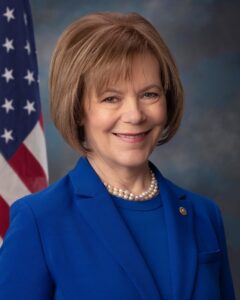
The two Minnesota senators have a combined 29 years of service on the committee, which is formally called the U.S. Senate Committee on Agriculture, Nutrition, and Forestry. Klobuchar joined the committee in January 2007. Smith has served there since 2018.
Lt. Gov. Peggy Flanagan, Minnesota’s Democratic senator-elect, has expressed a desire to serve on the Senate Agriculture Committee. If Flanagan secures a seat, she’ll be among a large number of new senators on the committee from both parties.
Remarkably, eight of the 23 committee members—or 35%—are leaving the Senate in January. Klobuchar and Tommy Tuberville, an Alabama Republican, are becoming governors of their respective states.
Minnesota’s Smith and her fellow Democrat, Dick Durbin of Illinois, are retiring. So are Republicans Joni Ernst, of Iowa, and Mitch McConnell, of Kentucky. In 2023, when Democrats held a Senate majority, Smith was selected to chair the Senate Subcommittee on Commodities, Risk Management, and Trade.
On Nov. 3, Republican Sen. Roger Marshall lost his reelection bid in Kansas. Ballot counting continues in Mississippi, where it appears likely Democratic challenger Scott Colom will defeat Republican Sen. Cindy Hyde-Smith.
Angie Craig has been House ag ranking member
In the current Congress, U.S. Rep. Angie Craig, a Democrat from Minnesota’s Second District, has been serving as the ranking member for Democrats on the House Agriculture Committee.
Her seniority and influence on that committee will disappear in January, because Craig gave up her congressional seat to run for Minnesota’s open U.S. Senate seat. Craig lost to Flanagan in the August primary.
The only other Minnesotan serving on the House Agriculture Committee is U.S. Rep. Brad Finstad, a Republican who lost his bid for reelection in the First District to Democrat Jake Johnson. A recount is set to occur in that district.
If Johnson remains the victor in that congressional contest, Minnesota will lose 100% of its agriculture committee members from the 2025-26 Congress in both chambers.
“It is going to be a big void to fill,” Matt Wohlman, Land O’Lakes vice president of government relations and industry relations, said in a Monday TCB interview. “When all the dust is settled [on committee assignments for the new Congress], I would presume that there will be other members of the Minnesota delegation that will be on the Senate and House agriculture committees.”
Of course, those new members will need to start building relationships within the House and Senate.
Collin Peterson, a moderate Democrat who represented Minnesota’s Seventh District for 30 years, was chair of the House Agriculture Committee in 2020, when he was defeated by Republican Michelle Fischbach.
U.S. Rep. Fischbach joined the Agriculture Committee in 2021, when her first House term began. Today, she serves on the Rules Committee and the Ways and Means Committee, and no longer sits on the Agriculture Committee.
Klobuchar’s agriculture connections
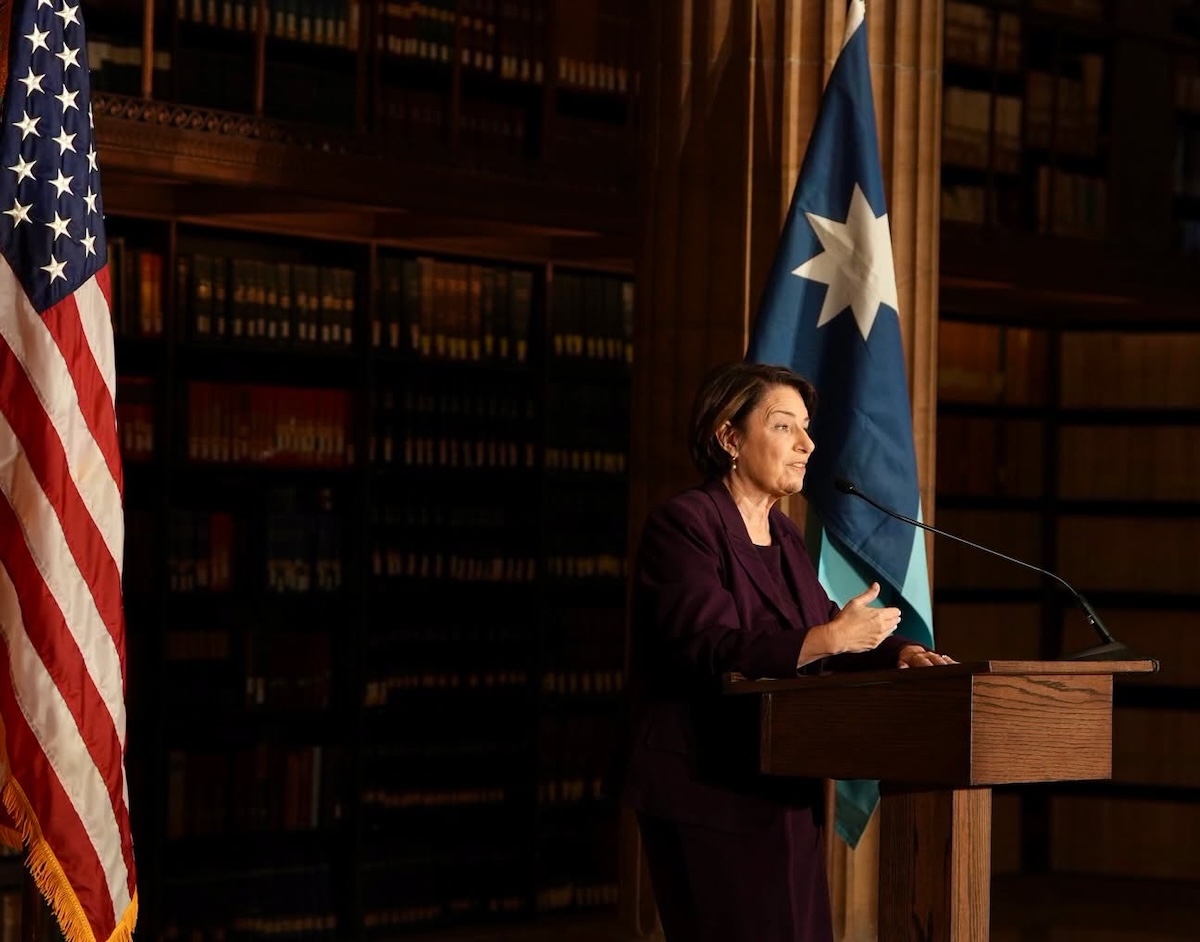
On her Senate website, Klobuchar has 19 pages’ worth of commentary and policy positions on agriculture and rural communities. She notes that Minnesota is the sixth-largest agricultural-producing state, with more than 64,000 farms that produce “over $28 billion in market value from their agricultural products.”
Klobuchar, who made a practice of annually visiting all 87 Minnesota counties, has extensive knowledge of the farm economy and rural communities. Her existing relationships with Senate Agriculture Committee members could be quite helpful to her during her four-year term as governor.
Also, Klobuchar has worked cooperatively with the current committee chairman, Republican Sen. John Boozman of Arkansas. Eight of Klobuchar’s Democratic peers on the Senate Agriculture Committee are remaining in the Senate.
“Sen. Klobuchar has vast relationships in Congress on both sides of the aisle,” said Wohlman of Land O’Lakes. “There’s a deep amount of respect between her and Sen. Boozman. I do think those relationships continue to be important, even in her role as governor.”
Klobuchar has chosen to elevate agriculture and rural communities during her gubernatorial transition process. Among her 13 transition co-chairs is Gary Wertish, who has served as president of the Minnesota Farmers Union since 2017.
Klobuchar will be sworn into office in January as Minnesota’s first woman governor. Based on his seniority, it’s expected that Sen. Michael Bennet of Colorado will chair the Senate Agriculture Committee.
Political polls have shown that President Trump’s tariff policies are unpopular with a majority of Americans. The agriculture committees will be among the panels weighing in on that issue in the new year.