

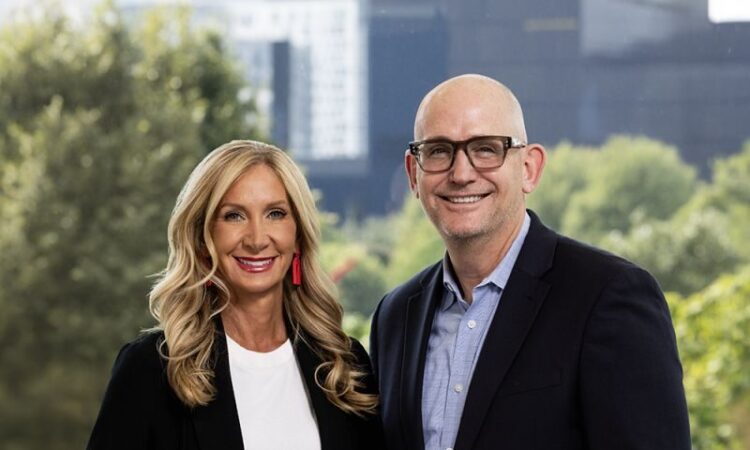
First Take: Padilla President Julie Batliner
Padilla is one of the most influential public affairs and communications firms in Minnesota. The hyper-connected group, which has a good reputation within the corporate and media world alike, named Julie Batliner as the fifth leader in the firm’s 65 year history last week. She is replacing Matt Kucharski after his nine year run at the helm comes to an end.
The firm, which is owned by Montreal-based holding company AVENIR GLOBAL, has a headquarters overlooking Gold Medal Park on West River Parkway and has additional offices in New York, Boston, Chicago, Richmond, Washington D.C., and San Francisco.
Batliner brings nearly 30 years of experience in the agency world to her new role, including stints at FleishmanHillard and Carmichael Lynch Relate. She’ll be using that experience to try to help build the next chapter at the Minneapolis-based firm.
Twin Cities Business chatted with Batliner about navigating increased media fragmentation, AI, and why well-prepared leaders should embrace more media opportunities.
This interview has been edited and condensed.
You’re brand new in this role. Tell us why you took the job.
Padilla is a 65-year-strong agency that I’ve always been adjacent to throughout my career at other agencies. There is a ton of legacy, learning, and success there, along with deep history in Minneapolis and beyond—stretching all the way from the Padilla Speer Beardsley days to where it is today. That was super appealing to me: to come in and build on that foundation.
My job will be to lead the team into the next chapter of client partnership in this new communications era we’re all navigating—from evolving channels and social media shifts to how AI is changing both the way brands communicate and how we do our jobs overall. It just felt like a great way to apply my past experience at a solid, established place.
Speaking of AI—that’s obviously a big conversation topic right now. How are you viewing the impact AI is going to have on your profession?
I see it in two ways. First, internally, it gives us another tool to use. It’s certainly not a substitute for great ideas, but it is an input for great ideas and helps us get our jobs done efficiently.
Second, it’s about helping clients navigate AI. We need to make sure they have the right strategies in place, understand how they’re showing up across LLMs and AI search engines, and conduct deep dives into the content informing those models. With AI searches becoming dominant, clients want to ensure they are presenting the right messaging and getting cited in the right places. We actually have an offering called Padilla GEO 3D that specifically helps clients manage that.
Media fragmentation is another major topic. The number of traditional journalists has dropped substantially over the last decade or two, and while some publications have closed, there are also many more places where people consume news and information. How do you approach an increasingly fragmented media landscape where the definition of what is and isn’t journalism feels blurrier than ever?
The best defense against fragmentation is having a truly useful message and a strong, unifying creative idea that can be tailored for all these different channels. That’s how you cut through the noise—focusing on unifying the core idea rather than worrying constantly about the individual channels, because those channels are adapting and changing so fast.
It’s also about helping clients invest in brand differentiation so they remain memorable regardless of where the message appears, backed by a smart media-mix model. Embracing culture-jacking, being genuinely entertaining, and providing timely, useful news for the right audience all help navigate this environment. It’s just the reality of where things are today.
The line between paid, earned, shared, and owned media feels much blurrier than it was ten years ago. How does that impact your work?
Right. Social used to sit in one bucket, and then it shifted heavily into paid. You really just have to rise above the platform nuances and find that central, unifying idea that breaks through.
Over the past few years, we’ve noticed that many corporate leaders are more reticent to speak with the media than they used to be – often out of concern over how they’ll be portrayed or the risk involved. How do you advise clients who are hesitant to engage with the press?
Preparation is your best friend. Everyone has a story they need to tell, and the media remains a great partner to help tell it. Having your core message down and staying authentic is key, as is being prepared to address tough issues head-on when necessary. We do a lot of media coaching and message preparation; we even built a program called Padilla Prep specifically for executives to help them feel confident going into those conversations.
You interact with leaders across Minnesota’s economy. Where do you feel the local business community is at right now, and what should people know about where our state’s economy is headed?
There is a ton of opportunity. Minneapolis has always been an epicenter of smart, creative talent and home to top-tier agencies. At the same time, we’ve faced real challenges as a region that we’ve had to work through. Business, community, and nonprofit leaders are stepping up and collaborating to address those issues while continuing to build on what makes this a great place to live. Resilience remains essential for our business community.
How have your past experiences prepared you for this role, and is there one specific milestone that changed your trajectory?
I don’t know that it’s one single event as much as the cumulative learning over time. Working across major PR networks like FleishmanHillard and Carmichael Lynch Relate gave me exposure to different agency models, sizes, and operational styles. You take those insights, along with what you learn from every client and team member you work with, and apply them forward.
Five years from now, what do you want people to be saying about Padilla?
Our guiding philosophy is “Transform with Purpose.” In five years, I want clients and partners to say that Padilla was a true strategic partner—not just an agency vendor—that actively helped them get to where they wanted to go.
Is there a core theme or approach you’re bringing into your first few months on the job?
Anytime you step into a new leadership role, it’s time to listen, learn, and evaluate what comes next. My overarching theme right now is asking: What should we cherish, and what should we change? That’s an exciting framework to work from.