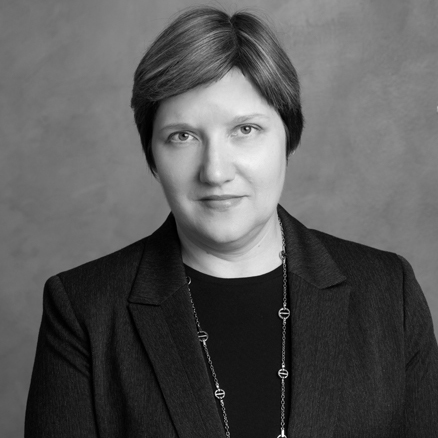
Women at the Top
It’s been five years since a Minnesota-based Fortune 500 company chose a woman to be its CEO. Corie Barry was promoted internally in 2019 and remains the CEO of Best Buy.
In the United States, only 10.4% of Fortune 500 companies have CEOs who are women.
In this election year of 2024, it bears noting that no woman has ever been elected president of the United States. Hillary Clinton, in 2016, gained the distinction of being the only woman in U.S. history to serve as the presidential nominee of a major political party.
Why has the CEO job in public companies—a career pinnacle—been so difficult for women to land when many women are well educated, talented, and experienced in business?
Why has the Oval Office in Washington, D.C., been completely closed to women? It’s a topic worthy of analysis, particularly in a year when polls indicate a majority of American voters would prefer presidential candidates other than the two male presumptive party nominees.
Becoming CEO-ready
After St. Catherine University conducted its research for the Minnesota Census of Women in Corporate Leadership last year, it showed that women were CEOs of 10 of Minnesota’s 73 public companies. That’s about 14%.
TCB Talks: Women in Leadership
This story appears in TCB’s upcoming April/May issue and is now available online in advance of the TCB Talks: Women in Leadership event on April 16 in St. Paul. Learn more here.
Twin Cities Business searched for answers to those questions by posing them to experts inside Minnesota and around the nation.
To substantially increase the number of women who are public company CEOs, several hurdles must be cleared. Women need to possess the right business experience, demonstrate a strong aptitude for adapting to change, enjoy the support of well-connected mentors and sponsors, and work for corporations with boards that value gender diversity.
Kweilin Ellingrud, a Minneapolis-based senior partner with McKinsey & Company, is a national and global expert on women’s careers.
“To continue to make progress, the challenge is we don’t have enough women in P&L [profit and loss] roles,” Ellingrud says. “This is what I would call the power alley of organizations.”
Some women will ascend to chief legal counsel, chief human resources officer, or the top marketing job in a public corporation, but those important positions typically won’t land them a CEO job unless they also have key experience running a business segment with profit and loss responsibility, she says.
“For Fortune 500 CEOs who are promoted from within, every year between 95 and 100% of them are promoted from running the biggest P&L [business unit] or the second-biggest P&L,” Ellingrud says.
For more women to become Fortune 500 CEOs, more women need to move through the talent pipeline with timely P&L experience. “To me, that is the biggest single factor in shifting that 10% statistic of women CEOs,” she says. Currently, she notes, “there’s just a huge disconnect of most of the women being in support roles, where it’s not really a CEO-promotable role or talent pipeline.”
In Minnesota, three women are Fortune 500 CEOs. Corie Barry leads Best Buy, a publicly traded corporation. Teresa Rasmussen is CEO of Thrivent, a fraternal benefit organization. Beth Ford is CEO of Land O’Lakes, an agricultural cooperative.
Read more from this issue
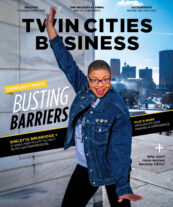
Ford had worked in six industries before she joined Land O’Lakes in January 2012 as chief supply chain and operations officer. By November 2015, then-CEO Chris Policinski gave Ford profit and loss responsibility for two of its three main businesses, Dairy Foods and Animal Nutrition.
Two years later, Ford assumed P&L leadership for the third business unit, Crop Inputs. Ford was running all three businesses and serving as chief operating officer when the board of directors selected her to become CEO in 2018. She was the heir apparent CEO because board members had watched her produce business success across the company.
“I tell women to shape your destiny—don’t be a passenger on your own life journey,” Ford says. “We need to ask for what we want. Women should use their voices, take risks, and leverage their curiosity to continue to grow into top leadership roles.”
Ford, who has built and nurtured a broad professional network in the business sector, says that women often are each other’s greatest advocates.
“We need to keep encouraging the next generation of leaders to pursue those careers that, although seemingly unattainable, are the ones we’ll need to solve some of the greatest challenges that lay ahead,” Ford says.
“The challenge is we don’t have enough women in P&L [profit and loss] roles.”
—Kweilin Ellingrud, McKinsey & Company senior partner
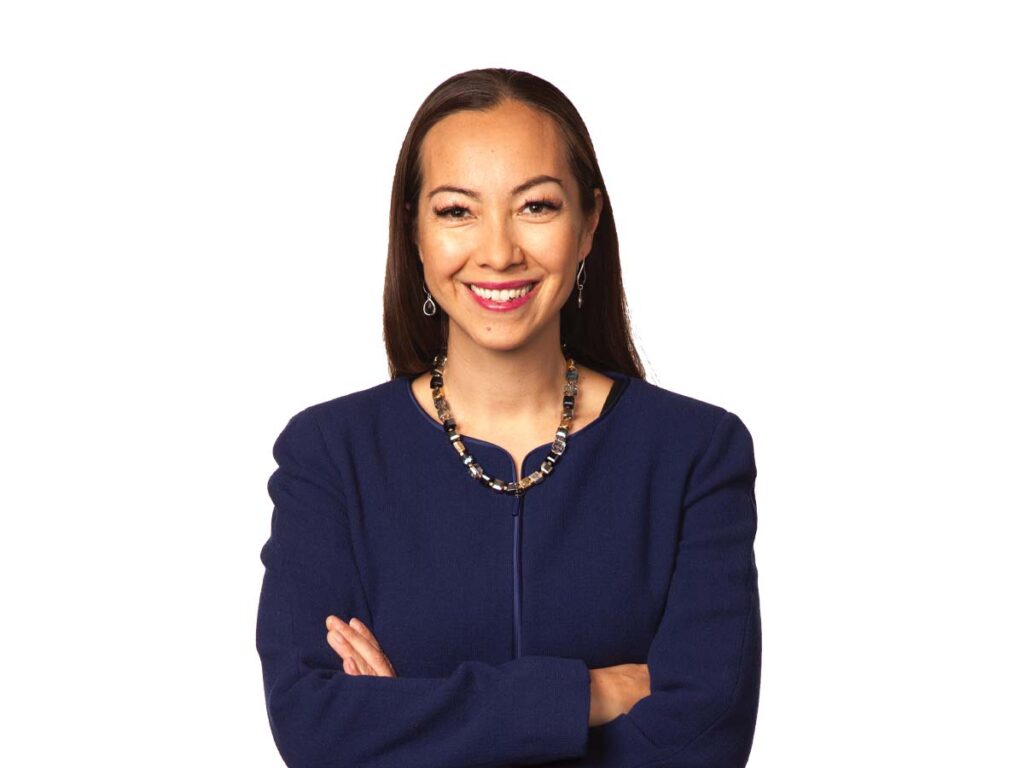
Achieving early success
While the number of women serving as CEOs and executive officers has increased over time, Ellingrud notes there has been “glacial progress.”
It’s one of the reasons she emphasizes that women need to carefully plan to get several different experiences and P&L responsibility early in their careers, so they can move through the corporate pipeline with the strong possibility of reaching the C-suite.
“It’s hard to go into sales for the first time when you are 15 years into your career,” Ellingrud says. “Leadership development programs, where you are doing job rotations across a lot of [business] groups, will be helpful.”
Women seeking promotions and leaders who have the power to promote employees also must recognize that gender bias still exists, she says.
“The research is well known that both men and women judge men based on potential and women based on performance or track record,” Ellingrud says.
When given resumes of a man and a woman with identical qualifications, Ellingrud says that research shows “both men and women will rate that imaginary male candidate with the identical resume with higher leadership and greater future potential than the woman.” She explains that this response results from long-standing social norms about gender.
It’s fair to say that choosing a CEO is “very highly subjective,” Ellingrud says, so the outgoing CEO, who frequently has considerable influence, and board members need to be aware of how conscious and unconscious biases may affect their evaluation of CEO candidates.
Value of committed sponsors
Jeannine Rivet, who began her career as a nurse, ultimately served as CEO of three UnitedHealth Group businesses—UnitedHealthcare, Ingenix, and Optum. Before she began her 28-year career at UnitedHealth Group, she had profit and loss responsibility.
Rivet, who also has had extensive experience on business boards, still serves as a sponsor and mentor to several women and men each year.
“I’ve had sponsors. I’ve had mentors, too,” Rivet says. “I’ve had sponsors who were men, who saw my capacity, my capabilities, the work that I did. They made me take risks. They literally pushed me into roles that I might not have looked for personally.”
She acknowledges that she’s frustrated that women haven’t made more progress in reaching the top of public and Fortune 500 companies.
She’s a strong advocate of using sponsorships to increase the numbers of women who become CEO-ready. She also says she’s observed confusion over the different roles of mentors and sponsors.
“A mentor is there to listen, ask a lot of questions, guide the person to their own conclusions, help them with examples from their own personal lives with similar situations,” Rivet says.
“The sponsor is there to get you more visible, promote you, transfer you, help you,” she adds. “But they are not mentoring. People who are looking for mentors don’t realize they should also be thinking about a sponsor. Usually, it’s within their own organization or their own industry because then you’ve got more opportunity.”
Rivet is retired from a full-time executive role, but when she was a company leader, she made it a point to serve as a sponsor. “I always look for the people who have the potential [for promotion] but didn’t think to look at anything else,” Rivet says. “I frequently would either sponsor them within my organization or talk with somebody where I think they could add value. So we’d transfer them into another opportunity that could help them grow and develop and take on more leadership roles.”
Don’t stay in your lane
Women’s career advancement involves the right career decisions, mental attitude, performance, and talent.
“Women, whether they work for publicly traded or not-for-profit organizations, still need to have executive presence, they need to be holistic, they need to understand the whole company,” Rivet says.
“Many women stay in their lane [current job],” she says. “They’re very good and they stay in their lane. It’s for personal reasons because they’ve got kids, and they want to spend more time with their children. Or they don’t want to take anything else on at this time. That’s fine.”
For women who want to move up the ladder or succeed once they get there, Rivet takes note of the mental framework that comes into play.
She shares the story of a mentee who built her own business, and the company was doing well. “She wanted to talk about imposter syndrome because she didn’t think she should be the CEO,” Rivet recalls. “She’s doing a phenomenal job, but she’s got some insecurities.”
Rivet helped her change her view of herself. “How you think is how you behave,” Rivet says. “If you’re thinking that maybe you are not the right person, then you’re going to act like you’re not the right person. You don’t want that outcome.”
Within large corporations, Rivet says women shouldn’t sit back and wait to be recognized for doing good work. “If they want to climb the ladder, that’s when they should ask for a sponsor and they should network,” she says.
Throughout her career, Rivet says she networked with the C-suite in the companies where she worked. “I made sure I knew who they were, what they wanted, how they thought, and I never had a problem doing it,” she says. “I just said, ‘Can I buy you a cup of coffee? I want to learn more about what you do and how you got there.’ ”
Corie Barry’s career path
When Hubert Joly joined Best Buy as CEO in August 2012, he had no idea that Corie Barry would succeed him seven years later.
“Corie was a junior officer,” Joly says. “She had been with the company for more than 10 years, had been in the field, had been in finance. She was the head of finance for the merchant organization at the time.” He viewed Barry as “smart and thoughtful,” but Joly didn’t pay special attention to her.
In a phone interview from Boston, Joly chronicled how Barry flourished in executive roles at Best Buy but then opposed his recommendation that she become a CEO candidate. Joly currently is a senior lecturer at Harvard Business School.
In late 2012, Joly hired Sharon McCollam to become Best Buy’s CFO, whom Joly described as exceedingly talented and a great partner for him in transforming the Best Buy business model.
“Sharon had a passion for the development of Corie,” Joly says. “She took a genuine interest in her and wrote six-page memos every six months to emphasize areas that Corie needed to work on. She was very direct but really caring. Nice and kind are two different things. She was kind because she was telling the truth.”
Under the sponsorship and coaching of McCollam, Barry strengthened her leadership capacities.
Over time, Joly says he started giving Barry challenging assignments. He asked her to serve as interim president of Best Buy’s services organization. He also asked her to lead the strategic growth office, where the company incubated new ideas.
Joly describes Barry as having “a great strategic mind and a fabulous ability to understand what it takes to get things done.”
He recalls that he had to convince her to take on the hard assignments. Joly says that Barry would ask: “Why do you have confidence in my ability to do these things?”
Joly discussed Barry’s doubts about her leadership ability during a mid-February class he taught at Harvard to 80 senior executives. Barry joined the class via Zoom.
Barry’s tenure with the company was included in a Harvard case study titled Best Buy’s Corie Barry: Confronting the Covid-19 Pandemic, which was co-authored by former Medtronic CEO Bill George, a senior fellow at the business school.
“Corie, with encouragement, stuck her neck out. When she had these assignments, she always vastly exceeded my high expectations. She was able to handle new things that were not part of her expertise. That taught me that she had a great learning ability,” Joly says.
“In this world of multiple intersecting crises and chaos, experience and expertise are interesting,” he says. “But ability to learn and adapt creatively to unprecedented events is a key attribute that I think boards should look at when they promote people to the C-suite and particularly to the CEO job.”
In 2016, Barry succeeded McCollam as Best Buy’s CFO.
The reluctant CEO
After Barry was named CFO, Joly says he told her: “I think there is more in you. I think you could be potentially a CEO successor.” The message wasn’t welcomed by Barry. “She was very clear. She said, ‘I don’t want to do it,’ ” Joly recalls.
He laughs heartily as he tells the story. “The board told me at the time, ‘Stop bothering her. You just made her the CFO. Leave her alone.’ ”
Joly gave Barry space to do her CFO job without the distraction of planned succession.
But by December 2018, Joly had another key conversation with Barry. “It had become clear to me that the time had come for me to think about transitioning the role. I told Corie, ‘Look, this is what I’m thinking. So this is now real. I’m not asking you to say yes. I’m asking you to consider and evaluate the opportunity,’ ” Joly says.
He recognized that Barry still had multiple reservations about taking the CEO job. He told her: “Why don’t you write them down. Then we can talk about it.” Barry drafted a memo with her objections, and the last page contained her rationale for why she might be interested in the job.
Joly had asked her to think about the question “What would need to be true for you to be comfortable and be excited about wanting the job?” He emphasized that reframing of issues was helpful.
Among Barry’s concerns were work-life balance and being compared to Joly, who was credited with successfully turning the company around.
“We had a dinner conversation about her memo, and we talked about all of the objections. She was able to have other conversations with a number of people,” Joly says, and within four to five weeks she told him that she wanted to be a candidate for the CEO job.
Joly says that Barry shared with his Harvard class that the evaluation process “forced her to clarify her leadership approach and, if she was given the job, how she would do it.”
Barry’s first reaction to the CEO opportunity is similar to many women who are hesitant to pursue a promotion opportunity. The reluctance factor is documented by research. Joly says author Sally Helgesen wrote about the behavior pattern in a book titled How Women Rise.
Of course, generalizations don’t apply to all women or all men. But there’s a tendency for many men to seek promotions when they lack some qualifications, while women may not apply for a job in which they meet all of the job requirements, Joly says.
If a woman is offered a promotion, Joly says she might say: “I’m not sure. I’m not done with what I was doing. I’m not sure I want the limelight.”
Joly says a corporate leader should not assume that response is a final answer. “The lesson here is to decode what a man and a woman are going to say and lean in to have a more in-depth conversation,” he says.
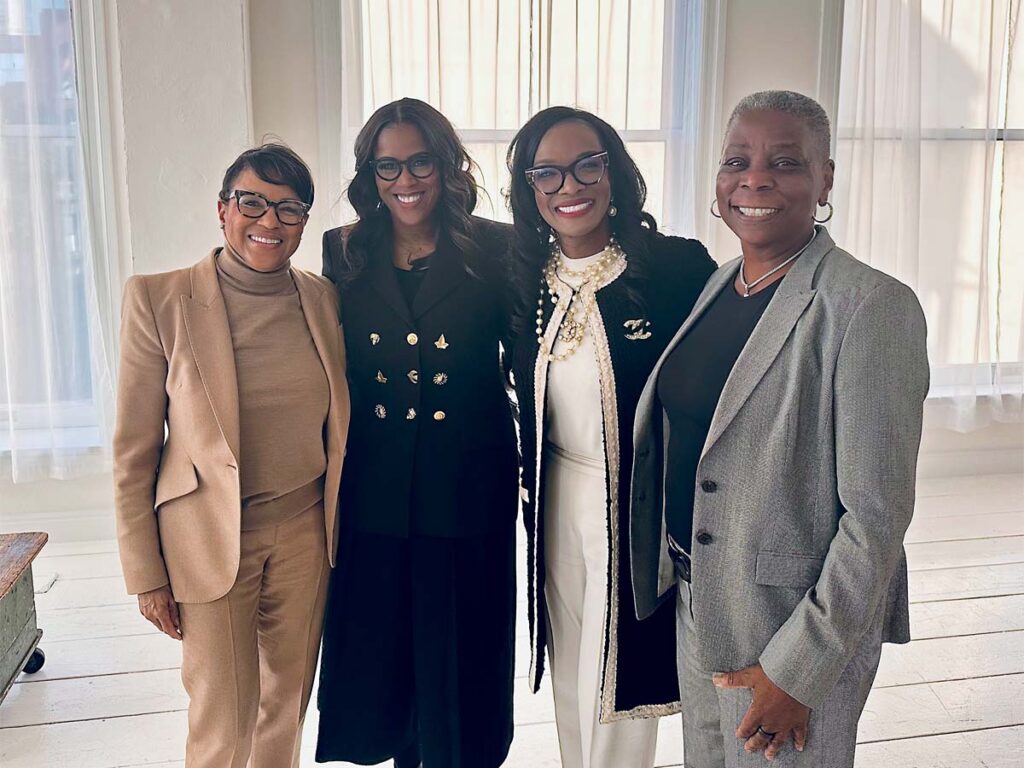
Black women in the pipeline
When Cindy Kent lived in the Twin Cities, she was among the group of prominent Black women who had found success in corporate America. Kent was a vice president in two business areas at Medtronic and then went on to work for 3M for five years. Her last role at 3M was president and general manager of the 3M infection prevention division. She also served on the Best Buy board until 2020.
Now based in Nashville, Kent thinks back to a speech she gave several years ago while at Medtronic when she talked about disruption in health care occurring at the intersection of products, services, and technology.
At the time she left the Twin Cities, Kent says, “I only had experiences in health care products.” During the early years of the pandemic, she was living in Nashville and serving as executive vice president and president of senior living for Brookdale, which she says developed her skills in a services business.
After being recruited by Texas-based Everly Health, she moved to Austin in 2021 to serve as chief operating officer for the digital health company. She left Everly last year. Kent is on the board of Accolade, Inc., a publicly traded telehealth and health care navigation company. Her extensive experience has given her keen insights on pipelines, networks, board priorities, and how diversity, equity, and inclusion (DEI) initiatives are playing out around the country.
One study that documents the challenges faced by women of color like Kent is the annual Women in the Workplace study that’s conducted by McKinsey & Company and LeanIn.org.
For 2023, based on gathering data from hundreds of companies, the study shows that the entry-level population in corporations breaks out this way: white men, 34%; men of color, 18%; white women, 29%; and women of color, 18%.
The C-suite composition in last year’s study—after employees had been promoted through the levels of manager, senior manager/director, vice president, and senior vice president—resulted in this breakout: white men, 56%; men of color, 15%; white women, 22%; and women of color, 6%.
“The progress for women of color is what’s the most astounding and underwhelming of all of those statistics,” Kent says. “The issue becomes the rate of promotion and how fast women are moving through the pipeline and getting the experience to be CEO-ready.” If women aren’t given “stretch assignments” so they can prove their abilities, then Kent says there won’t be enough women to compete for CEO jobs.
Second, she says, board behavior is paramount in determining how many women become CEOs, particularly women of color. Board members can say they want female candidates in the CEO pool, but there’s always risk involved in hiring and firing CEOs, Kent says.
“If the board isn’t diverse and members haven’t had exposure to diverse candidates, then they are probably likely to be too uncomfortable to make the decision that they perceive as a leap,” Kent says. She adds that she’s faced this issue in her own career, because when a CEO selection comes down to the final two candidates, board members feel safer in “going with somebody who’s been a CEO in the past.”
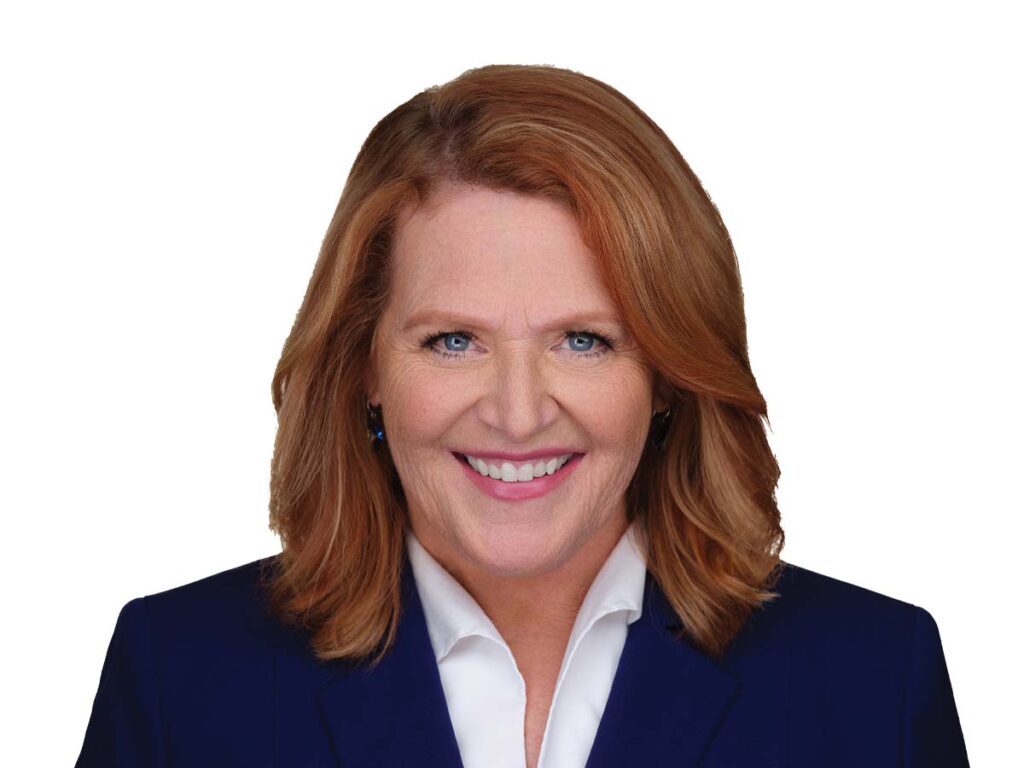
“It was a really subtle and sexist way to raise the gender issue without being overt.”
—Heidi Heitkamp, University of Chicago’s Institute of Politics director
Networking with CEO pioneers
Kent is among the successful women in business who have impressive networks and make it a priority to learn from women who’ve made their marks in business.
Ursula Burns was the first Black woman to serve as CEO of a Fortune 500 company, and she led Xerox through 2016. Through her connections, Kent managed to get on her calendar when Burns was still at Xerox. “I flew to Connecticut to meet her in a closed session for an hour, and it was amazing,” Kent says.
Kent laughs as she recalls she was somewhat scared during the session, because Burns was “tough as nails,” quizzed her about what Kent had been doing in her career, and told her that she needed to move faster toward promotions.
“I wasn’t used to her style and edge,” Kent says. But she heeded her advice, and in the past year Kent reconnected with Burns by phone to solicit her career perspectives.
While Kent was at Everly, she met with Roz Brewer, who served as CEO of Walgreens Boots Alliance. At a recent investment summit, Kent also crossed paths with Thasunda Duckett, the CEO of TIAA.
A few months ago, Kent was at a forum in New York City and ended up running into Burns, Brewer, and Duckett—the first three Black women to serve as Fortune 500 CEOs. She treasures the photos she took with the trio.
“To see them hug and love on each other—it was just a moment,” Kent says. “I was so overcome that I couldn’t stop crying.” The three women inspire Kent for what’s possible for her and other Black women.

CEO of the United States
While CEO of a public corporation has been a tough job for women to attain, the U.S. presidency has been off-limits to women.
“With the exceptions of Donald Trump as a businessperson and Dwight Eisenhower as a general, in modern times our presidents have come from the chief executives of the states, the governors, or the U.S. Senate. Women have been underrepresented in both of those positions,” says Debbie Walsh, director of the Center for American Women and Politics at Rutgers University in New Jersey.
The public views women as collaborative, and many voters have supported women for lawmaking roles, including as state legislators and members of Congress.
But governor, the top state executive, is a different story. “A woman serving as the chief executive, the place where the buck stops, plays against stereotype,” Walsh says.
“The default image of a president or a governor for a lot of folks is a white male with slightly graying hair. It is not a woman in a bright red suit,” she says.
But Walsh notes that times are changing, and more women are entering the presidential pipeline. Currently, 12 of the 50 U.S. governors are women, and 25 of the 100 U.S. senators are women. Both are at record highs.
Heidi Heitkamp, director of the University of Chicago’s Institute of Politics, has firsthand experience involving the trends and voter perceptions that Walsh described.
Heitkamp had served as state tax commissioner and attorney general before she ran for North Dakota governor in 2000, when she lost to banker John Hoeven.
“She doesn’t look like a governor,” she recalls voters saying. “I had big red hair. I get that. But they made a big deal out of the fact that we didn’t look like the first family. It was a really subtle and sexist way to raise the gender issue without being overt.”
She still remembers what was said in focus groups back in 2000. “I just don’t know if she can do a deal with a company that wants to come to North Dakota,” Heitkamp reports a voter said. By then, she adds, she had negotiated a settlement deal in a historic tobacco case as well as several multimillion-dollar deals.
A dozen years later, Heitkamp ran for the U.S. Senate and won. In 2013, she remembers attending a meeting of women senators with then-Facebook executive Sheryl Sandberg, whose book Lean In: Women, Work, and the Will to Lead had just been published.
“I went for one reason, to point out that many of the women in the room, especially if they were Democrats, had run for governor and didn’t win,” Heitkamp says. In recent years, more women from both major political parties have been elected governor.
“There is still a fair amount of bias, but I think that is dissipating,” she says. With more women governors and U.S. senators in the political pipeline, Heitkamp is hopeful that women will be strong presidential contenders in future elections.
“It’s likely a woman nominee will be a governor, somebody who can argue that they have executive experience, especially if they’ve led a big state,” Heitkamp says.