

The Perils of Politics at Work
Steven Sawyer’s tenure as general manager of First Avenue didn’t last long.
The downtown Minneapolis music venue hired him May 6, but by May 10, he was out of a job, according to a narrative in a lawsuit filed in Hennepin County District Court in late June. First Avenue leadership said Sawyer was terminated because he was simply “not a good fit” for the organization, but the suit said there was a more specific cause: social media posts in support of former President Donald Trump.
Though the posts were either created or reposted years before his hiring, some First Avenue staffers “said they would refuse to meet” with Sawyer, according to the suit.
Sawyer’s suit, first filed June 26, would be just as brief as his employment: By July 5, Sawyer withdrew the suit “with prejudice,” meaning it cannot be litigated again. Cory Olson, a lawyer who represented Sawyer, said the parties had resolved the issue.
For better or worse, private employers have a great deal of latitude when it comes to regulating speech in the workplace.
Though this particular case might be resolved, it raises questions about the boundaries of political speech and activities in the workplace. Does a “like” on social media constitute political speech? If so, is that grounds for firing? What about a tweet? Are social media posts from years ago grounds for firing?
The short answer to these questions is that, for better or worse, private employers have a great deal of legal latitude when it comes to regulating speech in the workplace. As the First Avenue example indicates, that can even include speech and activity “off the clock.” It leaves a wide gray area—and plenty of headaches—for businesses in the social media age, especially ahead of a contentious presidential election and in the midst of ongoing global conflicts. Drawing any sort of hard lines, workplace experts say, can create even bigger problems down the road.

Photo credit: Tony Nelson
“I have some sympathy for HR departments,” says Matthew Bodie, law professor at the University of Minnesota Law School.
The limits of 1A
The First Amendment’s freedom of speech protections do not, of course, extend to employees at private companies; the amendment protects only any infringement of speech by the government. That means private employers can indeed prohibit certain kinds of speech or types of activism—or even fire workers for years-old social media posts.
“We exist in a world of at-will employment,” says V. John Ella, attorney and shareholder at Eden Prairie law firm Fafinski Mark & Johnson P.A. “Legally, you [as an employee] can do whatever you want because of the First Amendment, but there could be consequences either within the workplace or with customers or clients.”
For his part, Ella says it’s never a bad idea to be cautious about airing political views on social media. “I have political views, but I long ago stopped posting them anywhere on social media because I’m looking for clients,” he says. “I’ve been circumspect, careful not to put that kind of content out there personally, and I think that’s good advice for many professionals in the workplace.”
Employment law crash course
The definition of “political speech” is a thorny issue, and, while there’s no blanket protection for employees generally, there are a few narrow carve-outs.
The 1935 National Labor Relations Act (NLRA) protects workers’ rights to organize. That means employees are free to talk to one another about wages and working conditions. In one recent case in Minnesota, the nearly century-old law even protected a Home Depot employee’s decision to handwrite “Black Lives Matter” insignia on their work apron in protest of what they and other workers said were racist working conditions.
In a February ruling, the National Labor Relations Board ruled that the worker’s refusal to remove the BLM letters was “protected concerted activity,” which marked a partial reversal from an administrative judge’s ruling in 2022. At the time, the administrative law judge, Paul Bogas, ruled that the employee’s behavior was not “concerted.”
“We disagree with this finding,” the NLRB said in its ruling. “The judge erred insofar as he required proof that other employees authorized or endorsed [the employee’s] placing of the BLM marking on the apron. … The record here plainly shows the existence of a group complaint about working conditions.”
Andrew Parker, managing partner with Minneapolis-based law firm Parker Daniels Kibort, notes that “employees have the right to talk about possible unlawful conduct going on in the workplace. … That is protected under various federal and state laws.”
Read more from this issue
When it comes to restricting speech, “there needs to be a fairly strong nexus between the off-duty conduct and the work of the employee,” Parker says. “If there is that nexus, [employers] may well be able to restrict social media use or apply certain rules of the workplace to the employees’ communications.”
While the BLM insignia was protected in this specific case, it’s harder to connect statements about, say, presidential candidates, to working conditions.
“I struggle to see how political speech relates to the terms and conditions of employment,” Ella says.

It’s also worth noting that employers cannot explicitly tell their workers how to vote. “You can’t tell someone go vote a certain way or I’ll fire you,” Bodie says. Nor can companies punish employees for donating to political candidates of their choice.
Minnesota recently added another layer of complexity: As of last year, employers cannot fire or otherwise punish workers for declining to attend meetings if their purpose is to communicate the employer’s opinion on religion or politics.
Politics and company culture
There are plenty of other reasons to proceed with caution on the employer side. While technically legal, outright bans on “political speech” can have unintended consequences. They’re also largely impractical. Consider the case of San Francisco-based cryptocurrency exchange Coinbase. In a late 2020 blog post, in the wake of George Floyd’s murder and the advent of Covid-19, CEO Brian Armstrong told employees that the company had an “apolitical culture” and asked them to stop political discussions in the workplace. “We won’t debate causes or political candidates internally that are unrelated to work,” Armstrong wrote.
He even went on to offer severance packages to employees who disagreed with the new policy.
The moves “made Armstrong a lightning rod in a Silicon Valley culture war, set against a broader American one,” tech magazine Wired reported at the time. “Ironically, they’ve put Coinbase and its employees in the thick of a political debate far outside the bounds of the company’s core mission—precisely what Armstrong said he hoped to avoid.”
The new policy certainly turned off some employees—Armstrong said in a later blog post that about 5% of the company’s workforce opted to take the exit package. But it also attracted new workers.
“What the headlines didn’t share was that he was also hit with a deluge of applicants—people who said, ‘That’s exactly where I want to work,’” says Johnny C. Taylor Jr., president and CEO of the national trade association Society for Human Resource Management. It’s possible Coinbase got exactly what it wanted.
For Taylor, that scenario underscores the fact that there simply is no right or wrong answer when it comes to regulating political speech in the workplace. As he sees it, the decision to limit any conversation is “very much an issue of culture.” The more apt question, for Taylor, is: What kind of company culture are you trying to build? More importantly, can you be consistent about it?
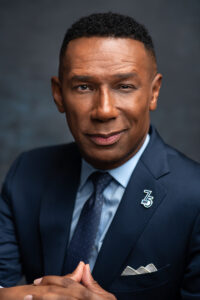
Photo credit: Paco Alacid
“What is wrong is if you tell people what your culture is, but then in practice you’re not comfortable being held to that culture by your employees,” he says. “Then—rightly so—they call you out on it.”
If an organization opts to disallow any kind of speech in the workplace, Taylor advises to proceed with “great caution” and set up explicit guardrails.
“You have to describe behaviors and give them scenarios, so they understand” precisely what is and is not allowed, he says.
The size of an organization matters, too. Speech restrictions at a giant Fortune 500 with thousands of employees are obviously much harder to implement than they would be at smaller businesses.
Whatever policy a company chooses, it’s best to be proactive and specific. “Now is the time to be thinking about it,” says April Eichmeier, assistant professor of strategic communications in the emerging media department at the University of St. Thomas. “If you make a plan for when and if a controversy comes up, it’s going to be much easier to execute on than to make it up on the fly.”
She also suggests doing a risk assessment and asking specific questions about policy violations. What’s the consequence for a specific violation? A warning, or something more severe?
It doesn’t hurt to get employee feedback either, she notes.

“[A workplace] can involve employees” in the policy, Eichmeier says. “This doesn’t have to be a situation where management sits in a room and makes decisions from on high.”
When it comes to social media, it’s also never a bad idea for employees to include the oft-used line on X, formerly known as Twitter: “Views expressed are my own.”
Changing the tone
Specific policy recommendations aside, Taylor and SHRM have been emphasizing the concept of “civility” in the workplace. In a February survey of 1,600 U.S. workers, about a third of respondents said they expect workplace conflict to increase over the following 12 months. About two-thirds of respondents said they experienced “incivility or witnessed incivility in their workplace within the past month.”
In response, the group released a web page with tools aimed at facilitating civil discourse in the workplace. That includes a set of cards with questions for employees to ponder. Taylor describes the effort as a way to “gamify” what can often be a difficult conversation. “We’re giving people tools to make it interesting, not punitive, so we can convince people to better interact with colleagues.”
George Vergolias has been attempting to navigate civility and political speech in the workplace for years. As chief clinical officer for Bloomington-based consultancy R3 Continuum, Vergolias and his team are regularly called on to hold “facilitated discussions” on difficult topics in the workplace. Since the company began the effort in spring 2020, it’s held around 300 such discussions.
When it comes to restricting speech, “There needs to be a fairly strong nexus between the off-duty conduct and the work of the employee.”
—Andrew Parker, managing partner, Parker Daniels Kibort
In a facilitated discussion, a trained facilitator goes into a workplace and conducts an intervention to help employees get past differences and work better together.
“Our goal is not to get people to agree,” Vergolias explains. “We’re trying to get to a level of understanding so that both sides can feel heard and understood. We may disagree vehemently, but we still retain that sense of humanity in one another.”

R3 has been in the business of addressing “disruptive” events in society and in the workplace for decades now. “We responded to 9/11,” Vergolias says. The facilitated discussions line of business is an outgrowth of that.
Vergolias says his company has increasingly been called in to help employees sort through strong differences of opinion on a range of hot-button issues that have nothing to do with the workplace or the company itself: pandemic response, George Floyd’s murder, the reversal of Roe v. Wade, conflicts in the Middle East. Vergolias says leaders were coming to his company and asking, “How do we navigate these topics when they’re getting in the way of day-to-day operations?”
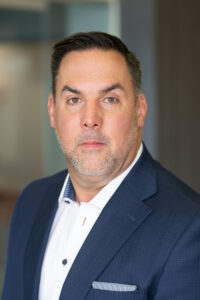
Vergolias notes that the workplace of today looks much different than the workplace of even 10 or 15 years ago. We’ve entered an era where many employers encourage workers to bring their “whole, authentic selves to work,” but, in the same breath, employees might also be discouraged from letting activism or political views disrupt their daily duties.
There are also some generational dynamics in play, Vergolias says. Millennials and Gen Zers want a workplace that “gets” them and respects their viewpoints. Prior generations, Vergolias notes, “just didn’t bring that stuff to work.” The change is forcing leaders to navigate a host of issues that often don’t have a bearing on daily business matters, especially at a time of deep political division.
Politics is, of course, about much more than the current presidential contest. In some conflicts, it’s harder to “agree to disagree” when an individual feels their very identity—gender expression, sexuality, even race—is threatened by a political party’s platform.
But, for his part, Vergolias emphasizes that his company isn’t really attempting to find concrete answers to larger societal issues—rather, the point is simply to help employees get along better and do their jobs. As he puts it: “The goal is really, how do we work together in a cohesive way?”