Soul Grain Brings Cultural Diversity to Grocery Aisle
Liza Maya is a Twin Cities nutritionist; Sylvia Williams is a local pastry chef. For years, the two friends dreamed about cooking up a healthy snack brand with flavor.
In 2022, they launched Soul Grain with a mission to add color, diversity, and unique flavors to the granola aisle. Started as a granola bar, their recipe quickly became deconstructed. “We thought granola aisles were lacking diversity and representation,” Maya says. Now available in select Whole Foods, Fresh Thyme, and Kowalski’s Markets, Soul Grain’s packaging makes it a standout. Maya and Williams share their inspiration.
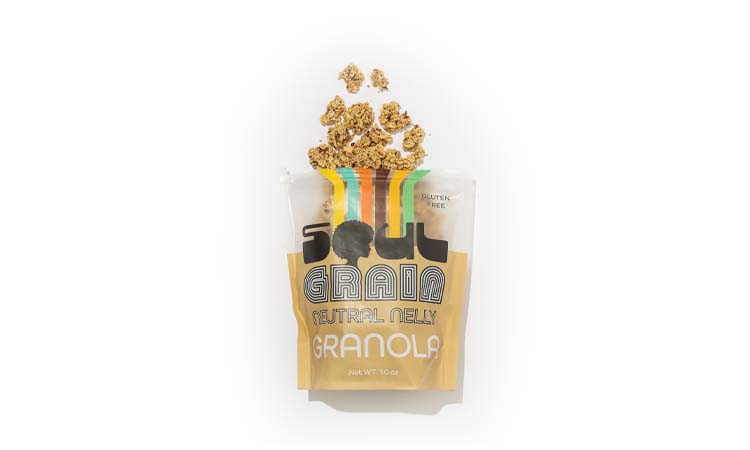
Colors: “We wanted our product to be colorful and pop,” says Maya. Each flavor is printed in a color that matches a food: yellow for banana pudding, orange for sweet potato casserole, and more.
Logo: “Sylvia wanted a ‘retro’ vibe to correspond with the sly nod to [the TV show] Soul Train, so I went about compiling font options that I felt went with the theme of 1970s Black pop culture,” says logo designer Trey Gua, who added the female Afro graphic.
Insight: The North American granola market was valued at $6.25 billion in 2023 and is projected to reach $9.87 billion by 2032.
—Market Research Future
Tagline: Put some soul in your grain. “It’s something you don’t see on [grocery] shelves,” Maya says.
Flavors: “Flavors are all inspired by our cultural background,” says Maya. Some are seasonal, like purple grain and sweet potato casserole. Their bestseller is banana pudding.
Read more from this issue

QR code on back of package: It takes consumers to the brand’s Instagram page or website, where they share a music playlist inspired by each flavor; for example, reggae/dance hall for Coco Mango; Afrobeats for Spiced Paradise, which is inspired by spices prominent in northern African cuisine. “We wanted the playlists to tell a story,” Williams says. “All the playlists are nostalgic and meant to inspire pleasant memories of past good times.”
“We wanted representation (in grocery aisles) and more diversity than just raisin and cinnamon.”
—Liza Maya, co-founder, Soul Grain