

Employee Well-Being in the Post-Covid Era
The idea of “taking mental health day” may have been considered unusual a decade ago. Today, you’d be hard pressed to find a worker who’s never taken one.
It’s emblematic of the many ways the workplace has changed dramatically amid generational shifts and the lasting effects of the Covid-19 pandemic. Employees are demanding more from employers, and white-collar workers, in particular, have gained an unprecedented level of flexibility and autonomy after the rapid adoption of hybrid and remote work.
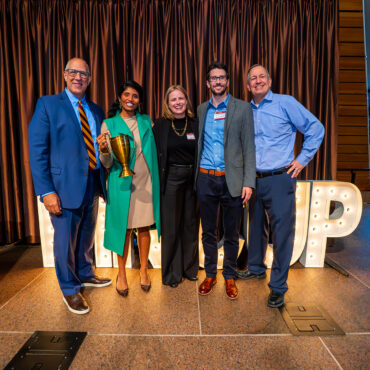
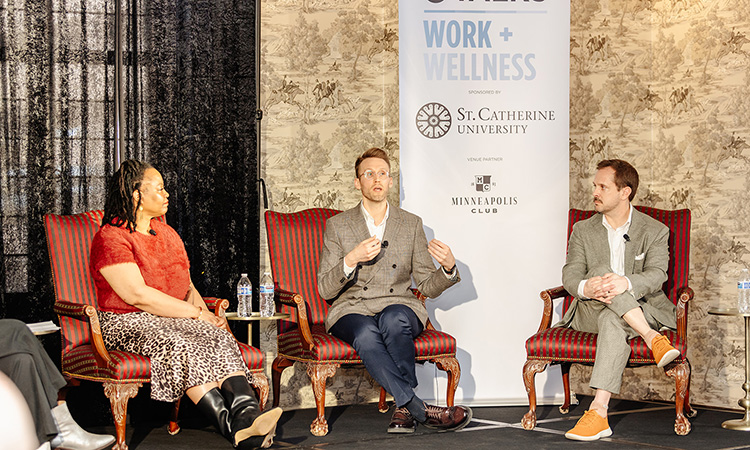
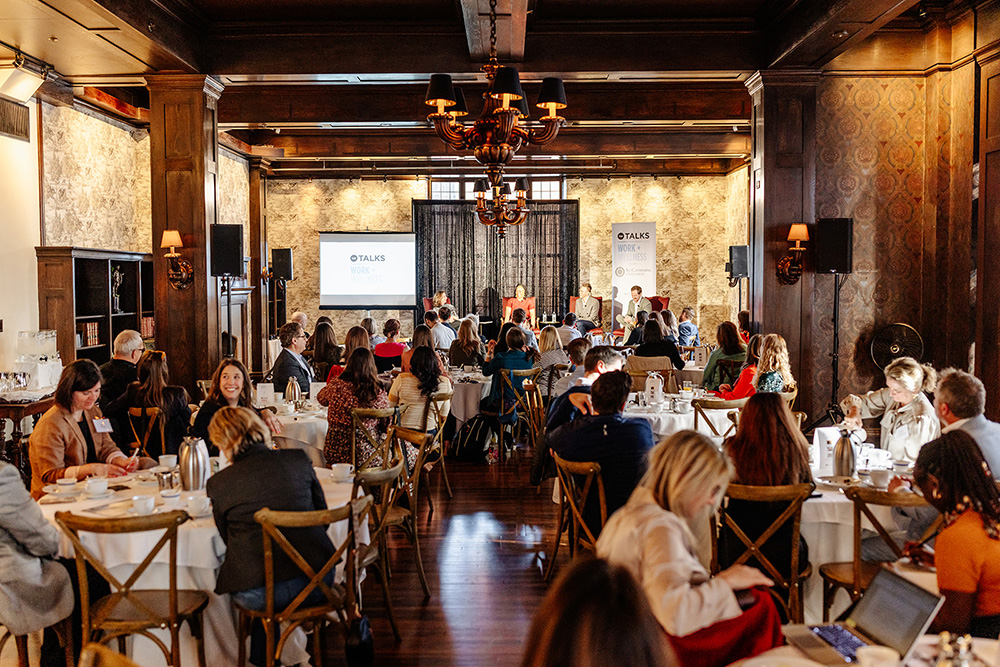
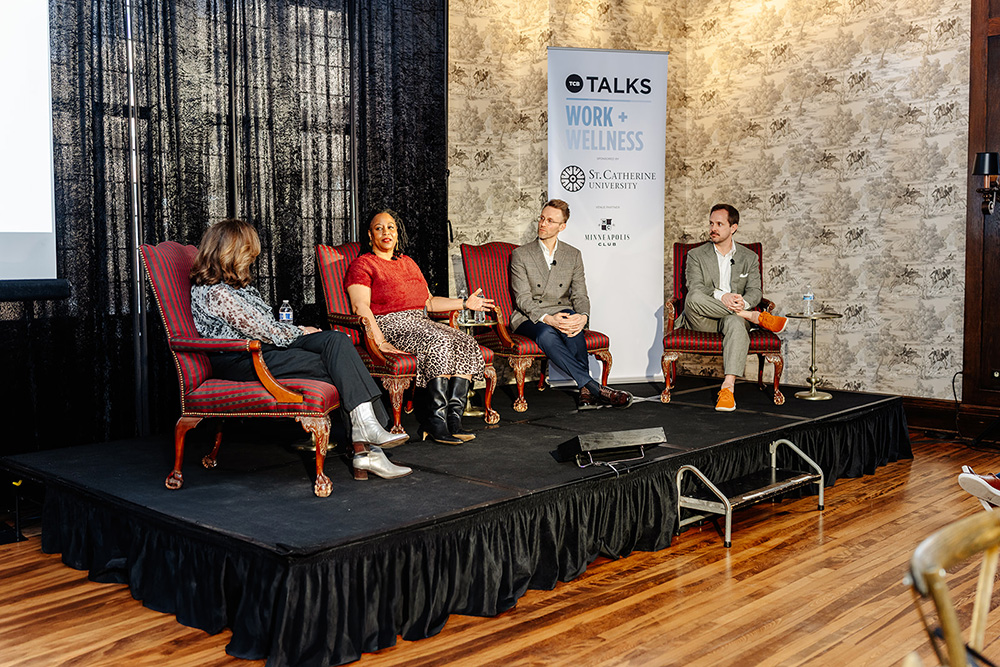
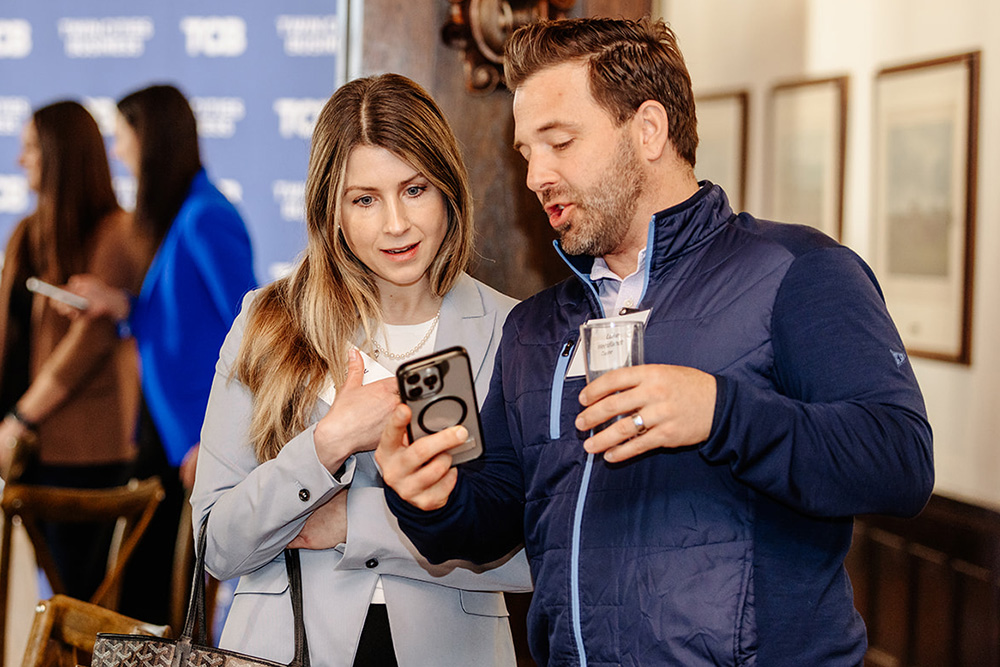
At the TCB Talks: Work + Wellness panel discussion at the Minneapolis Club on Thursday, a trio of panelists talked through the delicate balancing act employers face trying to meet business needs while maintaining employee health and well-being.
“The pace of change is faster and faster every day, so I think that induces a certain amount of stress and anxiety in everybody,” said Colette Campbell, chief people and culture officer at St. Paul-based Bremer Bank. “People are trying to figure out how to navigate this.”
Campbell took questions alongside M Health Fairview VP of patient care and chief nursing officer Adam Karlen and Cadre director of people and partnerships JC Lippold. TCB editor-in-chief Allison Kaplan moderated the discussion.
Even the way employers think about “well-being” has expanded significantly in recent years.

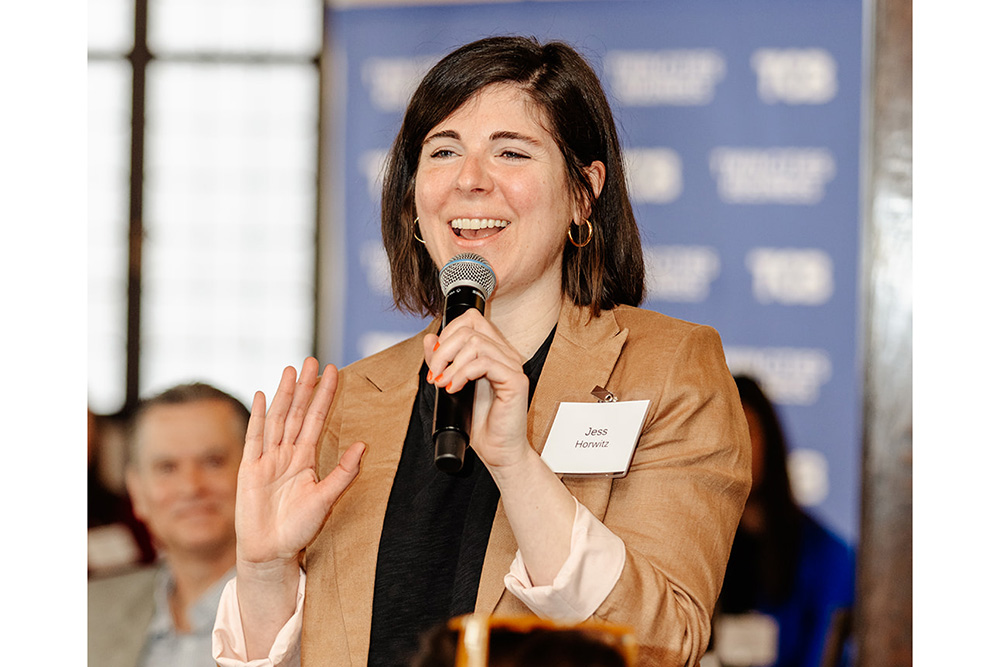
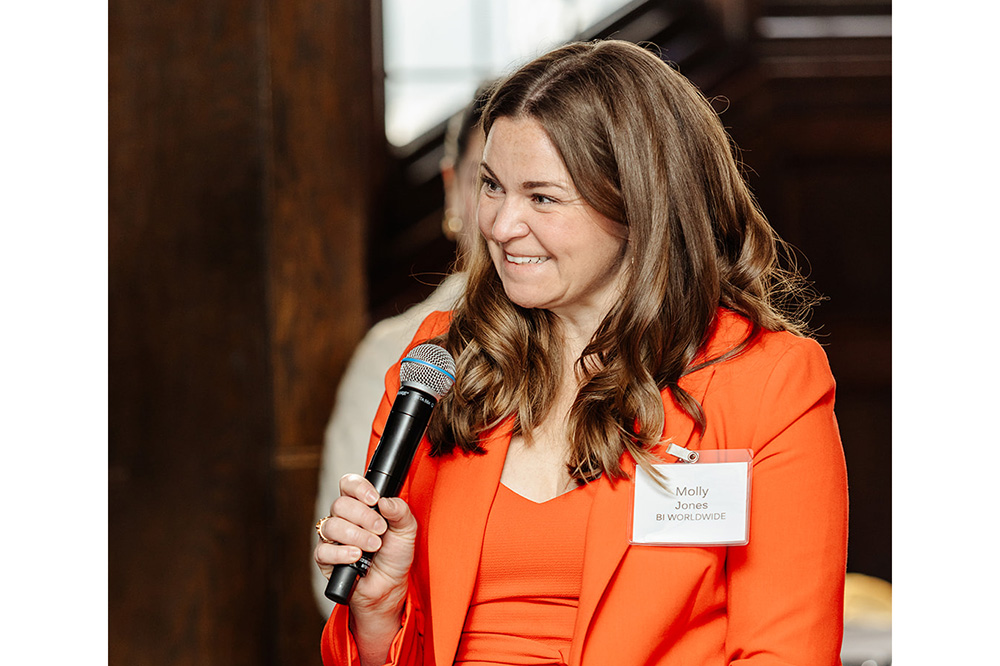
“We do think about mental well-being, physical well-being, emotional well-being, as well as financial well-being,” Karlen said. “They’re all collectively in this concept of well-being.”
Campbell described these as “dimensions of wellness” that can affect employee performance, positively or negatively.
There are, of course, a range of new resources that employers can tap into to help address these issues. Lippold’s employer Cadre, for instance, provides a social network platform designed to provide mental health support for users. Whether employees opt to use the resources they’re provided with is another question.
“How many people have benefits but either don’t know about them or they don’t know if they’re supposed to use them?” Lippold said.
At the same time, there’s one almost century-old workplace concept that could help workers today: employee assistance programs, or EAPs, which grew out of addiction programs back in the 1930s and ‘40s. Today, EAPs have seen their purposes multiply, providing everything from assistance locating mental health providers to grief support.
Still, whether employees take advantage of their EAPs isn’t clear. “I love our EAP,” Campbell said. “It’s a benefit that many people have and might not use it.”
Meanwhile, employers are still sorting out the best ways for their employees to work and gather. Just yesterday, Gov. Tim Walz called state employees back to the office on a part-time basis, following in the footsteps of a range of private employers who’ve called their workers back.
Campbell acknowledged that workplace flexibility remains a “tricky” topic, especially when some roles lend themselves more easily to hybrid and remote work than others. Regardless, for both employee morale and business needs, she maintained that there is value in meeting in person at least some of the time. “I think there are more reasons we need to bring people together as opposed to just thinking about productivity,” Campbell said.
For instance, there’s the prospect of interdepartmental relationships between employees. Perhaps an employee in accounting finds a mentor in an employee in marketing. In an office, “you’re meeting people you wouldn’t have met before,” Campbell said.
And in some professions, hybrid or remote work isn’t always an option. Nurses, for instance, need to provide care in person much of the time. When determining whether hybrid work makes sense for an employee group, Karlen said, it’s important to focus on an organization’s desired outcomes.
“We really focus on the outcome of work,” Karlen said. “Hybrid is here to stay in many industries, but we need to ask whether we’re achieving outcomes.”