Why Is Detergent Locked Up at Target?
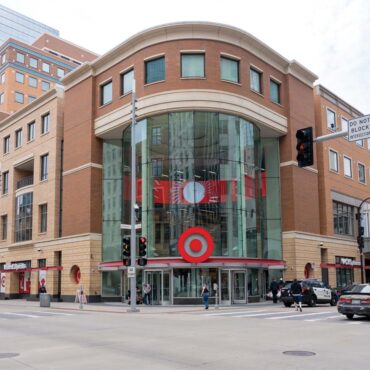
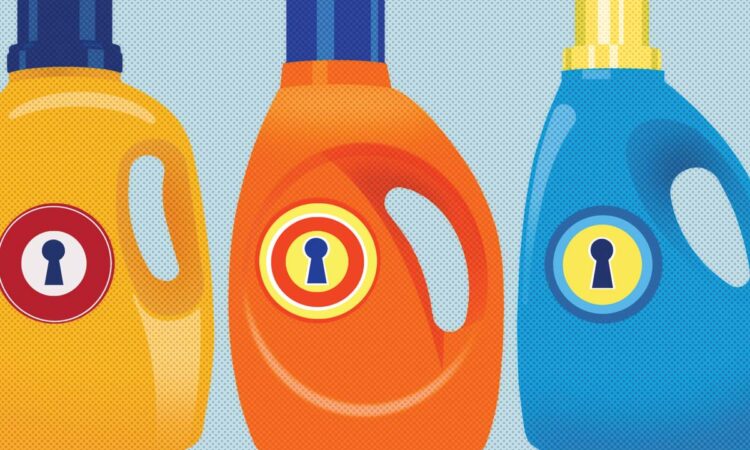
At your local Target, you might have noticed a growing subset of merchandise behind plexiglass barriers. Detergent, dental floss, hair care products—to buy any of them, shoppers need a team member’s assistance, summoned by the wave of a hand under sensors in each aisle. What used to be a quick transfer from shelf to shopping cart often takes five minutes.
Stores have been putting items behind lock and key for several years, and the phenomenon continues to grow. It’s a response to “organized retail crime” (ORC), large-scale coordinated theft for financial gain—and it’s not just Target. Walmart, CVS, and Walgreens are all locking up products to mitigate theft. “Shrink”—the term for retail losses during a specific period—was $112.1 billion in 2022, according to the National Retail Security Survey. Retailers cite this metric to explain their loss prevention decisions. This number is up from $93.9 billion in 2021, $61.7 billion in 2019, and $50.6 billion in 2018.
Target shopper Sheena, a mom of three who declined to give her last name, stops a few times a week at the Midway Target. One of her top concerns as a shopper is privacy, especially in the pharmacy aisle. “There’s things that they have behind [the plexiglass] that are kind of personal, so you can no longer pick discreetly,” she says. And it’s become harder to compare items in the store, like vitamin labels for her kids, she says. “[Sales associates] will take forever” to get to her aisle, she says.
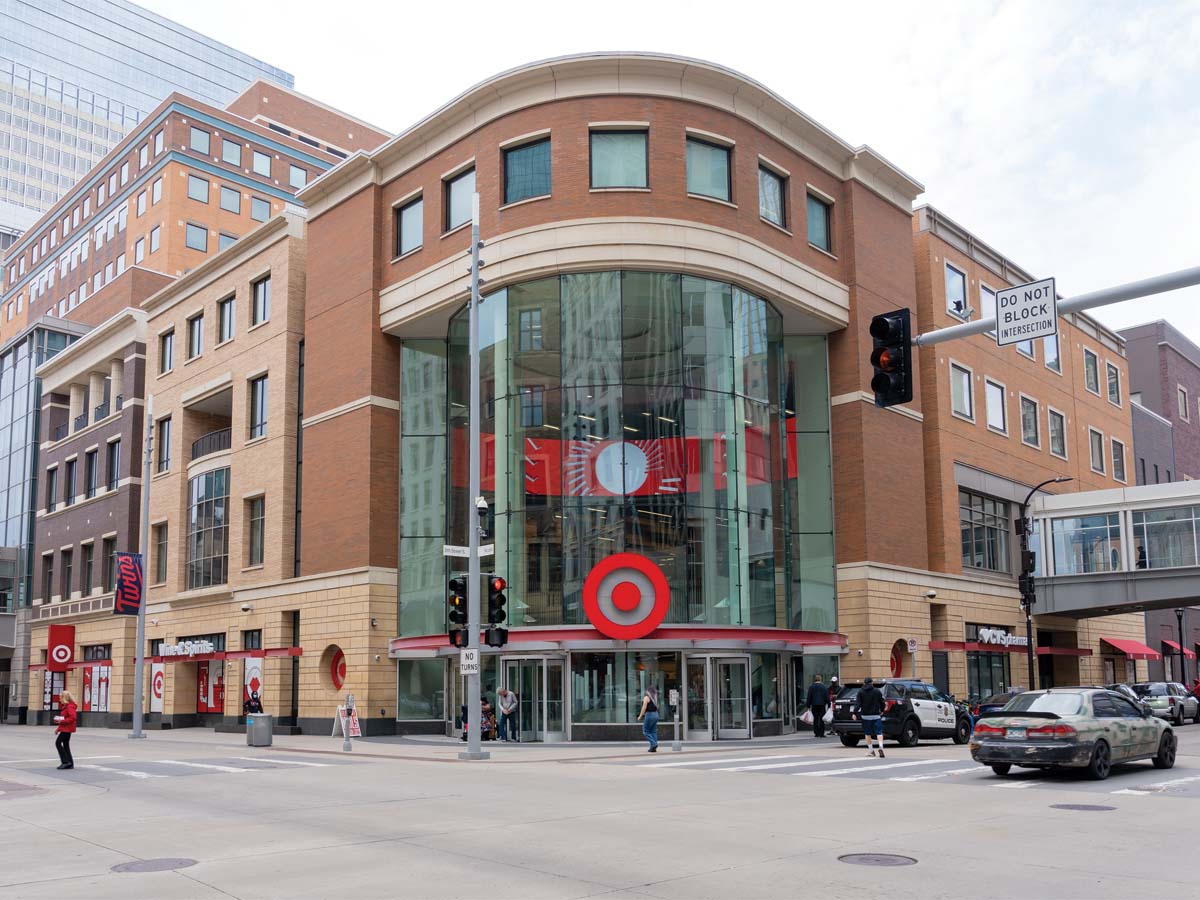
Another shopper, who declined to offer his name, shops infrequently at Target and professed shock at the prevalence of plexiglass at the store in the Quarry shopping center in Northeast Minneapolis. “It just makes the shopping experience more of a drag,” he says.
In a November interview with CNBC Evolve Global Summit, Target CEO Brian Cornell briefly touched on the Minneapolis-based retailer’s response to the theft losses, including closure of nine stores in four states.
“Shrink” was $112.1 billion in 2022 according to the National Retail Security Survey. This number is up from $93.9 billion in 2021, $61.7 billion in 2019, and $50.6 billion in 2018.
“There were stores where we had made big investments in additional asset protection. Working with third-party security, we used other devices to try to control theft. But we closed those stores because we deemed it wasn’t safe for our teams to continue to operate in those environments,” Cornell said in the interview.
How does Target decide which items go behind the plexiglass? “Our multi-layered approach to combatting theft includes in-store technology, training for store leaders and security team members, and partnerships with law enforcement agencies as well as retail trade associations,” Target said in a statement. “On a limited basis, we employ theft-deterrent merchandising strategies, such as locking cases, for categories that are prone to theft. While we don’t share specifics on these strategies, these decisions are generally made at a local level.”
But consumers still ask—with growing frustration on social media—why are relatively inexpensive common goods locked up?
Mike Olson, CEO of Minneapolis-based 360 Security Services, attributes the decision to the ability to quickly resell the stolen goods. Stolen goods can also serve other purposes; powdered baby formula, for example, has historically been used to dilute drugs like cocaine and heroin, Olson notes.
According to the National Retail Federation (NRF), ORC groups have expanded their targets over the last few years, and the value is not entirely driven by price point. In the health, beauty, and personal care category, ORC most frequently targets items like body cream, cosmetics, fragrance, deodorants, oral care, over-the-counter meds, and vitamins and supplements.
But Olson doesn’t believe plexiglass barriers ultimately work. “If you’re using [plexiglass] in a city that is not prosecuting crime, it’s just a matter of time” before the theft resumes.
Cody Johnson, president of the Minnesota Organized Retail Crime Association (MNORCA), suggests that without a united commitment among retailers, law enforcement, and consumers, organized retail crime will persist. And deterrent tactics like plexiglass will just push consumers to online or non-urban stores with open shelves. “The city needs to address the issue, not just a single business,” Johnson says.
Without more effective security and accountability measures, Olson notes, more retailers are likely to shutter stores in higher-crime areas where residents already lack diverse options.
According to the NRF’s National Retail Security Survey, which contains insights from 177 retail brands, in addition to putting more merchandise behind lock and key, 28% of businesses reported closing a specific location, 45% reduced operating hours, and 30% reduced or altered product selection as a direct result of retail crime.
“For consumers, [plexiglass barriers] are telling me this is not a safe place,” Olson says. “Am I safe in the parking lot? Am I going to get carjacked? What about the adjacent stores or restaurants? It sends a psychological message … that ultimately can have a much bigger effect on the local economy.”