The Road Diet
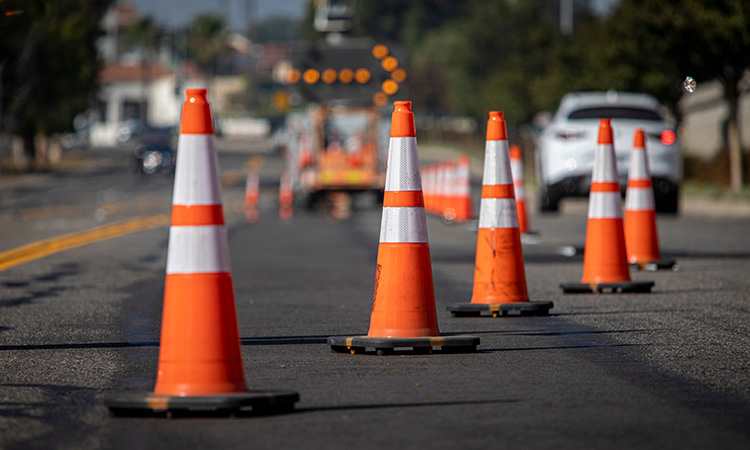
It’s been a summer of overwhelming levels of roadwork, especially in the city of Minneapolis. Linden Hills, 50th and France, Hennepin Avenue in Uptown, Hennepin Avenue by Loring Park, Hennepin Avenue in Old St. Anthony, Lowry Avenue, Fourth Avenue through Dinkytown. Businesses have been impacted on every stretch, losing parking and customers who just can’t invest extra time. And it won’t wrap up until Thanksgiving. TCB wrote about Dream Creamery’s travails on Lowry in the previous issue. Vellee Deli on First Avenue NE shut down more recently, blaming road construction.
What’s equally concerning is nowadays, when a road in Minneapolis or St. Paul goes under the knife, it usually comes out smaller, due either to the addition of bike and bus lanes or just the mandates of the 2040 Plan’s transportation action section.
I am not a NIMBY. I support more and better transit, real bike infrastructure (not the painted lines Minneapolis laid down virtually everywhere that offer bikers no protection). Drive down Olson Memorial Highway or the grotesque stretches of Lyndale north of the Basilica and shake your head over the wasted concrete.
The recent conversation about permanently shuttering I-94 between the two downtowns laid bare some truths. The urbanist community pushing these solutions is not operating from a playbook of practical multimodality, but from an ideological orthodoxy in which business and people don’t matter. The street parking that sustains your store? It’s an incentive to drive! The congested roadways that your workers use to get to suburban offices or factories? Narrow them!
In this orthodoxy, the car is public enemy No. 1. I’m not a car guy. I dislike driving, by and large, and wish we had adequate transit so that my 12-minute, all-Minneapolis car commute didn’t take an hour or more using public transportation. But that’s what most of this region lives with.
City government’s hope is that by making it harder to use your car, you will seek out alternatives. You will carpool. You will combine trips rather than running three separate errands on three separate days. (Don’t people already do this?) You will buy online. As City Councilmember Linea Palmisano explained to me in a recent chat, it’s too easy to get anywhere in the Twin Cities in 20 minutes by car. There is no disincentive to drive or shop in the suburbs.
Palmisano adds she’s not anti-car but believes the transit prioritization lanes need to be given a chance to work and motivate people into other modes, and that the status quo is not sustainable.
If you are rigidly anti-car in the Twin Cities, you are anti-senior. You are anti-working class. You are anti-parent. And you are anti-business.
Baked into the 2040 Plan is an imperative to improve transit so Minneapolis can manage all that density without more cars. But the recently announced Network Now plan by Metro Transit is far less than what would be necessary to allow most city residents to live car-free. Apparently, we’ve decided to forgo the carrot and just use the stick.
Anti-car orthodoxy is deeply embedded in the Twin Cities public sector. Minneapolis has been hiring for this mindset since Betsy Hodges was mayor. Nobody emerges from grad school in planning these days with anything but a desire to try to rewrite all the mistakes made in American cities over the past century. They are abetted by a coterie of young white men on social media who provide the illusion of public endorsement. These folks, as I’ve discovered through interacting with them, mostly can’t relate to people who are elderly, have children, or work a job that requires them to leave home. They fixate on pedestrian deaths and bike lanes blocked by the Amazon deliveries they subsist on and tweet photos of Parisian streets with memes like, “This is what they took from us.”
The reality, though, is if you are rigidly anti-car in the Twin Cities, you are anti-senior. You are anti-working class. You are anti-parent. And you are anti-business. When you double someone’s commute, you reduce their quality of life. When you drive retail and hospitality out of the city, you drive out low-skilled jobs that people rely on. And if you don’t provide people with substantial, usable alternatives before you use the stick, you degrade the environment even more as cars sit in traffic at idle.
Ultimately, you can’t punitively stop people from driving, even if you close 94; find me a place where this has worked in America on a broad scale. This is the fallacy of the YIMBYs.
Yes, America screwed up after World War II when we sprawled using a model that rejected the urban design of the past. But reversing 80 years of bad decisions requires coordinated efforts over an equivalent period. And it requires planners and advocates whose regard for people is as great as their hatred of cars.