
The Future Is Human
Executives tend to believe they’re winning at wellness—not just their own, but their employees’ too.
According to the 2025 Workplace Trends Report from Arbinger Institute, a Utah-based leadership development firm, 84% of supervisory professionals surveyed said they believe their company is taking adequate steps to address the well-being and mental health of employees (that figure jumps to 95% if you zero in on the C-suite)—up from 77% a year ago. But only 66% of non-supervisory employees agree.
That could explain the record levels of disengagement Arbinger finds: 45% of employees surveyed said engagement and morale need improvement. Only 9% of individual contributors and 20% of managers said their company provides opportunities for innovation and creativity, compared with 34% of VPs and 47% of C-suite executives. Lack of recognition, unclear expectations, and feeling unappreciated or unsupported by management were key factors contributing to employees feeling stressed or burnt out.
I don’t think we need a study to conclude that those feelings—unclear expectations, lack of support—have been exacerbated in recent years by remote or hybrid work, even if a whole lot of us appreciate the flexibility to work from home. Heart emojis on Teams don’t replace time together. And messages are more easily misconstrued over email.
We’ve spent so much time in the last year worrying about how AI is going to upend our jobs and disrupt our work when a better question might be how do we prioritize the humanity in our organizations when automation is ever-increasing? The Arbinger report notes a shift in what it means to be an effective leader today: less authority figure, more coach who offers tools and support to help teams thrive. From the survey’s takeaways: “When leadership clearly recognizes that employees are people who matter as much as they do, with goals, challenges, and responsibilities outside of work, it demonstrates respect and can actually inspire employees to contribute more.”
The pandemic made it difficult to compartmentalize work and personal life, and as we’ve experienced in the years since, there’s no stuffing the messy overlap back in the box. An entire generation of up-and-coming workers hasn’t experienced a time when cutting out of a meeting to pick up kids could put your job in jeopardy. Many of them can’t believe it ever wasn’t OK to work from home while training a puppy, or that most of our offices weren’t dog-friendly. And they want to talk about their feelings—about the dogs and the kids and, oh yes, the work. Arbinger’s Workplace Trends Report and many other surveys show that the companies with the happiest, most engaged employees recognize the need to treat those employees as whole humans.
The intersection of work and wellness is where TCB’s editorial team started coming up with the stories we wanted to share in our first issue of 2025. We leaned into our experts. HR Confidential columnist Stephanie Pierce shares the challenges of being an HR leader today, including some of the complex work culture issues companies are grappling with. It’s a perspective only an industry insider like Pierce could bring to us (I know, because I tried.). Performing Philanthropy columnist Sarah Lutman underscores the surging demand for nonprofit services and the burnout it’s causing within the field’s overworked ranks. In her Working It column, legal expert Linda Holstein shines a light on an often-overlooked solution: the 65-plus crowd—healthier than ever before, wise, and generally less stressed than their younger counterparts.
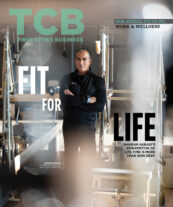
Speaking of staying healthy longer, guest contributor Aaron Leventhal, a pro soccer player turned personal trainer, whose FIT Studio in St. Louis Park is like the Manny’s of local gyms, writes about fitness for the 40-plus crowd and how taking time to exercise can improve our performance at work. And on our cover, executive editor Adam Platt takes us inside the gym—make that fitness country club—of one of Minnesota’s fittest and most ambitious 63-year-old CEOs, Bahram Akradi, whose move upmarket and expansion of services speak to America’s willingness to spend on healthy living.
Read more from this issue
All that’s just the tip of the iceberg in this packed issue, which, we hope, sparks conversation from the C-suite to the sauna on leadership, health care, productivity, and balance. How do your healthiest habits benefit your work? We’d love to know—email me at akaplan@tcbmag.com. And join us March 27 for TCB Talks: Work + Wellness, when experts in work culture and mental health will share their advice for prioritizing employee well-being.