St. Thomas to Open $110M Arts, Engineering, and Sciences Building
The University of St. Thomas is gearing up to introduce a new, first-of-its-kind facility blending art, engineering, and science.
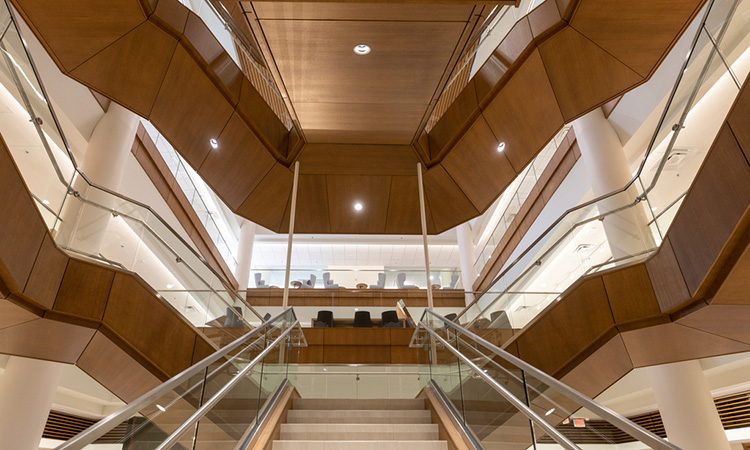
On Feb. 5, the university’s new Schoenecker Center on St. Paul’s Summit Avenue will officially open for students and staff. The $110 million facility places a premium on STEAM education, or the blend of science, technology, engineering, the arts, and math. The school constructed the building with a gift from longtime donors Guy and Barbara Schoenecker.
The new center is unique because it offers labs for traditional scientific disciplines like chemistry alongside space for the creative and performance arts. The Schoenecker Center also includes a performance hall that can be reconfigured into a presentation room for lectures, robotics presentations, and more.
“The essence of engineering is creativity and design, maybe even more than the mathematics and the technology,” said Don Weinkauf, dean of the university’s School of Engineering, in an interview with TCB.
Weinkauf noted that the university’s current science and engineering buildings were constructed in the late ‘90s. Since that time, enrollment in those programs has grown “by three- or fourfold,” he said. “From a very practical matter, the space was clearly necessary to accommodate growth.”
The university broke ground on the Schoenecker Center in May 2022. The building spans five floors and more than 130,000 square feet.
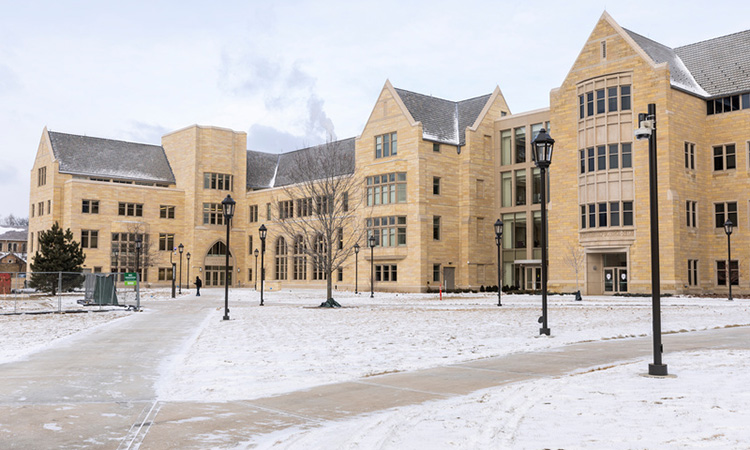
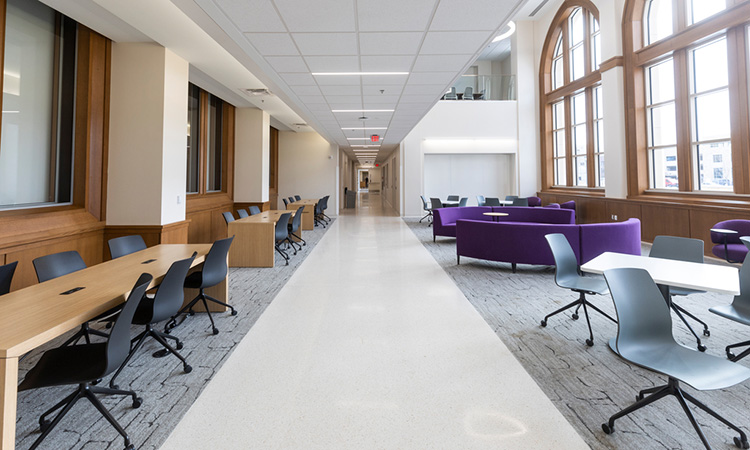
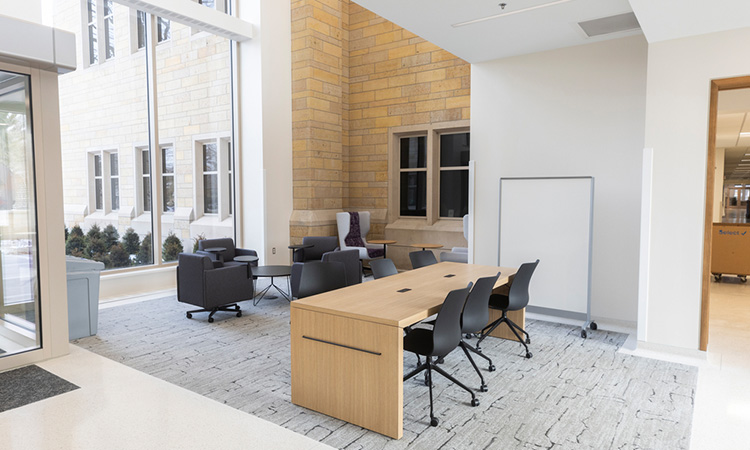
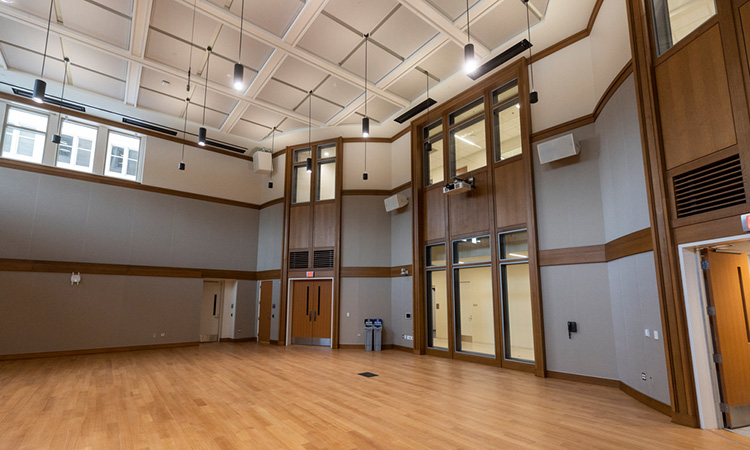
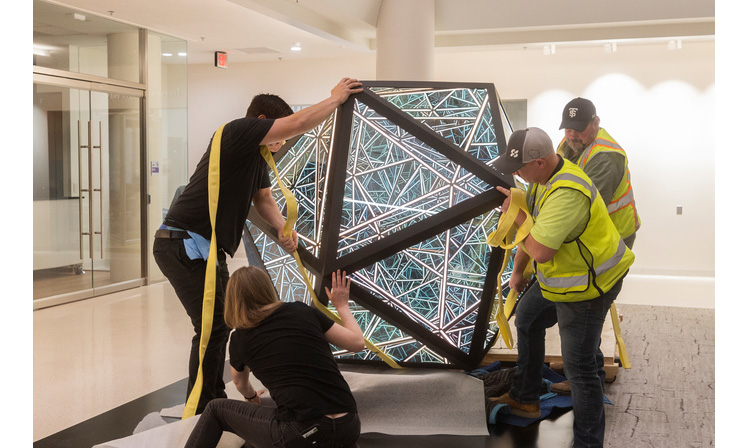
Practical considerations aside, St. Thomas officials believe the new center could serve as a “national model for bolder, more interdisciplinary learning.”
William Tolman, dean of St. Thomas’s College of Arts and Sciences, said the new building is “quite unique.”
“We have other science buildings that have a mixture of science departments, and we have various other buildings that are just humanities,” he said. “This is the first building of its kind where you have this mix of these disciplines all together in a purposeful way to engage students in interdisciplinary learning.”
Tolman noted that there will also be space for the school’s emerging media department, which includes journalism, digital media arts, and strategic communications programs.
The building was “incredibly challenging” to construct because of the diversity of spaces and uses involved, he added. For instance, the music performance spaces needed to be well-insulated, while lab and engineering spaces came with their own set of regulations and requirements.
View this post on Instagram