Rochester Rising: Downtown Development
On average, DMC accounts for about $173 million annually in downtown development. DMC’s centerpiece is Discovery Square and the two buildings designed specifically to house life-sciences businesses and organizations: One Discovery Square (opened in 2019) and Two Discovery Square (completed in 2021). More than solely a place to do and build business, Discovery Square is intended to be “a live/work/play innovation district,” DMC EDA executive director Patrick Seeb says. DMC now is looking to boost public infrastructure investments to support and facilitate further growth in the DMC district and throughout the downtown.
For instance, DMC is working with the city and the U.S. Army Corps of Engineers to “naturalize” the downtown river corridor. The city has in place a floodwall system designed to keep the Zumbro River from overflowing and causing damage and disruption. But there’s a drawback—it’s kept people from accessing the river. Seeb’s organization and others are seeking to develop an approach that provides both flood protection and public access.
One of the initiatives in this endeavor is the Riverfront Reimagined plan, which covers 5.5 acres of city-owned land. To guide the plan from imagination to reality, the city secured about $20 million in federal infrastructure funds in 2023; it’s now seeking more funding as well as private partners to develop the property. DMC has helped by providing money for design and engineering work.
Another key infrastructure plan DMC is helping to craft: upgrading streets to provide greater mobility for pedestrians and bicyclists. DMC is also building out public space improvements within the Discovery Square subdistrict. One of these is Discovery Walk, a four-block linear park that will run through the area, featuring local art and space for civic events.
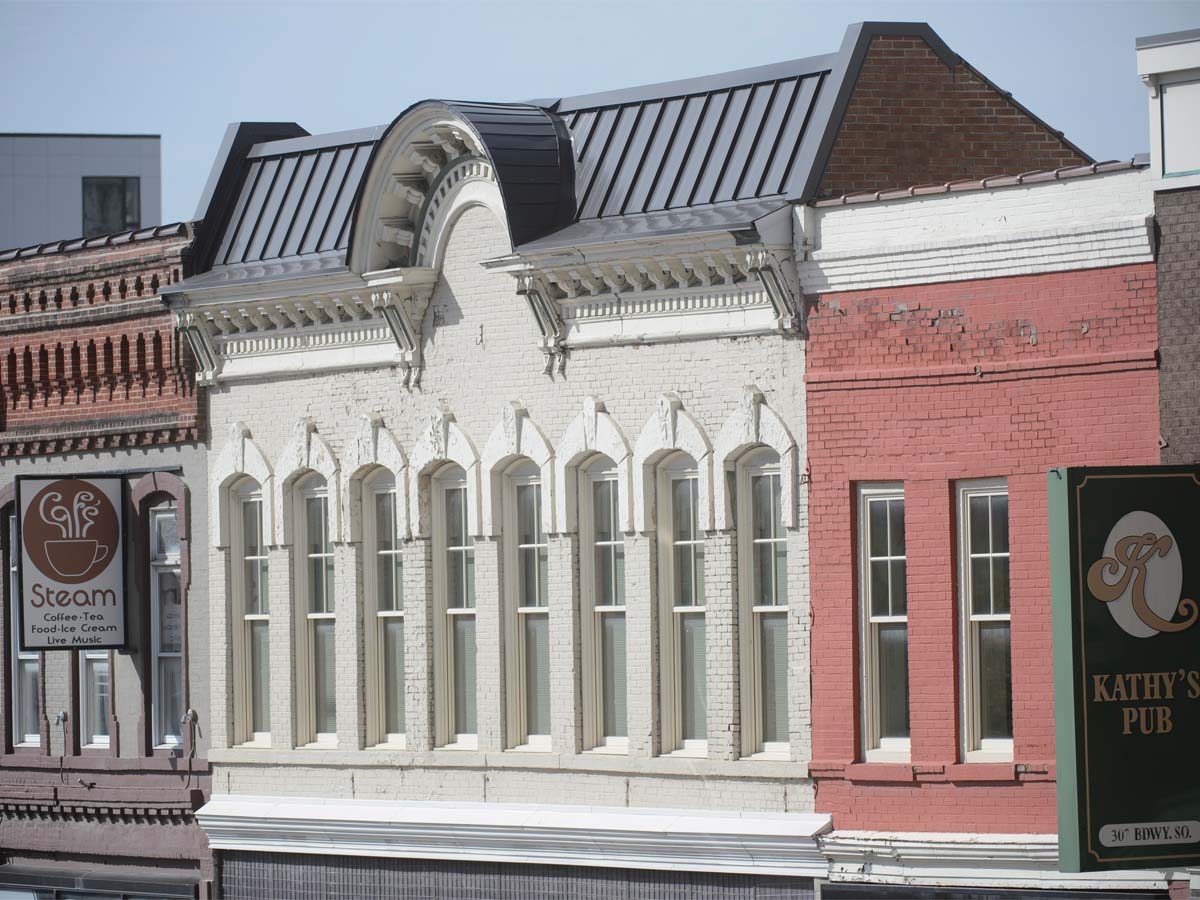
At the same time, DMC has placed “a big emphasis on attracting new private developers,” Seeb says, particularly for new housing projects, several of which have been built in recent years in downtown Rochester. In addition, DMC is working with property owners to help preserve historic buildings downtown. The City Council has established a historic preservation district comprising 31 downtown structures. The overall goal of these plans, Seeb says, is to help cultivate “a downtown that reflects the character and history of Rochester” while building “the vitality and energy” that both residents and visitors crave.
On average, DMC accounts for about $173 million annually in downtown development.
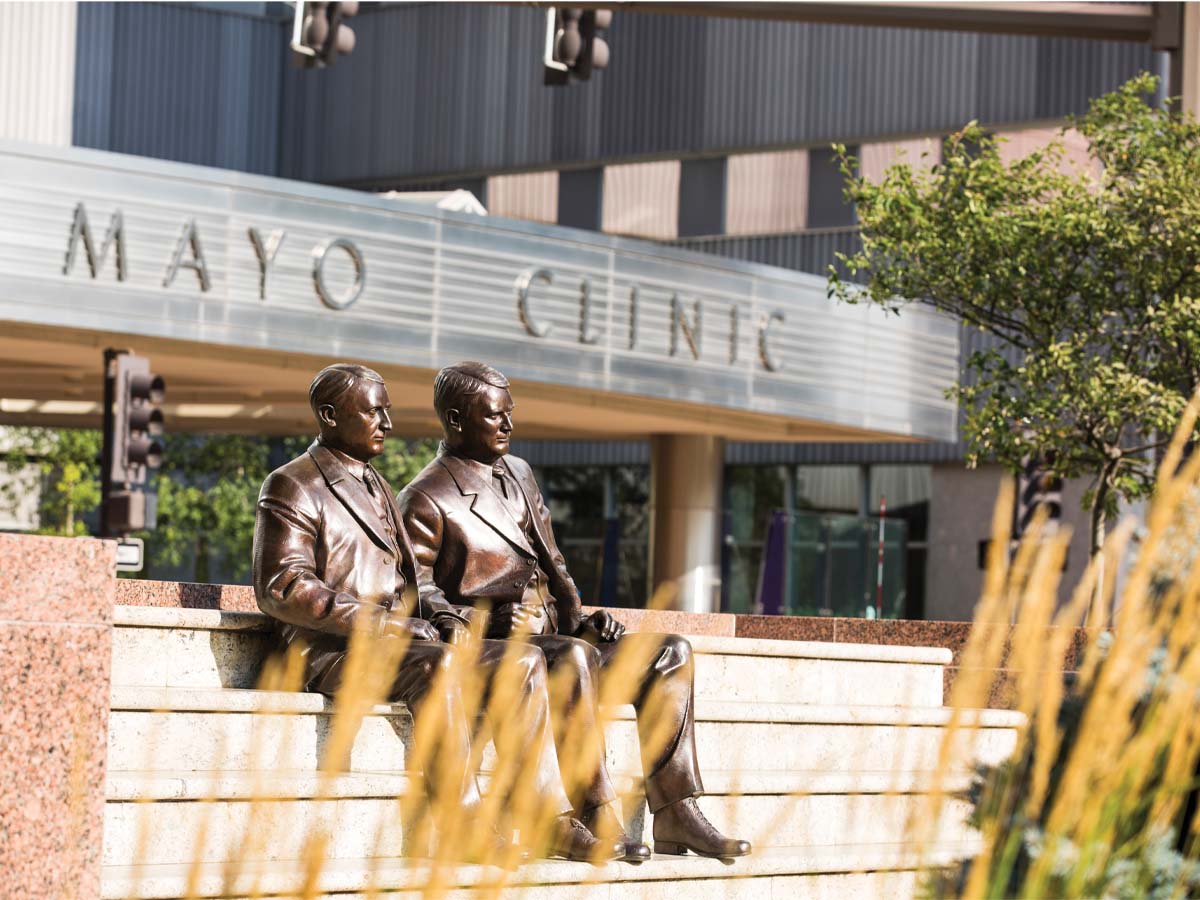
Not surprisingly, the lion’s share of the investments under the DMC umbrella have been made by Mayo Clinic, which accounted for $133 million in development in 2023 alone. Late last year, Mayo Clinic completed the Anna-Maria and Stephen Kellen Building, which is dedicated to cancer research. It was the organization’s first major building project since it opened the 21-floor Gonda Building in 2001.
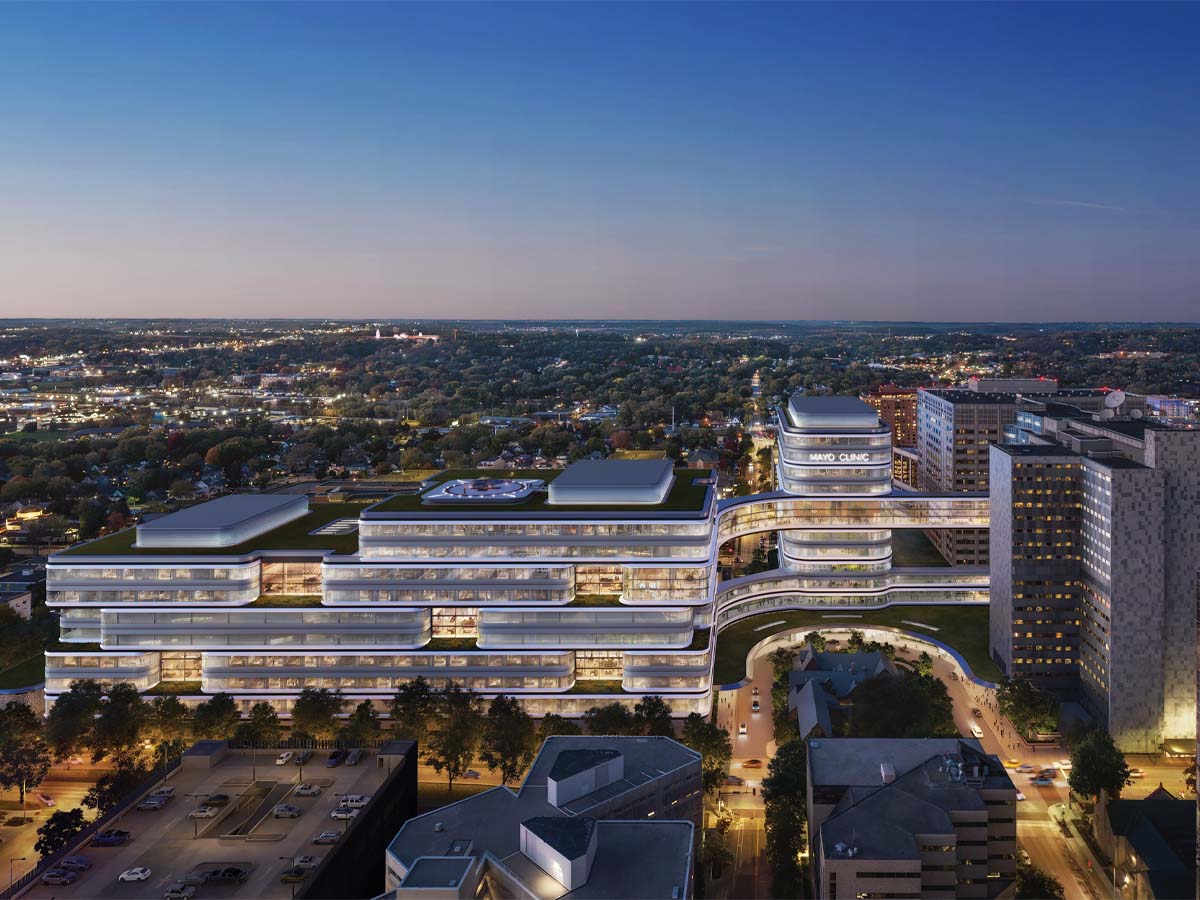
This milestone begets yet another: Last November, Mayo’s board of directors approved Bold.Forward.Unbound., a multiyear strategic initiative that will invest $5 billion over six years in new buildings and added capabilities at Mayo Clinic’s Rochester complex. The overarching objective is to integrate physical spaces and digital capabilities to meet patients’ evolving needs across all of Mayo Clinic’s locations.
Key to this approach is designing patient floors to maximize flexibility. Specific spaces or entire floors will be able to shift from patient room to operating room or diagnostic imaging suite depending upon staff and patient needs. Structural and architectural components will allow for future expansion. Bold.Forward.Unbound. spaces will also include horizontally and vertically connected “neighborhoods” that will bring services together around common patient needs and diseases, creating continuous care environments that will serve as patients’ “homes.” The goals are to advance teamwork between medical staff, transform the patient experience, and improve outcomes.
The overarching objective of the Bold.Forward.Unbound. project is to integrate physical spaces and digital capabilities to meet patients’ evolving needs across all of mayo clinic’s locations.
The Bold.Forward.Unbound. project in Rochester will construct five new buildings adding 2.4 million square feet of space. Among the new structures will be a new logistics center incorporating robotics, automation, and other technologies to ensure that care teams have the resources they need when they need them. Construction work on the initiative will begin late this year or early next.
Currently, “there are many things happening behind the scenes in partnership with the city and our neighbors,” says Craig Daniels, MD, Mayo Clinic’s physician leader for Bold. Forward. Unbound in Rochester. This includes planning to ensure that disruption to pedestrians, traffic, and businesses during construction is minimized. “We want to have strong relationships with the business community,” Daniels notes. “So we’ve been listening to their concerns and needs.” Mayo Clinic has been convening with area churches and other neighboring entities.
“The Bold.Forward.Unbound. project is about transforming health care,” says Dr. Amy Williams, Mayo Clinic’s executive dean of practice. It will boost interaction between care team members, allowing them to share knowledge when treating Mayo’s complex patients. And it’s being crafted to “make sure we have the data and spaces to deliver the best care of the patient and improve patient outcomes,” she says. That will include not only seamlessly incorporating new technologies but also being prepared for those yet to come. “This is all about the future,” Williams adds.
Among the Ranks
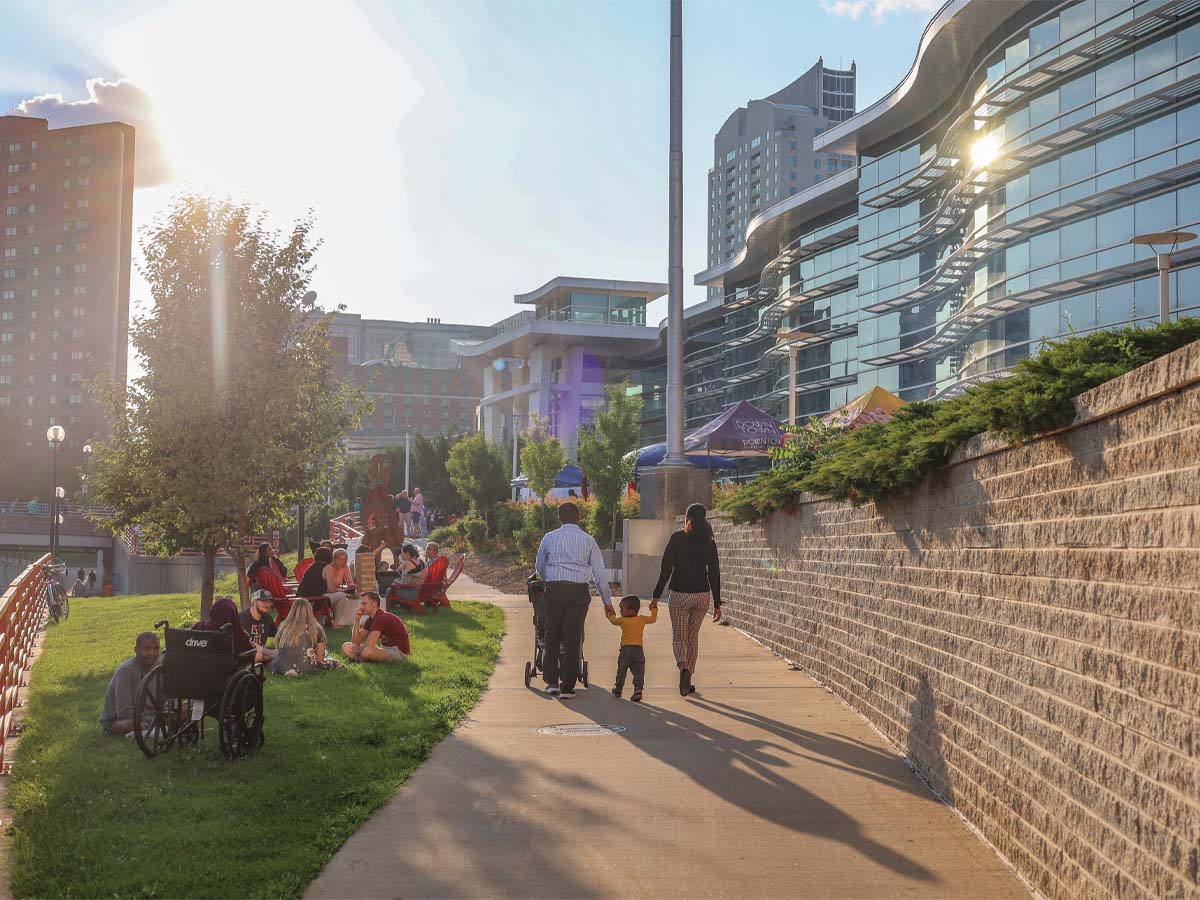
Drs. Stephen Russell and Kah-Whye Peng // Co-founders of Vyriad
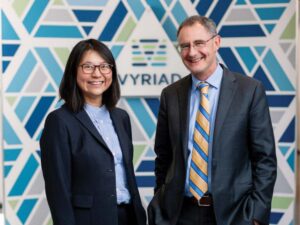 Mayo Clinic has given rise to an expanding portfolio of health-related businesses through the years (according to Mayo Clinic Venture, more than 170 startups have used intellectual property developed at Mayo Clinic). Among them is Vyriad, a biotechnology company that’s developing the next-gen of targeted genetic therapies. At the helm are Drs. Stephen Russell and Kah-Whye Peng, who built the Department of Molecular Medicine at Mayo Clinic in the late ’90s. The pair have remained committed to keeping Vyriad since its 2016 founding, even as prospective investors tried to sway them to relocate their operations.
“The venture capital investors, some of them just said, ‘Well, if you’re not in Boston or California, we’re not interested,” says Russell. “And others were kicking the tires on it and saying, ‘Why don’t you move?’” Staying close to Mayo Clinic came with its own set of benefits—Vyriad closed a partnership with Regeneron Pharmaceuticals, which has gone on to develop new oncolytic virotherapies. “We’ve built this phenomenal team of scientists,” he says. “I’m really very proud of what we have, and I do think we’re the best viral therapy company that there is in play at the moment.”
Explore the following pages to learn more about Rochester: