Q-rounds App Tackles Unpredictable Wait Times at Hospitals
Q-rounds, a Minneapolis-based health care tech company, recently closed a $1.8 million funding round and plans to expand its software-as-a-service product to at least 12 hospitals.
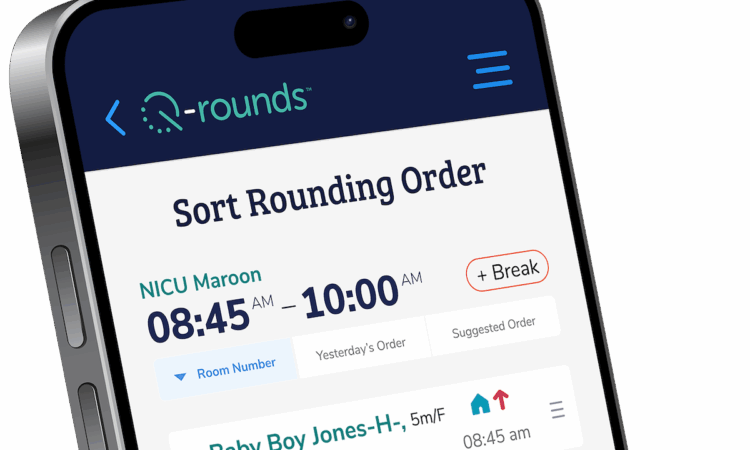
That product is a real-time virtual queue that alerts nurses, patients, and families when to arrive for rounds. Rounds are bedside meetings with patients, patients’ family members, and nurses for daily evaluations and treatment updates.
Q-rounds announced in a press release that it raised the money in venture funding spearheaded by Bread & Butter Ventures, the early-stage VC firm based in Minneapolis. Financing also came from Gopher Angels, Irish Angels, Discovery Capital, and Groove Capital.

Michael Pitt, co-founder and CEO, says this round of funds will help set up the operational and marketing side of the company.
Q-rounds raised an initial $70,000 through grants and non-dilutive funding, followed by a $770,000 angel round led by Groove in 2024 and a $2.2 million non-dilutive grant from the National Institute of Nursing Research. Those funds primarily helped develop the product.
Referring to rounds, Pitt says, “Getting everybody in the room for that conversation is a near impossibility,” and family members and nurses often don’t know when the doctor will show up. The No. 1 question in the hospital every day, Pitt says, is “When will the doctor be here?”
“All of that coordination is a massive undertaking that really never works well. Families are held hostage at the bedside,” he says. “They’re afraid to get a cup of coffee or go to the bathroom for fear of missing that discussion.”
Pitt, a professor of pediatrics at the University of Minnesota, is also a hospitalist at the Masonic Children’s Hospital. As a doctor, he says he has observed inefficient communication during treatment. Elsewhere, as a customer of many different businesses, he has noticed what he calls “time transparency” regarding anything from package shipping to haircut queues.
“I realized, why aren’t we doing that where it matters the most: in health care?”That revelation led Pitt to found Q-rounds.
Q-rounds software is integrated into electronic health records and requires input only from doctors, so nurses and patients don’t have to download anything.
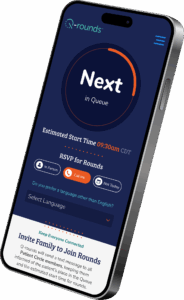
The doctor uses the app to organize patients by order of priority, creating a schedule with estimated wait times that are shared with patients’ family members through text and with nurses through their hospital devices, Pitt says.
Family members may join remotely if they can’t be there in person.
“That’s the core of what we’ve solved, is automating getting everybody there,” says Pitt. “The goal is that this [becomes] the standard of care.”
In March, Q-rounds will complete three years at its first site, the Neonatal Intensive Care Unit at the Masonic Children’s Hospital, which is part of the Fairview system. So far this year, Q-rounds has expanded to the entire Fairview network of hospitals, Pitt says. (Q-rounds is used by another hospital system in Minnesota, although Pitt did not disclose which, as the agreement has not yet closed.)
So far, 50,000 family members have joined hospital rounds using Q-Rounds, Pitt says, noting that nurse and family attendance at rounds at the Masonic care unit has consistently tripled. Daily, more than 60% of families at Masonic are joining rounds remotely using the app.
The company plans to have the app in use at 12 more hospitals, at least, by the end of this year. Of those, five are in North Carolina, marking the app’s first out-of-state market.
With a staff of nine, Masonic may hire more in sales and marketing, Pitt says; otherwise, the new funding round will not alter company size. “The goal is not quantity,” he says. “We’ve always been able to run lean, and I’m excited to not change that mindset just because we have funding.”
Next on the company’s roadmap is a Series A funding. “We, luckily, are in a position where I don’t think we will be raising because we are out of money—we will be raising because we can accelerate growth,” Pitt says.
The company aims for $2 million in annual recurring revenue at the end of this year.