Minnesota Medical Marijuana Patients on the Rise
With cannabis products now widely available at Minnesota gas stations, convenience stores, and even bars, are people still using the state’s medical cannabis program?
According to state data, they absolutely are. The number of medical marijuana patients registered through the state’s program rose to around 40,000 by the end of 2022, an increase of 10,000 compared to the year prior. Notably, the number of visits to state medical marijuana dispensaries per month more than doubled a year ago. That happened after legislators permitted the sale of smokable versions of the plant starting in March 2022.
Medical Cannabis Dispensary Visits in Minnesota
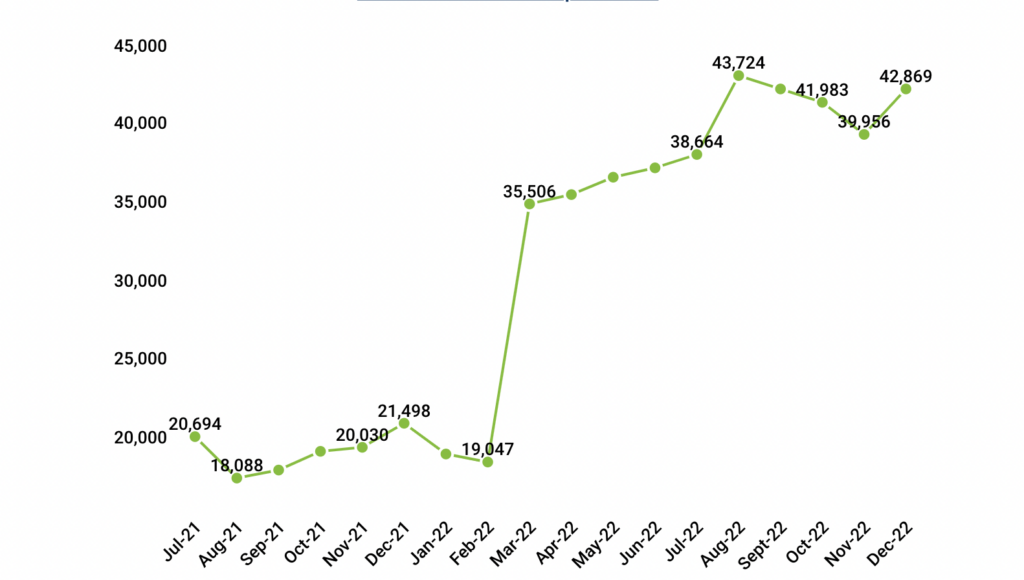
Source: Minnesota Department of Health
After a July state law change made hemp-derived THC products broadly available in Minnesota, some feared the new market would poach patients from the state’s medical program. In fact, last year, Minnesota medical cannabis company Vireo Health filed a lawsuit alleging the state’s new hemp-derived THC edible law unconstitutionally discriminated against its market for edible THC products. Vireo dropped the complaint in December without prejudice, which means the lawsuit is dropped for now though the company could refile in the future.
Vireo did not immediately respond to a request for comment, but the numbers suggest the hemp-derived cannabis market hasn’t really affected medical dispensaries. This might be because the hemp-derived edible law limits the way these products can be consumed. The general population cannot legally consume any form of cannabinoid or THC by vaping or smoking under the current state law.
But under the medical program, vaping has always been an option for patients, said Chris Tholkes, director of Minnesota’s medical cannabis program. Flower — the dried, smokable version of cannabis — was added through a state statute in March of 2022, and edibles were added through a petition process in August.
“There was definitely some pent-up demand for flower,” Tholkes told TCB. “For people who have been self-medicating for many, many years, that is the product that they are most familiar with. They know how it works with their body. They know what they like. So I think there was definitely a demand, and we did see another large spike when we added edibles as well.”
Tholkes also attributes the rise in medical marijuana use to less stigma against it among the general population. The number of healthcare practitioners certified in the medical program has risen to nearly 2,400. Meanwhile, irritable bowel syndrome and obsessive-compulsive disorder will be added to the qualifying conditions for the medical marijuana program starting Aug. 1. But Tholkes notes the vast majority of patients are certified in the program for chronic pain, intractable pain, and PTSD.
“As we add more conditions, I think that is a great thing. It adds more opportunity for people,” she said.
Ultimately, what happens next in the state’s cannabis industry depends on what happens at the state legislature this session. It’s still unclear if a recreational marijuana bill will pass this year. Even if it does, there will likely be more amendments made before anything is signed into law. This means any anticipated impact legalization would have on the medical program remains speculative, Tholkes said, noting “the devil’s in the details.”
Tholkes serves on the National Board of Cannabis Regulators Association and said she can speak a little to what she hears from colleagues about what happens to medical marijuana programs in other states where recreational marijuana has been legalized. Most states that have legalized recreational saw a reduction in medical cannabis patients by about 30% to 40%, she said. This reduction depends on a number of things, including geography, as well as incentives or disincentives for participation in the program.
“We’ve seen some states tax the adult use recreational products very heavily and continue to not tax the medical products, so that would be an incentive to stay in the medical program,” she said. “Additionally, there might be some unique products that continue to be available on the medical side that are truly more medical in nature.”
Looking at state data, Tholkes noted there’s continued interested in medical marijuana across ages, races, and regions.
“We see just a reflection of Minnesotans that are participating in our program, and that has not changed over time,” she said.