Burn Scars: The Mysteries of the Lutsen Resort Fire
Just after midnight on Tuesday, February 6, 2024, Lutsen Resort general manager Edward Vanegas’ phone rang. With over a decade of experience in hospitality, Vanegas had received automated alerts for malfunctioning smoke detectors or low batteries before. But this was different.
“Trucks are dispatched. We have live fire,” a dispatcher told him.
“Live fire?” he repeated.
Within minutes, Vanegas was in his pickup truck, racing through the darkness along dirt roads, then Highway 61. The 35-minute drive was tense and silent except for repeated attempts to reach resort owner Bryce Campbell.
Each call went to voicemail. Text messages got no response.
Around 1 a.m., Vanegas phoned Campbell’s husband. “There’s live fire,” he told him. “I can’t find Bryce.”
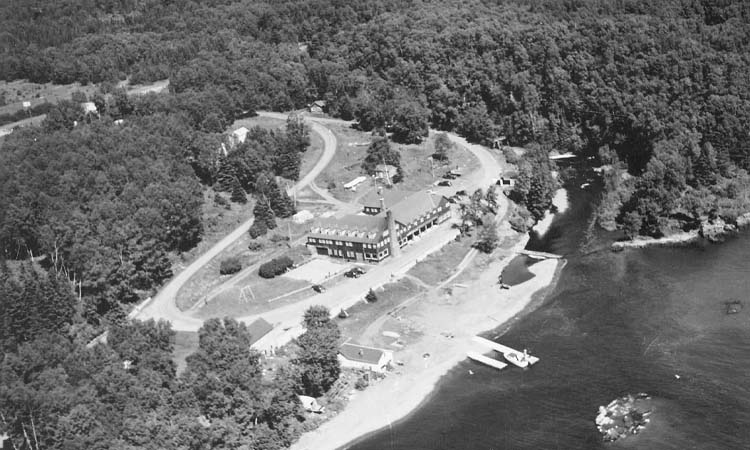
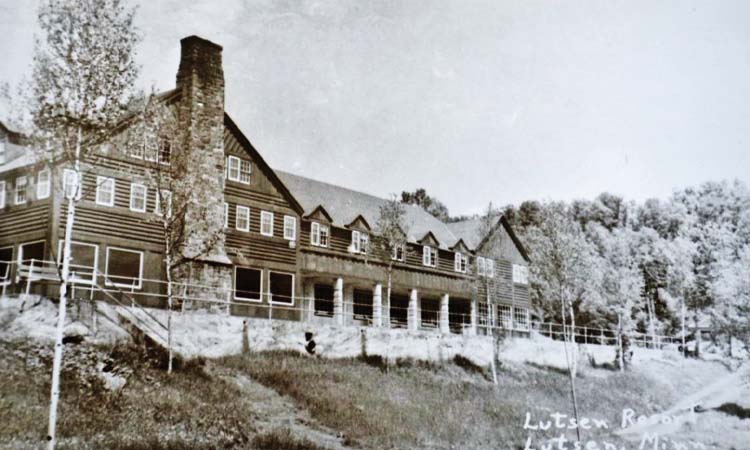
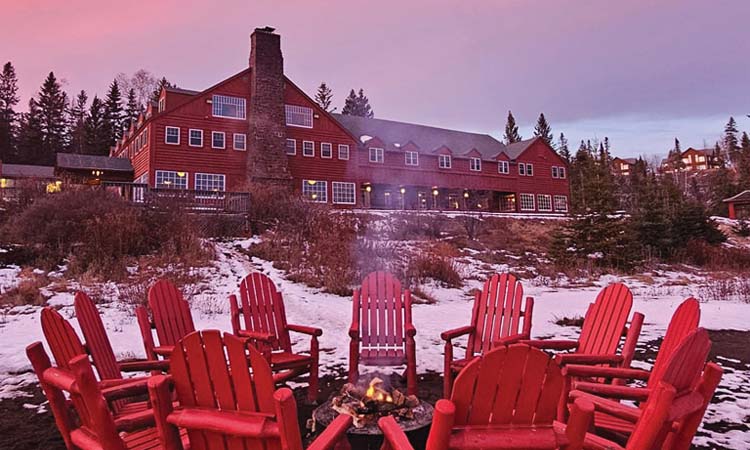
As Vanegas approached the property, the scale of the disaster became apparent. Thick, black smoke billowed into the night sky. Seventy-foot flames churned above the 72-year-old red lodge overlooking the Lake Superior shoreline.
Cook County Sheriff Patrick Eliasen arrived around 2 a.m. and saw the building fully engulfed. The loss was personal. He remembered childhood visits to the lodge pool, family dinners, and performances there as a guitarist.
For 16 hours, Vanegas remained at the scene, watching what he later described as “the biggest bonfire” he had ever seen. And nearly a full day after the blaze, he had still not heard from Bryce Campbell.
By mid-morning, one of Minnesota’s oldest continuously operating lodges, with roots dating to the 1880s, was reduced to rubble. Firefighters continued to pour water on the building for three days straight.
The weight of the moment rippled beyond the property. Reporters Kalli Hawkins and Kirsten Wisniewski from radio station WTIP in Grand Marais scrambled to confirm details as their website crashed from heavy traffic.
“Many people have come up with conspiracies online as to why there was no one inside on [the night of the fire],” Vanegas explains. “We had no reservations. We had guests on Sunday, and guests coming Wednesday, but we had a couple empty nights.”
Generally, the resort had few to no guests early in the week. That, coupled with the lack of snow that winter, translated to a visitor drought on the North Shore.
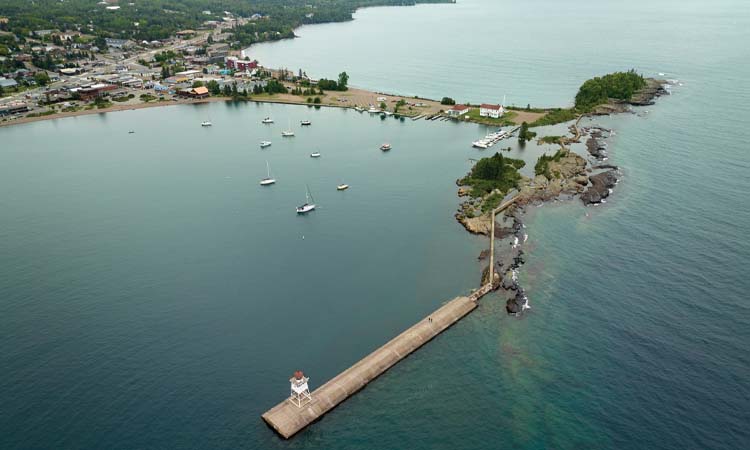
The loss of the resort raised immediate concerns about the impact on the regional economy. Lutsen Resort was an icon of the North Shore, no less than Cascade Falls or the Grand Marais lighthouse. The region attracts approximately 1.2 million tourists annually, according to Visit Cook County. Over 80% of Cook County residents work in tourism.
Campbell told investigators he saw his restaurant staff on Feb. 5 during his workday. He later testified in insurance proceedings that he left his condo in Two Harbors “around 10:40 p.m.” He allegedly entered the building through a side entrance, so the night watchperson didn’t know he had returned right before midnight, investigators say. About a half hour later, surveillance video from a nearby business and a sheriff’s deputy captured Campbell’s SUV heading north, with footage showing it within two miles of Lutsen.
Two days later, Campbell told fire investigators he had an alibi. He says he went home on Feb. 5 to his condo at Superior Shores Resort in Two Harbors, which his company bought in 2020, and ordered a Domino’s pizza.
A month later, his story changed. Once again, Vanegas’ phone rang.
“I have to tell you something,” Vanegas recalled Campbell saying, with nary a hello. “I was there. I went back to the resort. I had to pick up something I left a couple days before.”
“At that time of night?” Vanegas responded.
“I am sorry my personal choices have impacted the business,” Campbell told his former business partner.
In March 2024, state fire marshal’s investigators found evidence that suggests the fire had been set. Officials located a wrench “wedged beneath the basement door,” near the lodge’s water heaters, according to their report, ensuring the door couldn’t be opened. Investigators also found the cover of one of the resort’s water heaters on the ground and discovered its gas assembly missing.
In December, Campbell was arrested and charged with felony counts of arson and insurance fraud. The criminal complaint noted that he had searched online for Swissmar, a flammable accelerant.
Does Vanegas believe Campbell set the fire?
“No. I can’t come to that conclusion,” he says. “The financial motive to burn it down is there. Could I see him going down [to the basement] with an accelerant, [disassembling] a water heater, and starting a fire? Not really, because mechanically he’s an idiot,” Vanegas says, laughing.
Vanegas and Campbell had worked side by side for about five years at the resort. Vanegas says he last spoke with Campbell six months after the fire.
Campbell did not respond to multiple attempts to reach him for comment.

A business under strain
Bryce Campbell and his mother, Sheila, purchased Lutsen Resort in 2018 for $6.75 million through North Shore Resort Co., part of the Ontario, Canada-based Campbell Hospitality Group.
Once the Campbells came in as owners, the diverse array of excursions that the resort had long offered its guests dwindled dramatically. Vanegas says Campbell removed kayaks, snowshoes, and ice skates. “We stopped doing hiking trips with guests,” he adds. “The kids’ camp went away. Those were unilateral decisions, and we [as a staff] were surprised by it.”


Contracts with nearby businesses that once generated substantial income had expired, and renovations to create new “VIP suites” at the lodge increased cash burn. Then, one week after the fire, Highmark Builders filed a mechanic’s lien of more than $270,000.
In late January 2024, Vanegas warned Campbell that Lutsen Resort wasn’t likely to meet payroll, which ran $65,000 a month. “These people are working this week for free and they don’t know it,” Vanegas says he told Campbell. “Morally we need to tell [the staff].”
Vanegas recalls Campbell replying, “I am spiraling, and you are being a Debbie downer.”
Court documents revealed Campbell’s mounting financial pressures. He faced more than $14 million in near-due or past-due debts, while his bank accounts held roughly $41,000 just days before the fire.
Campbell has denied wrongdoing, and legal proceedings are ongoing. He was ordered to remain in Cook County after posting $100,000 bail.
For many resort employees, the fire was catastrophic. Roughly three-quarters of the staff lived in the lodge or in dormitories near the property, Vanegas says, and many were immigrants on temporary J-1 visas. Those student workers are vital to the local tourism economy, as most work multiple jobs.
“Many people have come up with conspiracies online as to why there was no one inside on [the night of the fire].”
—Edward Vanegas, General Manager, Lutsen Resort
Lutsen Resort did not own the ski area or most of the other lodging in the region, the big player being Odyssey Resorts, which owns seven resorts north of Duluth, including Caribou Highlands at Lutsen. Bryce Campbell’s North Shore Resort Co. operates Superior Shores Resort in Two Harbors.
Ownership of the Lutsen ski area, Lutsen Mountains, is held by the Skinner family, which operates all alpine skiing in the North Shore region. It also owns Lutsen’s Eagle Ridge Resort.


Cultural loss vs. economic reality
Lutsen Resort’s symbolic importance far exceeded its economic role, says Linda Jurek, executive director of Visit Cook County. While the loss of 90 or so available beds was significant, it wasn’t a large share of the region’s total lodging capacity, which can sleep up to 8,000 people. Nearby properties Bluefin Bay and Caribou Highlands Lodge had expanded in recent decades, creating more competition (and capacity) for visitors.
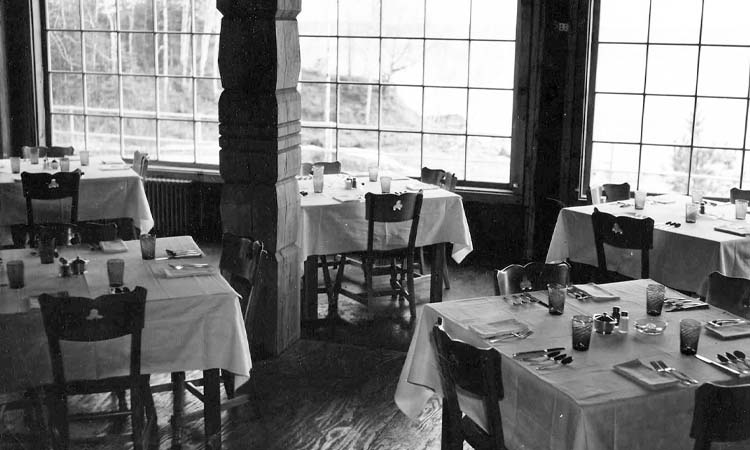
The bigger impact to the region came from the loss of the resort’s two restaurants and its role as a gathering space—a social hub where travelers met, dined, listened to live music, celebrated birthdays, and got married.
North Shore tourism is highly weather dependent, which has made it difficult to assess the fire’s economic impact. “There were so many variables,” Jurek says. Across the region, businesses reported mixed impacts.
In mid-February, Aspen Inn in Grand Marais was quiet. Assistant manager Quawnea Mitchell was vacuuming the lobby before a health inspector was expected later that day.
Winters are the slow season, she says, but notes that this winter has been the busiest of the past three at the Grand Marais inn. She attributes the increase in patrons to the loss of Lutsen Resort. Aspen Inn saw increased bookings as displaced visitors sought alternatives, particularly during the ski season at nearby Lutsen Mountains.
Before the fire, on days Lutsen Resort was sold out, it would send overflow customers to Aspen Inn. Those same visitors returned even after the fire, Mitchell says.
A mile away, Monica Wilson, the property supervisor at Shoreline Inn in Grand Marais, is taking a call on a yellow landline in the main lodge. It’s another reservation for the weekend. The booking leaves Wilson with no vacancy for the rest of the week.
Before the fire, Wilson says Shoreline Inn would have days with zero occupancy. Now, such days are rare, which is why she believes Lutsen Resort’s demise hasn’t soured anyone on the area.
“This winter we’ve had more customers from Lutsen because we do the ski packages with Lutsen Mountains,” she adds.
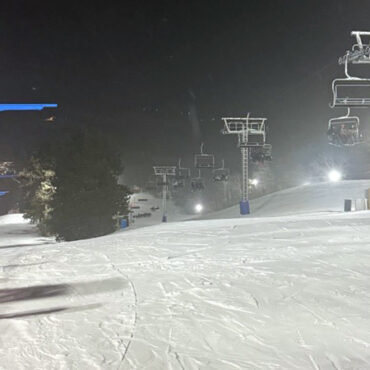
The winter of the fire, Lutsen Mountains generated 25% less revenue than a typical year. Owner Charles Skinner attributes that to a “snowless winter.” (On weekends and holiday periods, the ski area issues more than 2,000 lift tickets on average; on slower days, in the middle of the week, that drops to 700, he says.)
Other sectors, particularly restaurants and small food-related businesses, saw more subtle economic effects. While visitor traffic remained steady overall, the loss of the lodge altered how and where tourists spent money.
By 2025, Cook County’s lodging tax revenues had increased 6.6%, and average daily rates in the region’s lodging industry grew 2%, reflecting continued growth in the North Shore’s tourism economy.
Restaurants see things differently
At the South of the Border Café, owners Mark Johnson and Gene Eliasen discussed their circumstances at a wooden booth, the aroma of freshly baked bread in the air.
Johnson says their business relies heavily on seasonal tourism and saw little direct decline attributable to the fire. Travelers who once gathered at the resort for meals or events have spread out among smaller establishments along the North Shore.
In Tofte, 15 minutes south of Lutsen, Robert Thompson, an employee at Tofte General Store, concurs. Foot traffic has held steady from pre-fire averages. The winter of the fire “was a bad season” for many along the North Shore, he says, adding that the weather likely had a larger impact on the number of visitors than the loss of the resort. During the summer, the store sees over 1,000 customers a day. During the winter, “we’re lucky if we hit 200.”
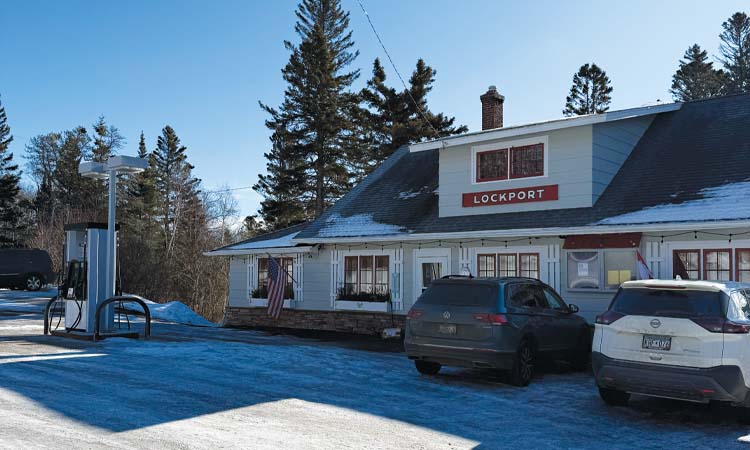
Lockport Marketplace, a longtime breakfast spot, is one of the first businesses people see traveling north on Highway 61 in Lutsen. Even Bryce Campbell used to start his day there, owners Nan Bradley and Deb Niemisto recall.
They believe the broader North Shore tourism economy is stable. Foot traffic and revenue have steadily increased in recent years, and Niemisto described 2025 as one of their strongest seasons, surpassing the busy years of 2007 and 2008.
“We’re satisfied with how our business is running,” she says.
Yet financial stability doesn’t mean the fire left no mark on the business they’ve owned for 32 years. One of the most immediate changes Bradley noticed was a decline in families traveling north for weddings. Lutsen Resort hosted an estimated 50 to 60 weddings annually. These events drew guests who stayed for several days, dined locally, and returned in future years.
“I think if both places were still going strong [with] weddings and concerts, it’d be a lot
busier up here right now. winter and summer.”—Deb Niemisto, owner, Lockport Marketplace
When nearby restaurant/bar and live music venue Papa Charlie’s burned down in 2023, “we lost that clientele, too,” Bradley says, including “band members that would have a little breakfast here.”
“Those two fires really impacted us,” Niemisto adds. “I think if both places were still going strong [with] weddings and concerts, it’d be a lot busier up here right now. Winter and summer.”
Bradley and Niemisto also mention the lack of commercial growth in the area. Most of the North Shore is protected land, in the Superior National Forest or the Grand Portage Reservation, leaving only a small swath of property available for development, much of it concentrated on the Highway 61 corridor along Lake Superior.
Beyond the economic impact, Bradley says what she misses most is the experience of walking into Lutsen Resort and feeling the warmth of the fire burning in the lobby hearth.
Niemisto hopes the resort will eventually be rebuilt, but it would be difficult today to build a structure like Lutsen Resort, explains Dale Mulfinger, a regional architect who wrote a book about lodge architect Edwin Lundie. Replacing the huge white pine beams, for example, would be expensive: “Heavy timber comes at a premium price since we don’t have old-growth trees [anymore],” he explains, and there aren’t a lot of people who practice heavy timber building.
The road ahead
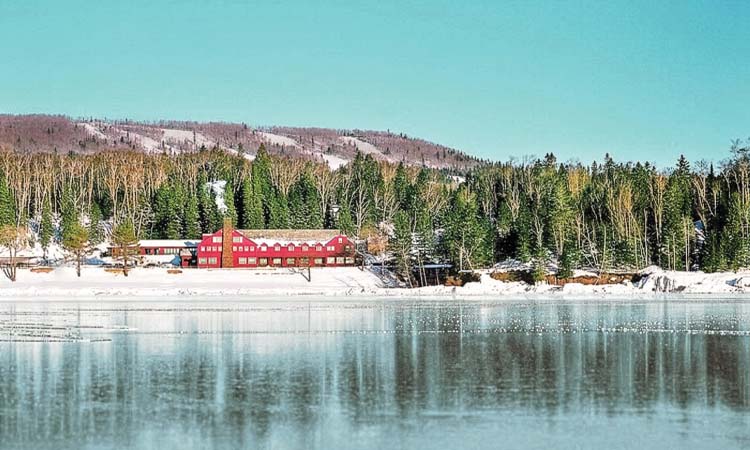
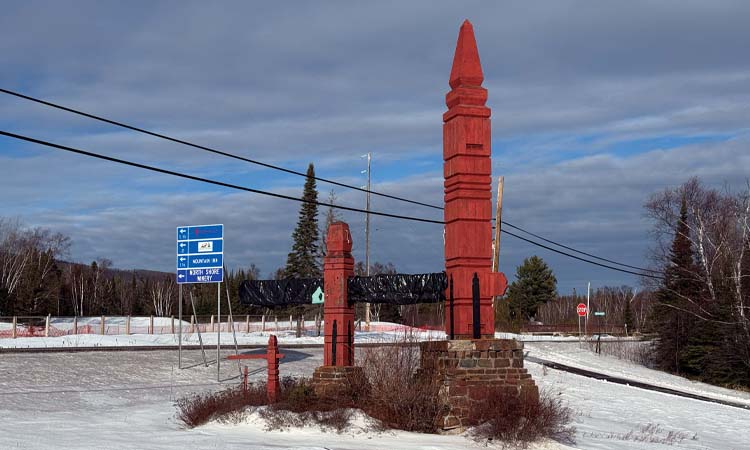
The property where Lutsen Resort once stood remains blocked from public access. If you drive by along Highway 61, you’ll see three red, wooden posts of different heights. What’s missing is the horizontal “Lutsen Resort” sign that two of those posts supported. All you can do now is try to imagine the red lodge that once perched nearly 100 feet from the mouth of the Poplar River as it flows into Lake Superior.
The memories of several generations of Minnesotans are what remains of an iconic edifice with a rich history. Two years after the fire, Cook County Sheriff Pete Eliasen still feels the loss. “It’s horses–t,” he says in his Grand Marais office. “It’s selfish, in my opinion … ‘I’m going to take this away from everybody else for my own personal gain.’ That’s how I feel.”
But visitors still arrive to ski and snowboard, hike the trails, enter the Boundary Waters, or just watch waves crash against the rocky shore. Hotels fill, restaurants bustle, and traffic flows north, day after day after day.