A Little Extra Wind Could Help Shield MN Farmers From Instability Overseas
Minnesota has more wind energy than we can handle, and a project in southern Minnesota wants to use the leftover capacity to power the first local, commercially available ammonia fertilizer.
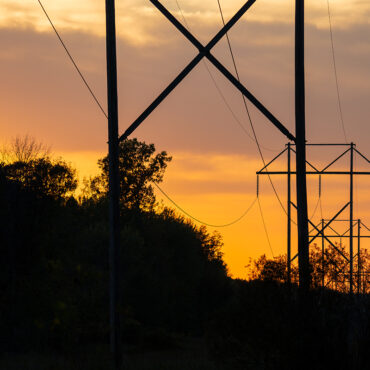
To start, that wind: Minnesota sits in a region that in recent years has had 4-9 million megawatt annual hours of curtailed wind, or wind energy that can’t be used. This region is the Midcontinent Independent System Operator (MISO) area, which includes Iowa, North Dakota, and Manitoba, as designated by the U.S. Energy Information Administration. Wind turbines here have extra capacity that the electric grid can’t take. So, the turbines get shut off. The energy is there, and it’s cheap, but there’s nowhere to put it.
Next, the project: A three-organization partnership wants to create a clean-energy source of ammonia for farmers in southern Minnesota. For them, the local wind surplus is an opportunity masquerading as a problem.
The project is a partnership between Central Farm Service (CFS), a member-owned agriculture cooperative based in southern Minnesota and northern Iowa; TalusAg, a Texas-based ag tech company that makes a modular green ammonia system; and CleanCounts, a Minneapolis-based company that validates clean-energy sources on energy projects so they can qualify for federal incentives.
A project like this has major up-front capital costs. To kick it off, the three organizations are asking the legislature to contribute $8 million from the Renewable Development Account, a fund created with money contributed by Xcel Energy for renewable energy projects as part of its agreement to store nuclear fuel casks at its Prairie Island and Monticello plants. The three organizations’ pitch is that this investment could spur a local industry around “green ammonia,” referring to cleaner generation of anhydrous ammonia, the name for ammonia that’s injected directly into fields in gas form. That ammonia provides extra nitrogen that helps plants grow.
“While venturing into new technologies can be scary, this technology feels like an absolute no-brainer given the extensive benefits to our farm owners in southern Minnesota,” says KC Graner, CEO of CFS. “Ammonia supply and logistics are critical pain points annually and have been historically. To be able to eliminate this legacy issue efficiently made us comfortable quickly.”
Surplus wind energy is key to the project
Minnesota’s wind surplus is a problem made worse by a state tax that funds many of the regions that host turbines. Minnesota’s Wind Energy Production Tax is calculated based on energy production hours. The more wind energy that’s produced, the more the energy developers pay into the state, which in turn distributes the money to counties and towns that host that production.
When wind is curtailed, the counties where production happens—which are primarily smaller, rural counties—are taxed without revenue to show for it. Giving that stranded wind a place to go, in this case toward ammonia production, would drive revenue for local governments. In one example, Murray County experienced a 34% drop in property tax revenue from energy producers between 2020 and 2022 due to wind turbines getting shut off.
Minnesota has been a pioneer in researching this topic. In 2013, the University of Minnesota Morris built the country’s first facility that uses wind power for ammonia production, called the West Central Research and Outreach Center.
Ammonia price spikes and volatility have roiled farms
Farmers across the state have faced major, unpredictable spikes in ammonia cost over the last few years. This project may give some a chance at greater predictability.
Far-away global events have largely driven the rising prices.
Minnesota does not have industrial-scale ammonia production, so farmers rely on imports. “The last time we had ammonia spikes was when Russia invaded Ukraine,” said Rob Davis of CleanCounts. “More recently, it’s the war in Iran. There’s always going to be a global event that disrupts supply chains.”
Graner says ammonia prices have swung by more than 300% in recent years. “Local production gives our member-owners a level of control and predictability they’ve never had before,” he says, “and it strengthens the economic resilience of every farm we serve.”
Beyond the costs, ammonia production is a major contributor to climate change. Traditional ammonia is produced primarily using natural gas. Around 1% of global carbon emissions come from the production of ammonia as a fertilizer.
Today, the project at Minnesota-Morris is producing one ton of wind-powered ammonia each day. The joint venture projects it will produce 40 tons a day by 2028, or 14,000-20,000 tons annually. That would nearly match the annual usage of anhydrous ammonia by the CFS farm cooperative’s members. Yearly anhydrous ammonia usage in Minnesota is around 150,000-250,000 tons per year.
CFS has pledged to make a major investment to get the three-partner project off the ground. “We will be making an investment of several million dollars of our owner’s money to add the proper storage for the offtake of this ammonia production, and no decision to spend capital is taken lightly,” Graner says.
To Graner, CFS’s cooperative structure has been a benefit. “Our nine elected board members represent the collective membership and are all at-risk farmers as individuals, so they can relate well with what our owners’ farms need for new assets to serve them,” he says.
Despite all the promise, given the major up-front costs, this project will need funding from the legislature to launch, according to Davis. There is hope for a bipartisan solution: The 45V federal tax credit that this project will tap for support appeared in both the Big Beautiful Bill, signed by Donald Trump and passed by a Republican Congress, and the Inflation Reduction Act, signed by Joe Biden and a Democratic Congress.