

First Take: Mono’s New CEO, Jeffrey Gorder
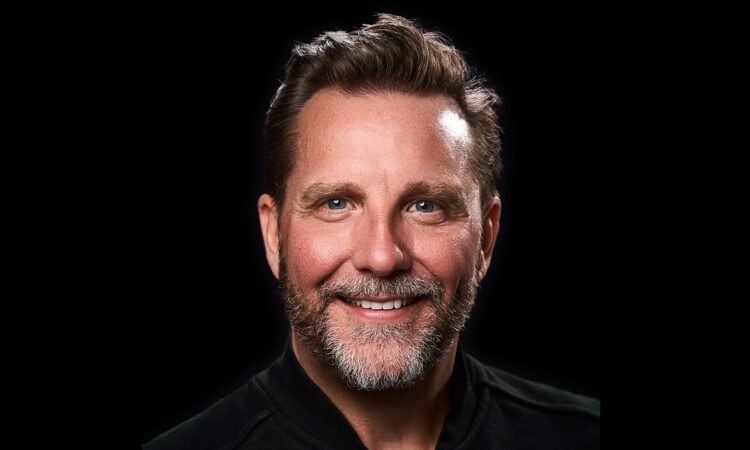
Jeffrey Gorder recalls when Minneapolis held a top spot in the creative-agency market. He would place that era in the 2000s—“when Fallon was really humming. Carmichael. Mono was in that mix. Space150. Colle McVoy. Peterson Milla Hooks. … Design firms like Little & Co. and Zeus Jones.”
Gorder took over Mono last Monday as CEO. He spent a dozen years at the Minneapolis-based “boutique” creative agency, founded in 2003, rising to chief growth officer before leaving to work for a global consultancy and then co-launching his own agency with a specialty in modernization.
The marketing and branding landscape has shifted since the 2000s (Why? Gorder chose not to speculate), and Gorder is an optimist embracing AI as good for the business and the people in the business.
Over the past 30 or so years, he developed his design cred locally. He graduated from the University of North Dakota in 1992 and got a job at one of the big Twin Cities agencies, then named Campbell Mithun (eventually: McCann Minneapolis). He went to Little & Co., where he “fell in love with design,” working with Target at the retailer’s design peak under chief marketing officer Michael Francis. From there, he went to Mono for 12 years, about three of which he spent in San Francisco opening and running a new office. Back in Minneapolis, he started in 2021 with Oliver, a global consultancy based in London, where he helped businesses modernize their in-house creative agencies. His agency, Citizen Inside, works in a similar mode.
He brings that skill set back to Mono, focused on updating client “ecosystems.” These comprise marketing teams, external creative agencies, in-house creative teams, and technology stacks.
“Today, AI allows you to sync all four of those … to create one enterprise, and it becomes an operating system,” Gorder says—“bringing all those things together so they work harmoniously, all in the spirit of making better creative, all in the spirit of connecting more eloquently with their consumer.”
Mono’s holding company, Stagwell, provides the technology stack. “[Stagwell has] partnerships with Palantir, partnerships with Adobe that we can bring, at Mono, to our existing and prospective clients,” he says. Shortly after Mono launched, it formed a partnership with New York-based MDC Partners, which merged with New York-based Stagwell in 2021.
“Jeffrey brings a modern perspective, a strong understanding of how agencies need to evolve,” says founding partner Jim Scott, whom Gorder succeeds as CEO, “and a leadership style that aligns with where our clients and our industry are headed. I am thrilled to pass the leadership baton to him.”
Gorder leads Mono with founder and chief creative officer Chris Lange, “whose creative vision has shaped Mono’s award-winning work since its inception in 2003,” per a press release.
Mono has served such brands as Apple, Google, PepsiCo, Target, and Walmart. Today, its clients include Thrivent Financial Services, Heaven Hill (a multi-brand Kentucky distillery), Ferrara Candy Company (Jelly Bean, SweeTarts), Leinenkugel’s Summer Shandy, and Swisher Blunts. (“Mono’s always been very, very strong in retail and grocery,” Gorder says, adding technology to that mix. “Macy’s was a client last year. Lidl was a grocery brand we brought to North America.”)
“I love Minneapolis,” he notes. “I had other job offers outside of this market, and I chose to come back to Mono in part because I love our creative community in Minneapolis, and I want to be a part of rekindling and leading Minneapolis back to a top-tier creative-agency market.”
The following interview has been edited and condensed.
How much has changed with creative agency work, or with Mono itself, since you were last at Mono? How much has AI reshaped the scene?
I would say the agency is very similar. The industry is very different. And the client needs, based on the industry shifting, are drastically different, as well. I am coming here to help modernize Mono’s offerings with the help of the Stagwell tech stack and, in turn, offer a more holistic, integrated solution to our clients and prospects.
How are client needs different? What are they asking for?
The chief marketing officer’s remit is broadened, given the influx of technology and the proliferation of technology today. Historically, their job centered around developing campaigns and having strategic partnerships with creative agencies to develop those campaigns and go to market. Today, the CMO is not just charged with developing those campaigns but to modernize their marketing teams, their in-house creative agencies, and their roster of external creative agencies. They have to decide how they’re going to evolve that ecosystem, that enterprise, that operating system.
That is what I’ve been doing over the past five years: designing those ecosystems so that marketing, external creative agencies, [and] internal creative agencies all work in harmony. Today, a marketer doesn’t just need the campaign. They need the ecosystem.
Could you describe the capabilities of Stagwell’s tech stack?
Probably the most meaningful [capability] is an offering called The Machine, which is what I would call a marketing and creative services operating system. Basically, it’s an operating system that can help navigate creative all the way from strategy to publishing. So, it’s an operating system that, in addition to our creative, can help streamline the workflow process.
So, The Machine is a piece of technology that both Mono can use in partnership with our clients and, if our clients want to install it into their in-house agency and use it as a piece of technology there, they can also do that. And that’s kind of utopia, if a client wants to use this technology across their ecosystem: use it in their marketing departments to write briefs; use it in their creative department or with their creative agencies to manage workflow, and then flywheel it all the way back to their internal creative agency to help execute work.
Could you walk me through an example?
The first step is to understand organizational design. You go in and evaluate the talent. You evaluate the ways in which they work. What’s their process? You evaluate what technology they’re using. You have conversations, you do interviews, you conduct workshops, you conduct town halls, you do small meeting groups, and you glean how things are organized and how things are organized. Most of these ecosystems and these organizational structures were built decades ago. Today, because of the proliferation of technology, we have an opportunity to transform and evolve them, getting different talent to sit inside the organization, adding to the technology stack, changing the way in which we work, the process, the literal steps of writing a brief, all the way through to producing a piece of creative—because AI and technology can enable a different workflow and a more efficient workflow.
You’ve finished your first week at Mono as CEO. What is your leadership style?
I’m a farm boy from North Dakota. I grew up driving John Deere tractors and racing quarter horses. I grew up in a really small town—2,500 people—and both my grandparents lived in my hometown. When you grow up in a small town and you have so much family there, you learn the value of community, and you learn the value of family. And I think I learned my leadership style from my core family as very empathy based. I always gravitate toward empathy-based leaders.
Monica Little, who was the founder and CEO of Little and Co.—that’s where I started crafting my leadership skills. Jim Scott, who is our exiting CEO, is an empathy-based leader. Michael Hart, one of the original founders of Mono, was an empathy-based leader; Peter Kuhn, who was the CEO of Oliver at the time, was also an empathy based leader.
It’s also a design-practice philosophy. We first need to have perspective and empathy and curiosity for what someone is going through, something that serves well for brands, because you have to be curious and you have to be insightful.
I’m also an optimist. I think, in today’s technology landscape, you have a choice. You can let fear creep in if you think too much about the changing landscape, about where technology is going to take us. And I believe in the promise of technology, not the peril.
How does an empathy-based leadership philosophy play out?
It’s a listen-first mindset. It’s [asking] a lot of questions. It’s seeking to understand. It’s having an open aperture to a different mindset than mine or perspective or experience than I might have.
Can you explain your optimism regarding creative agencies and AI?
A lot of the headlines state that AI is going to take your job, so creatives, strategists—we are all curious and somewhat worried about our livelihoods. If you let that creep in too far, you almost become paralyzed. CMOs and organizations have to make strategic decisions on how to evolve their strategies and organizational structures.
So, my mindset is … to learn and seek to understand what each and every individual department and client CMO is after. You have to be very bespoke. You have to be very custom, and you have to be very curious about what’s what’s important to them, so that you can leverage that optimism, learn from that empathy-based mindset, to design a model and a transformation that works for them and fits their culture and fits their philosophies.
That’s what I am so bullish about. I believe technology will bring us all sorts of intelligence, but I think humanity and creativity will be the point of difference moving forward. Technology will become accessible to everyone. It is today. It’s a matter of choice, how you leverage it. That intelligence is just that—it is intelligence. But what humans bring to the table is wisdom. How do you leverage that intelligence in your own way, within your brand, within your leadership style that works for you, to deliver the results that you want to deliver?