

How Tariffs Pushed Production of a Beloved Spirit from Rural MN to Montreal
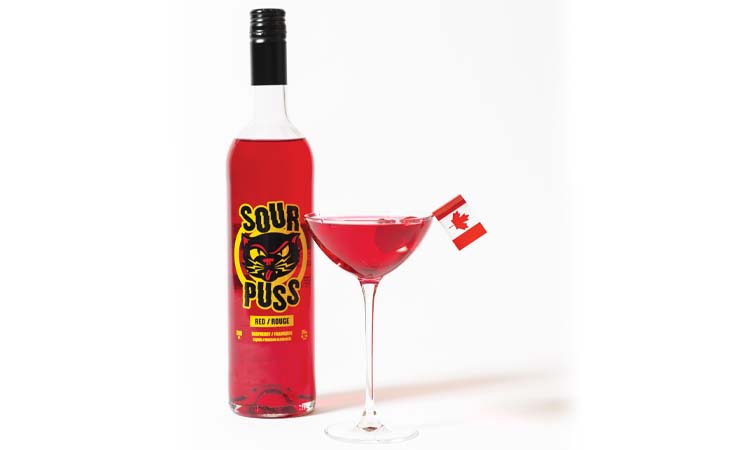
Are you a Canadian college student? If so, you may know Sour Puss. Redolent of Jolly Ranchers, branded with a cross-eyed cartoon cat, these sweetly tart liqueurs are big in Canada and beloved by the coming-of-age crowd. Before President Trump’s tariff saga, they were made in Minnesota, too.
Phillips Distilling Co. started producing Sour Puss in the late 1990s. The nearly 115-year-old family business bottles at its facility in the central Minnesota town of Princeton. A whopping 98% of Sour Puss went into Canada. “The primary flavor that we sell is a sour raspberry, and raspberry flavor tends to be very popular in Canada,” says Laura Donnelly, Phillips’ vice president of marketing, surmising why the liqueur caught on above the 49th parallel. (Sour Puss liqueurs are 15% alcohol by volume; by comparison, Jack Daniels is 40% ABV.)
Last year, when Trump imposed duties on Canadian products, Canada mobilized quickly, and provincial liquor control boards stopped buying and selling U.S. alcohol. (Alcohol imports and sales have been controlled mostly by provincial governments since Canada emerged from its own era of alcoholic beverage prohibition in the early 20th century.)
“This was a significant concern to us at Phillips,” Donnelly says. About 13% of its total production went to Canada, with Sour Puss comprising the “vast majority.” Canadian fans on social media mourned the brand’s disappearance from shelves.
“It was a very straightforward business decision,” Donnelly says: Phillips would contract Sour Puss production to a Canadian bottler. “It’s not easy to start up manufacturing at a different location,” she notes. “Think about when you buy something at the grocery to prepare at home, and it has instructions for an air fryer, a convection oven, a microwave”—a lot of work goes into reaching the same end by new means.
After vetting 19 Canadian bottlers, the company entered a multi-year licensing agreement with Station 22, in Montreal. Sour Puss production began there in November. It’s now back on shelves in all Canadian provinces and territories, and shipping is simpler, Donnelly says.
Phillips averted Minnesota layoffs by replacing lost volume with contract work for other brands. Its Princeton facility actually grew volume by 20% in 2025, Donnelly says. (Phillips earns about half its net sales from its own brands; the other half represents a rough split between private-label and contract work.)
Read more from this issue

Considering the possibility of further tariff adjustments, “I think we’re very comfortable and confident in our [licensing] agreement,” Donnelly says, adding, “We’re happy the Canadian consumer can get their beloved Sour Puss back in their liquor cabinets.”