The Saints Really Want a Ferris Wheel
When the Triple-A Saints announced plans for a Ferris wheel during St. Paul’s big, unsuccessful ask at this year’s legislature, you could hear the snickers. “People were thinking it was a county fair wheel,” quips Saints executive vice president Tom Whaley—something operated by a guy with an eye patch who lives under the grandstand.
Oh, ye of little faith.
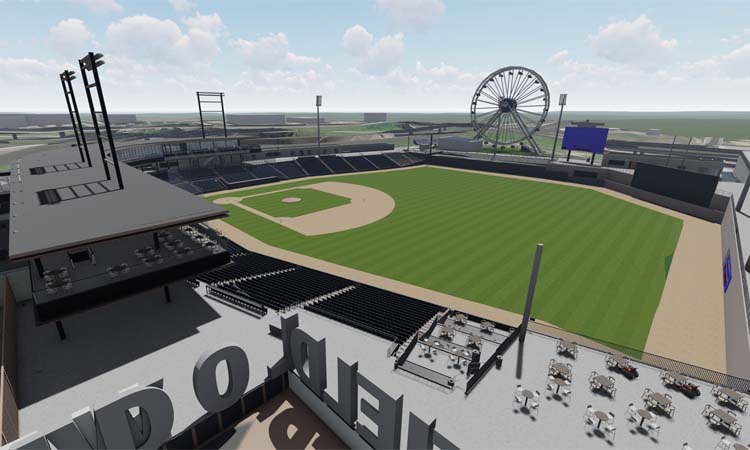
Now, it’s not beyond the St. Paul baseball club to crack a joke. But, in fact, the Saints really want a Ferris wheel. It was originally the brainchild of team founder and ex-owner Marv Goldklang, and though the Saints are under new ownership, ideas come back around. Whaley has taken up the cause, and you haven’t heard the last of it.
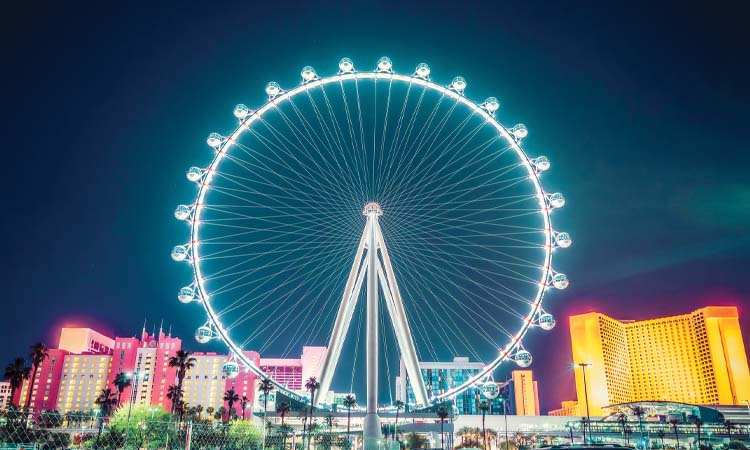
The idea took off during a staff trip to Vegas, where the High Roller observation wheel towers above the Strip. “We rode around for 50–60 minutes, it had a bar cart, comfortable seating,” Whaley recalls, glimpsing the potential. He hired Ryan Companies, which built CHS Field, for a feasibility study. Proximity to downtown airport Holman Field wasn’t an issue, said the Metropolitan Airports Commission.
Whaley likens the idea not to a county fair but the 200-foot-high St. Louis Wheel, which functions as a year-round amenity in a downtown that has struggled. It’s not as elaborate as the London Eye, but more substantial than a traveling midway. The Saints envision it as a group party venue during games and a civic amenity the other 290 days of the year. “We see it as a way to add year-round vitality and be part of a solution for downtown,” Whaley says.
Lowertown, crowded and vibrant as recently as 2019, is a ghost town on non-event days. The Saints would like to partner with the city and state, as they did in financing CHS Field, to address that. “It’s been a successful partnership,” Whaley notes, “so why not extend it for another 15, 20 years.”
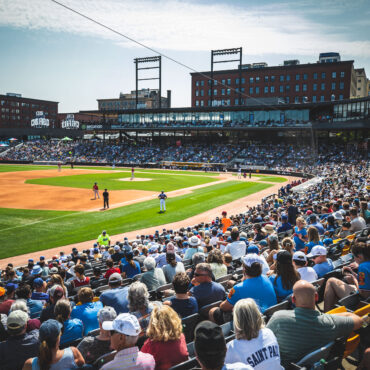
Whaley estimates it would cost $9 million to build a wheel just beyond left field near what is now a pre-game picnic area. He describes the initial reception at the Legislature as “pretty good.”
“The only negative was nothing came of it, but our goal was to introduce the idea to as many people as possible,” with a goal of building a consensus over time.