Relationships Among MSP’s Corporate Leaders Fuel Civic Engagement
Political polarization, activist investors, and increasing time demands on public company CEOs could be used as excuses for corporate executives to limit their involvement in civic affairs.
But they are reasons that were rejected by three well-known business leaders who took part in a panel discussion June 2 at the Minneapolis Club, which was a follow-up to TCB’s February article “Are CEOs Walking Away from Civic Leadership?” The event was hosted by the Harvard Club of Minnesota.
“We will only have thriving communities if we have thriving companies. We need each other,” said Christophe Beck, chairman and CEO of St. Paul-based Ecolab.
“We are at a time where we need CEO engagement the most,” Beck said. But he added that it’s challenging for many top executives to follow through and share their time, expertise, and resources in the communities where their companies are located.
“It’s almost an impossible task to be engaged in the community,” he said. “The world is getting more complicated by the day. How many quarters can a CEO afford to miss [financial projections]? Is it two? Is it three?”
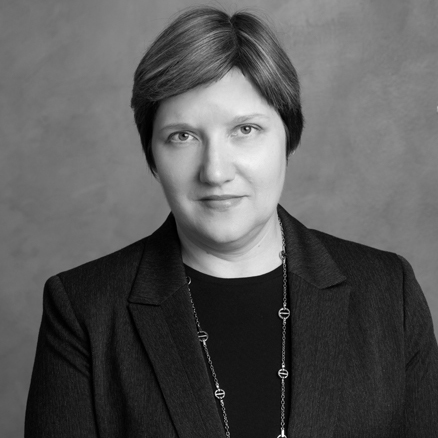
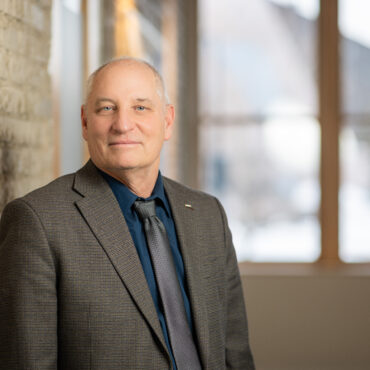
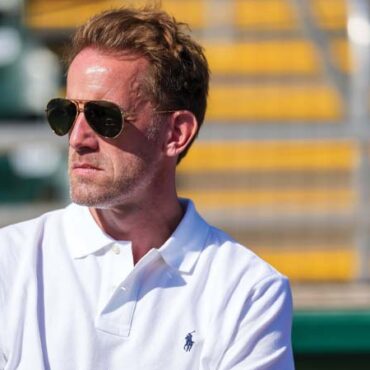
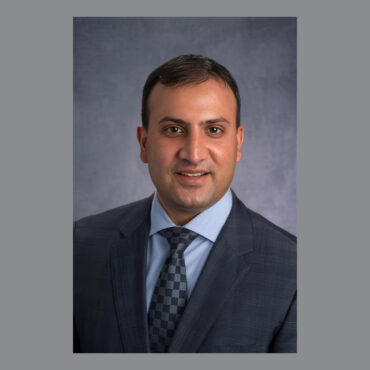
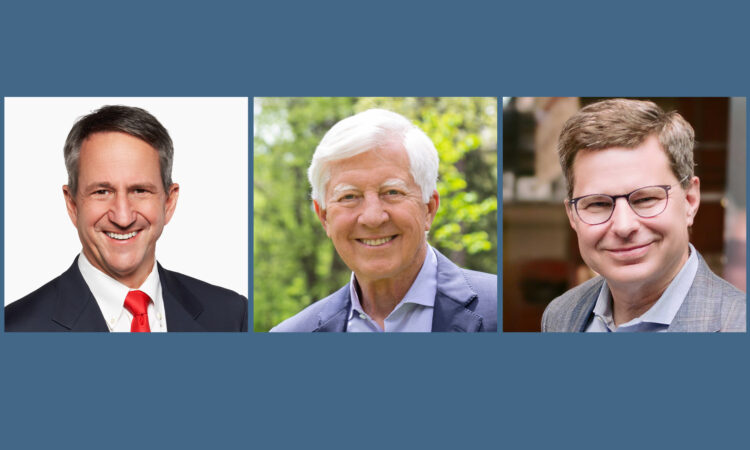
Beck was joined on the panel by Bill George, former Medtronic CEO and executive fellow at the Harvard Business School, and Tim Welsh, former vice chair of consumer and business banking at U.S. Bank and the new president of Chicago-based CCC Intelligent Solutions, Inc.
The three panelists identified why CEOs must make the time to affect civic affairs, but they also stressed that top corporate executives need to foster company cultures that encourage community involvement by employees below the CEO level.
Leader relationships drive involvement
At its core, civic engagement flows from the relationships that corporate executives have internally at their companies and with their peers at other businesses. The civic ethos is transferred and broadened when senior executives and CEOs mentor younger businesspeople and welcome them to the civic arena.
George isn’t a Minnesota native, and he could have moved to Boston after he left the Medtronic CEO role. From 2004 to 2022, George was a professor of management practice and senior fellow at the Harvard Business School where he taught leadership courses. He chose to keep his primary residence in Minnesota, and he often flew from the Twin Cities to Boston to teach his courses.
“It would be naïve to suggest you’re not influenced by the people you work with and see every day and influenced by your community,” George said. When he was a young executive and serving on a United Way panel, he recalled that James McFarland, former General Mills CEO and chairman, told him that he wanted to propose that George become a member of the Minneapolis Club. It was the place where the community’s movers and shakers held their meetings. When George accepted a job at Honeywell instead of Dayton Hudson, he said that former CEO Ken Dayton told him that he was glad he was remaining in the Twin Cities.
While today’s business leaders meet in many venues across the Twin Cities, George’s key point about acceptance and belonging still resonates in 2025. George said that it’s critical for newly promoted executives and those new to the Twin Cities to have the “feeling that you’re really part of something greater than yourself and feeling like you are welcome in the community.”
George and his wife Penny decided to be longtime residents of the Twin Cities and created a family foundation. They support health, leadership, environmental, and other programs. “We love this community,” he said.
Welsh, who joined CCC Intelligent Solutions in March, divides his time between the Twin Cities and Chicago and prioritizes civic involvement in both communities.
Welsh, who spent more than 26 years at McKinsey & Co., was part of the birthing process for the Itasca Project that came into being about two decades ago. The Itasca Project has been an initiative convening business and other community leaders to make the Twin Cities a better place.
It serves as the “dining room table” where “people from government, business, and nonprofits have come together to get to know each other,” Welsh said. He emphasized the need for those gatherings to be continuous, if business leaders are going to be sufficiently plugged in to social and economic needs as well as form civic partnerships.
“Think about how many CEOs change, how many nonprofit leaders change, how many government leaders change,” Welsh said. “Unless we as a community are intentionally in the process of relationship building and relationship renewal, we can’t get anything done civically because we won’t know each other.”
Welsh is referring to in-person meetings, not simply Zoom or Teams virtual meetings. “If we don’t know each other, then we don’t trust each other,” Welsh said. “Then good things won’t happen.”
When the CEO gets involved
Beck chairs Greater MSP, which promotes economic development in the metro region. He elected to spend some of his CEO time to help establish Minnesota as a hub for sustainable aviation fuel, a project that receives Greater MSP staff support.
When he assesses where to allocate civic involvement time, Beck asks himself where “my time can actually make a difference.”
Delta Air Lines CEO Ed Bastian reached out to Beck and enlisted his help on the aviation fuel issue. “Those are projects that are really hard to get off the ground because these models do not exist,” Beck said. “There’s not a company that’s producing sustainable aviation fuel, which is fuel coming from a crop, basically.”
For this initiative to succeed, it requires participation from many partners. “You need to have agriculture, you need to have chemistry, you need a refinery, you need to have an airline, you need to have an airport,” Beck said. “How do you bring those constituencies, those stakeholders together? There is no framework whatsoever for it. That was a perfect example where the CEOs had to be involved.”
Based on business-related time demands, Welsh said that CEO time for specific civic affairs projects could be quite limited. “If we can only get a few hours of CEO time, what is the best use of that time?” Welsh asked. “How can we align that time with the interests of the business and the interests of the community? The answer is generally not going to be sitting on the governance committee of your favorite nonprofit.”
Welsh is a strong advocate of involving people at multiple levels of a business in civic projects. He recently took part in a University of Minnesota event for the Minnesota Young American Leaders Program. “It brings together people from all over the state, in their 30s and 40s, who want to be civically engaged,” Welsh said. “We need to remember that we are part of a decades-long tradition in this community where business leaders, government leaders, and nonprofits have all built relationships and come together, and we need to nurture this.”
While George embraces the participation of mid-level and senior leadership executives in civic endeavors, he stresses the importance of CEO involvement in civic affairs as well as making public statements on important issues.
“The CEO job is far tougher than when I was a CEO,” George said. In the current political environment, there’s “the temptation [for CEOs and companies] to be pulled away from their purpose and their values,” he said. A former Target board member, George expressed concern about the diversity, equity and inclusion (DEI) retrenchment that Target did early this year.
Downtown St. Paul trio
Successful companies often are approached to move to other cities, states, and countries.
“We’re heading for very difficult times,” Beck said, noting the recruitment “competition that we have in Minnesota with other states, other countries that are coming here.” He said that Singapore has established an office in Chicago that’s charged with enticing U.S. companies to locate in Singapore.
“We’re not in a great place right now, so the risk that companies go out is way bigger than companies coming in,” Beck said. He talked about the importance of business leaders and government officials building stronger and better relationships, so they will more fully understand the business climate, economic, and social challenges that exist.
“We have everything we need to win,” Beck said. “So, if we get organized, if we trust each other, if we do [things] the right way, there is zero doubt in my mind that we will get to the right place.”
As part of his civic engagement, Beck serves on the Saint Paul Downtown Alliance board with Securian CEO Chris Hilger. Beck, Hilger, and Minnesota Wild owner Craig Leipold have become a band of brothers for revitalizing downtown St. Paul.
“We’ve become such close friends,” Beck said. They’ve pledged to each other to remain in St. Paul, despite the struggles downtown has faced in the post-Covid period. “It’s this friendship, this relationship, the trust, the commitment,” he said, which propels him to keep focusing on progress.
The Saint Paul Downtown Alliance wants to lead a rejuvenation of the business sector. But it also addresses homelessness and public safety—controversial topics that some executives might want to avoid.
A few years ago, when many citizens were criticizing local police, Beck remembers being invited to a police gala by Todd Axtell, former chief of the St. Paul Police Department. “I decided to go with Nadine, my wife,” Beck said. He remembers thinking: “We need to go there. This is important. We can’t complain about public safety in town and not be there.”
Beck characterized the police social event as “remarkable,” and another opportunity for building relationships among people with very different roles. But he stressed that a CEO needs to choose issues where he or she can have a substantive and positive effect on the community.
“I don’t think it’s right to speak up on everything all the time,” Beck said.
TCB’s senior editor Liz Fedor moderated the civic engagement panel discussion.