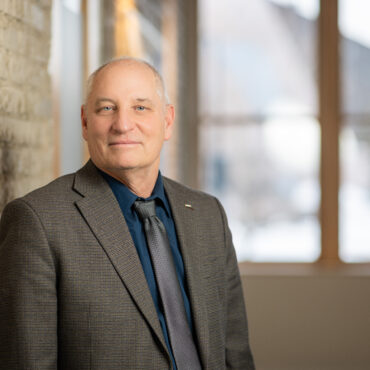
Kathleen Blatz Among Three Arbitrators to Settle Wolves, Lynx Ownership Dispute
When there is a bitter or protracted legal dispute, Kathleen Blatz, a former Minnesota Supreme Court chief justice, is often called upon to resolve it.
This week, she is among three arbitrators who are taking on the thorny conflict between Glen Taylor, longtime Minnesota Timberwolves and Minnesota Lynx owner, and Alex Rodriguez and Marc Lore, minority owners.
Blatz and two other arbitrators will determine whether Rodriguez and Lore met the terms of a 2021 agreement to purchase the professional basketball teams over a period of years or whether Taylor was justified in declaring on March 28, “The Timberwolves and Lynx are no longer for sale.”
In a press statement on March 28, Taylor confirmed the option for Rodriguez and Lore to acquire controlling interest of the Wolves and Lynx had expired.
“Under terms of the purchase agreement, the closing was required to occur within 90 days following the exercise notice issued by Lore and Rodriguez. That 90-day period expired on March 27,” according to a statement from the two teams on Taylor’s behalf.
Rodriguez, a former New York Yankees star, broadcaster, and businessman, and Lore, an e-commerce businessman, argued they had complied with the contract terms and the sale should proceed.
The formal arbitration between the parties is a long way from the folksy, harmonious environment in which the basketball sale deal for $1.5 billion was originally consummated in 2021. Taylor, a self-made billionaire from tiny Comfrey in southern Minnesota, told the Star Tribune, which he owns, that he got to know Rodriguez and Lore when they visited him in Florida.
“Taylor previously said the sale came together over the course of a few days. His wife, Becky Mulvihill, made everyone hamburgers and banana cream pie as they discussed the deal in person at the Taylors’ Florida home,” the Star Tribune reported.
Now the ugly contract disagreement that surfaced more than seven months ago is being arbitrated in the same week that a badly divided nation is choosing its next president.
Enter Kathleen Blatz
The arbitration process is confidential. But Sportico, citing multiple anonymous sources, reported the names of the three arbitrators. Taylor selected Blatz, while Rodriguez and Lore chose Joseph R. Slights III, a partner in a Delaware law firm. Thomas Fraser, a retired Hennepin County District Court judge, is serving as the neutral arbitrator.
Blatz is well known in Minnesota political and legal circles.
Blatz, 70, served in the Minnesota House for several terms, and her legislative service overlapped with Taylor, 83, during the 1980s. Taylor was a state senator and he and Blatz were moderate Republicans.
Before graduating from the University of Minnesota Law School in 1984, Blatz earned a bachelor’s degree in sociology from Notre Dame and a master’s in social work from the University of Minnesota.
Republican Gov. Arne Carlson appointed Blatz a Hennepin County District Court judge just 10 years after she earned her law degree. By 1996, Carlson appointed Blatz to the Minnesota Supreme Court and he promoted her to chief justice in 1998.
Blatz was in her early 50s when she retired from the Supreme Court, and then she entered a new phase of her career. This most recent act has been characterized by work as an arbitrator, board service, and conflict resolution of public issues.
In 2018, Twin Cities Business profiled Blatz for her board service. In the interview for that article, she also talked about being an arbitrator.
In many of the cases that Blatz handled over the past several years, she’s acted as a single arbitrator. “Both sides ask me to do it because I am the neutral,” she said.
“They have a contract, and it says that if they have a dispute, they can’t go to court,” she said. “They have to find a mutually agreeable neutral, and then I get to do those cases.”
At the time of the 2018 TCB interview, Blatz was an arbitrator in two arbitrations structured as three-arbitrator panels. “Sometimes I get the opportunity to do [an arbitration] with two other arbitrators,” she said. “It’s kind of expensive for the parties to do it. But they may want three because of what is at dispute.”
That’s clearly the case in the conflict over who will own the Timberwolves and Lynx, franchises that have appreciated in value since the 2021 purchase agreement was struck.
“How fun for me,” Blatz said back in 2018 when commenting on three-arbitrator panels. “We are the fact finders and then we decide the case together.”
There are significant differences between arbitrations and courtroom trials. “We find the facts, which you don’t do when you are a trial judge,” Blatz said. “You have a jury that finds the facts and you give them the law. But when you are on a three-person arbitration panel, we get to do it all together.” Blatz said she liked the collegial aspect of resolving disputes through arbitration panels.
Beyond serving as an arbitrator, Blatz has been enlisted to address major problems when political systems failed.
In 2011, DFL Gov. Mark Dayton and state legislators couldn’t settle on a budget deal, so state government shut down. A District Court judge appointed Blatz to serve as a special master in the shutdown case. It became Blatz’s responsibility to decide which government services should be funded because they were essential.
In 2017, during his second term, Gov. Dayton called Blatz for help when leaders of the public authority that runs U.S. Bank Stadium drew the public’s ire for providing free suite tickets to friends and relatives.
Blatz became interim chair of the Minnesota Sports Facilities Authority. “My goal was to restore public trust and confidence in the authority,” Blatz said in the 2018 interview. Under her leadership, the chair’s position was converted to part-time with a lower salary, and the authority started keeping a public log of who used the suites.
In a 2018 interview, community leader Pam Wheelock described Blatz as “fearless” and “a truth-teller.” It was Wheelock who invited Blatz to become a Blue Cross Blue Shield board member. Wheelock recalled a policy problem that Blatz uncovered. “To her, it is about the truth and facts,” Wheelock said. “It is around an issue you can’t anticipate that you see how good somebody is on their feet and how their prior life experience prepares them for difficult moments,” Wheelock said of Blatz.