Is It Ever Wrong to Use an Emoji?
When U.S. Defense Secretary Pete Hegseth recently texted his national security colleagues about upcoming war plans for military strikes against terrorists in Yemen, he obviously was unaware that Jeffrey Goldberg, editor-in-chief of The Atlantic magazine, was inadvertently included in the chat.
The ensuing debacle was made worse by Hegseth’s public denial of the March 15 text contents—“Nobody was texting war plans.”—as well as President Trump’s brush-off: “It wasn’t classified information.” Their comments resulted in The Atlantic leadership’s decision to quickly publish full details of the “Houthi PC War Group” text string, sent via the commercial messaging app Signal.
Indeed, 18 government officials, including Vice President JD Vance and Secretary of State Marco Rubio, were in fact posting in real time about secret targets, weapons, and attack sequencing set to unfold in Yemen within two hours of the first text.
Beyond the clear danger to U.S. military personnel from a top-level military leader texting imminent war plans on a nongovernment, unsecured channel, the public was suddenly treated to an inside look at how several men, and two women, Tulsi Gabbard, director of national intelligence, and Susie Wiles, White House chief of staff, reacted to the bombing in Yemen that day.
For those who view the country’s military command as a sober and serious contingent of highly trained officers and Pentagon leaders aware of the gravity of their mission, it was no doubt jarring to see the response of Michael Waltz, then-national security advisor, to Hegseth’s breathless recounting of exactly when, during the ensuing 60 minutes, the next “sea-based Tomahawks” would launch: ? ?? ?.
Waltz, the original organizer of the chat, has been left with the unfortunate task of explaining why journalist Goldberg was mistakenly included in the chat in the first place.
But it may not seem unusual or inappropriate to millions of online emoji users that these images were part of the commentary among top U.S. officials. There was Waltz’s fist and fire emoji, as well as other bro-patriotic communiqués, such as Middle East special envoy Steve Witkoff’s symbolic response: two hands praying, a flexed bicep, and two American flags. The little emojis were prominent in the chat amid Hegseth’s big news that Central Command “planned more strikes ongoing for hours tonight…and were on time, on target.”
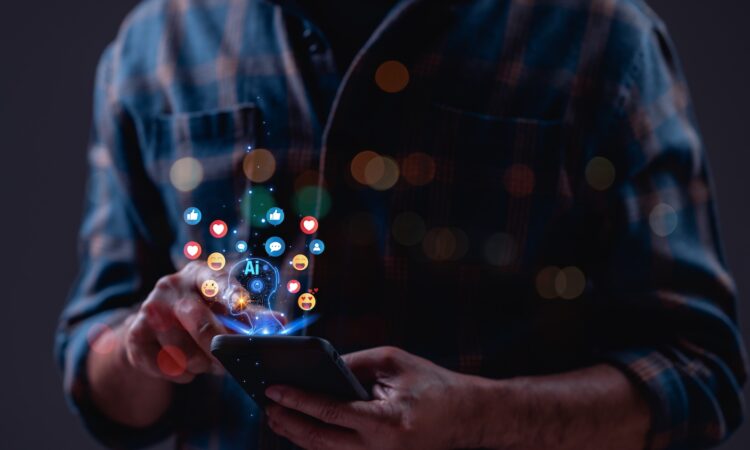
According to Adobe’s most recent U.S. Emoji Trend Report, 70% of U.S. emoji users include emojis in their work communications, because they “make team decision-making more efficient and help users share ideas quickly.” As long ago as 2018, 92% of the
online population regularly expressed their nonverbal intent, or “emotional meaning,” with personal emojis.
Read more from this issue

In an oft-cited Washington Law Review article from that year, “Emojis and the Law,” Professor Eric Goldman referenced court cases where emojis constituted legal evidence of an enforceable contract (thumbs-up emoji), sexual harassment (winking emoji), and premeditated murder (smiling face emoji with the eyes X’ed out).
In a current Bloomberg Law online video, Goldman nonetheless encourages viewers to keep using emojis at work despite possible misinterpretation by the recipients because, “in many cases, they’ll be a better way of expressing yourself.”
For the holdouts who believe emojis represent a spiraling-down from literacy to an online world of raw icons replacing well-chosen words, Wired magazine has the best retort. Calling emoji the “lingua franca for the digital age,” its “Wired Guide to Emoji” traces the development of emoji from inception in 1999 in Japan through Apple’s addition of an emoji keyboard in 2011.
It also reports that the Bill and Melinda Gates Foundation petitioned the Unicode Consortium in 2017 for a mosquito emoji to be officially recognized. Unicode, a sort of United Nations of emoji use, exists to ensure standardization among vendors and platforms.
The Gates Foundation sought a simple way to convey that mosquitoes carry malaria. Explaining why the mosquito emoji had an immediate global impact, Wired noted, “Not everyone can understand English. Not everyone understands the medical consequences of malaria. Not everyone is literate.” But they all “get” a mosquito icon.
Just this past April, I received a business emoji I readily understood but didn’t want to see. During the Wall Street meltdown over tariffs, I desperately texted my financial advisor for advice. His response: the prayer emoji. Really? Upon reflection, it perfectly characterized investor anxiety over the markets on that day.