Good Sports Teams Embrace Common Mission Lacking in the Nation, Some Workplaces
While Minnesotans are collectively suffering through dismal, cold weather in the early days of spring, many sports fans are excited about the final regular season Wild and Timberwolves games and optimistic about a new Twins season.
Sports provide an escape from work and family responsibilities and a break from stressful situations.
But professional sports teams that are fortunate enough to have excellent leadership offer us some lessons for what ails our civic life and many workplaces that are struggling with remote and hybrid work.
On March 27, the Wall Street Journal published a deeply disturbing poll conducted for the Journal in conjunction with NORC at the University of Chicago.
It documented that American citizens have a deficiency when it comes to “unifying values,” even though people have a common interest in taking actions that support livable and safe communities that would benefit everybody who lives in them.
In the poll conducted in early March, 38% said patriotism was very important to them. When the Journal first asked that question in 1998, 70% responded that patriotism was very important.
The survey also showed that fewer Americans think it’s very important to have children, be involved in their community, and value hard work.

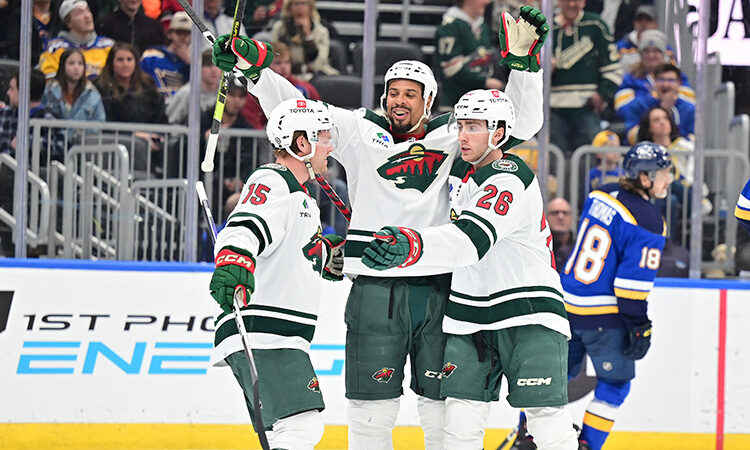
Photo by Debora Robinson/NHLI via Getty Images
“Tolerance for others, deemed very important by 80% of Americans as recently as four years ago, has fallen to 58% since then,” the Journal reported in its story.
This result is further evidence of the erosion in support for a key democratic pillar of robust debate and dialogue. We must have the capacity for open and respectful discussions that can produce workable solutions for complex social and economic problems.
If people shout each other down in the public square or oust people from a political party because their liberal or conservative views don’t adhere to a narrowly defined dogma, then we have little hope of developing sound public policies that endure beyond the next election.
Governing in a city, state, or nation is challenging, and as citizens we will only be able to govern ourselves if fellow citizens—of all races, ages, ethnicities, and political persuasions—feel safe to step forward to serve without being vilified, condemned, or threatened. Reaching a compromise in a democracy is difficult, but one sure way to sabotage any progress is through a lack of tolerance of multiple viewpoints and the people who hold them.
Minnesota, known nationally for fostering a strong civic culture, recently has been experiencing ugly episodes of intolerance at local government meetings and through intraparty feuds.
Team over individual
Of course, in the much smaller world of athletics, it’s easier to develop and share a common mission. But while coaches and team members all say their goal is to build a winning club, many fail to do so because they lack the talent, or they don’t fully embrace a team-first mentality.
The Minnesota Wild, now in first place in the NHL’s Western Conference Central Division, is a great example of a team in which players are putting the team’s goal ahead of their individual needs.
The Minnesota Wild players represent different races, ethnicities, and countries, but they have coalesced behind the goal of pursuing a Stanley Cup championship by working together as one cohesive unit.
A boss looks for reasons to say no. A leader looks for reasons to say yes.
A boss issues orders and demands loyalty. A leader gives direction and takes responsibility.
A boss expects to be the most important person in the room. A leader makes everyone feel important.
— Adam Grant (@AdamMGrant) March 3, 2023
When Bill Guerin, the Wild’s general manager, assesses players to bring into the Wild organization, he looks beyond the hockey skills that a given player possesses. He wants to know whether they will embrace the culture that has served the Wild well.
That culture was clearly on display after a midseason game in which the Wild’s best player, Kirill Kaprizov, had scored multiple goals. When the media asked him about his performance, he said he didn’t think he should be singled out, everybody on the team worked hard, and what was important was that the Wild won the game.
Individualism, which is discouraged by Guerin and Dean Evason, the Wild’s coach, was a major takeaway in the recent Wall Street Journal poll.
“The only priority the Journal tested that has grown in importance in the past quarter-century is money, which was cited as very important by 43% in the new survey, up from 31% in 1998,” the newspaper reported.
A couple of factors may play into that shift. One is that many people are financially insecure, so they are placing a higher value on money because they feel they are on their own and lack adequate safety nets if they lose their jobs. A second is that key leaders in society have emphasized wealth accumulation as the No. 1 measure of success. In earlier years, one’s character was viewed as more important than one’s net worth.
The centrality of mission and the camaraderie that exist within the Minnesota Wild clearly are not in existence in many other workplaces.
Employee disengagement
While the Wall Street Journal poll should be viewed as a warning flare about the state of our civic life, a late 2022 Gallup Poll documented that many workers are alienated from their employers.
About half of the U.S. workforce falls into the category of quiet quitters, according to Jim Harter, Gallup’s chief scientist on workplace issues.
“Many quiet quitters fit Gallup’s definition of being ‘not engaged’ at work—people who do the minimum required and are psychologically detached from their job,” Harter wrote in a September article for Gallup.
“Everyone else is either engaged (32%) or actively disengaged (18%),” Harter wrote. “The latter are ‘loud quitters.’ Actively disengaged employees tend to have most of their workplace needs unmet and spread their dissatisfaction.”
A successful CEO I once interviewed told me that employees can only be happy if their jobs serve a purpose larger than themselves and if they are hopeful about the future—both for their company and how they as employees fit into the workplace.
The decline in employee engagement that Gallup tracked started in the second half of 2021—more than a year into the Covid-19 pandemic.
As employees scattered to their homes to work remotely, it’s not shocking that many for-profit and nonprofit employers struggled to maintain or improve their cultures. Hence, employee disengagement ensued.
Harter wrote: “The overall decline was especially related to clarity of expectations, opportunities to learn and grow, feeling cared about, and a connection to the organization’s mission or purpose—signaling a growing disconnect between employees and their employers.”
Listening to employees
Employees are hired to do work that their employers need done, but the Great Resignation that has unfolded during the pandemic was fueled in part by employees who felt their work was soul-crushing, required a heavy work week on a routine basis, and/or they had bad or mediocre managers.
Effective communication by managers has become even more important during the new era of hybrid and remote work. That begins with listening to employees.
Matt Kucharski, Padilla president, told me in a recent interview that even the best-performing leaders and managers needed to change their behavior as a result of the pandemic.
Kucharski hired a firm to survey U.S. executives and employees, and then he conducted 25 in-depth interviews himself with C-suite executives.
“No. 1 is to listen to and acknowledge what is on employees’ minds,” Kucharski said. That’s precisely what Paul Marvin did after the family-owned company decided to make substantial investments in automation and technology upgrades.
Marvin, CEO and chair of the window-and-door manufacturer, traveled to several states to conduct 41 employee meetings during the first quarter of this year. He wanted to outline the company’s five-year strategic plan, explain how it could affect employee jobs, listen to feedback from employees, and then answer whatever questions employees wanted to ask about Marvin.
By taking the time to do 41 meetings himself, Marvin is conveying to his employees that he recognizes they have extremely valuable information to share about how they do their jobs and what resources could help them do an even better job. He also understands that you can’t simply impose new technology on employees; you need to have a dialogue.
Paul Marvin and the Wild’s Guerin both understand that organizations need to set high expectations and hold employees accountable, but it’s also the role of the leader to help employees succeed.
NHL players constantly compete for ice time. But that competition can be done in such a way that players support each other. That’s what’s unfolded this season with the Wild’s two goalies, veteran Marc-Andre Fleury and newcomer Filip Gustavsson, who’ve made each other better by competing for starts and practicing together.
The Wild’s leaders have enabled that constructive relationship that allows both goalies to get a lot of ice time and derive professional satisfaction from their play.
That example carries lessons for private sector managers, who need to design employee jobs so people can make strong contributions to their employers and feel good about and be challenged by the work they are doing.
Organizational psychologist Adam Grant recently characterized the difference between good and bad management by contrasting what a boss does as opposed to a leader.
In a recent tweet, Grant wrote:
“A boss looks for reasons to say no. A leader looks for reasons to say yes.
A boss issues orders and demands loyalty. A leader gives direction and takes responsibility.
A boss expects to be the most important person in the room. A leader makes everyone feel important.”