Civility at Work
I’m a big fan of swift and efficient meetings, but the most consequential conversations with our editorial team often occur when we veer off-agenda.
One such discussion led to digital editor Dan Niepow’s feature, “The Perils of Politics @ Work”. At a weekly editorial meeting in April, talk turned to a curious news item about a recently fired First Avenue employee; apparently it was because of political views shared on social media that seemed out of sync with the music venue’s code of conduct, which demands “dignity and respect, free from discrimination and harassment.”
As we teach our kids today: Your social media footprint will follow you forever. Divisive posts can and likely will be used against us sooner or later, but this case raised some questions, such as: Should social posts made prior to employment count against someone who has already been hired? And, more broadly, is it reasonable for a business to remove an employee for exercising free speech outside the office?
Niepow answers those questions, and more, in his excellent, timely piece. As our country hurtles toward an unprecedented presidential election at a time of extreme political polarization, we wanted to better understand how businesses here in Minnesota are thinking about politics at work—and whether “off the clock” even exists in the age of social media.
We know that many companies that felt compelled to take a stand on social justice or politics after the murder of George Floyd and during the pandemic are now more reticent to speak up. The shifting tide is no doubt due to our collective fatigue with the state of the world. A recent survey by Gallup, in conjunction with Bentley University’s Business in Society Report, found that less than half of U.S. adults think businesses should take a public stance on current events—41% in 2023, down from 48% in 2022. Worth noting: Those surveyed were more likely to favor businesses taking a stand on climate change (55%) and mental health (52%).
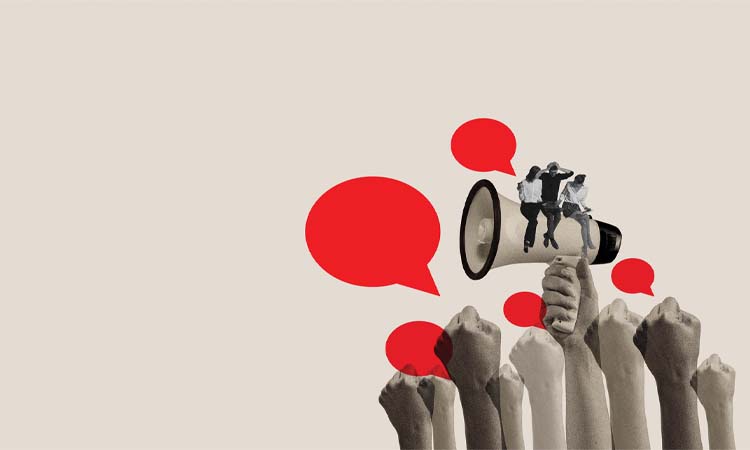
Companies today are more inclined to favor civility over stance. “We’re trying to get to a level of understanding so that both sides can feel heard and understood,” one workplace consultant tells Niepow. A similar theme emerges in Sarah Lutman’s Performing Philanthropy column. Lutman questions whether it’s beneficial today for a nonprofit to be partisan and suggests that words alone have the power to bring people together—or drive them apart. The column lists a few words most likely to provoke either response and links to an AI tool that can actually help flag language likely to be off-putting to your team.
Moral of the story? Get in the habit of checking yourself—before posting a tweet or sending a staff memo. Consider whether you’re adding context, inviting participation and creating value, or fanning the flames of divisiveness.
A recent survey found that only about 40%—well under half—of U.S. adults think businesses should take a public stance on current events.

Last year’s Bentley-Gallup survey also found that 63% of Americans say business has a positive impact on society—an 8% increase from 2022. So there’s hope.
This issue is full of reasons to feel hopeful, like our five Outstanding Directors (page 34)—savvy, thoughtful leaders who share their expertise and lessons in leadership with us, and with major employers in our community. And get to know the Notable Nonprofit Board Members (page 76), who dedicate countless hours to museums, hospitals, housing organizations and other groups that exist to enrich our lives and support people in need.
That’s the energy we want to hold on to.