Amphitheater Mysteries
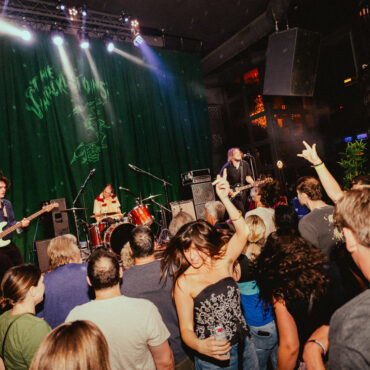
One of the holes in a very vibrant Twin Cities live music scene is the lack of a sizable outdoor amphitheater. It’s a need that was recognized half a century ago as large summer pop and rock tours consistently skipped the Twin Cities. Numerous proposals to build an amphitheater, usually with the Minnesota Orchestra’s involvement, were floated, but none came to fruition.
Weather and seasonality were always posited as a problem, but nearby cold metro areas like Denver, Chicago, and Milwaukee all are home to one or more sizable outdoor venues whose season is roughly Memorial Day to Labor Day, not appreciably longer than a Twin Cities venue would operate.
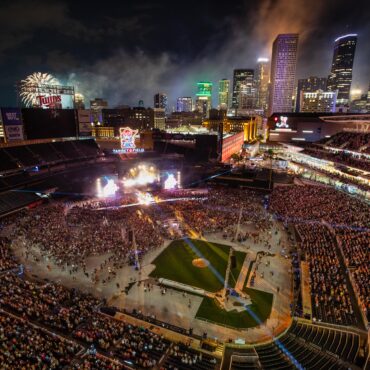
Over the last two decades various venues attempted to take a bite of this apple. The Weesner Family Amphitheater at the Minnesota Zoo holds 1,500. First Avenue has booked acts at Surly’s “Festival Field” (basically a gravel parking lot) for nearly a decade; its capacity is a bit under 5,000. And the new-ish Ledge Amphitheater at Waite Park, near St. Cloud, holds 6,000. But all have issues. Weesner is too small for most popular acts, Surly offers no seating or fixed amenities (other than the brewery), while The Ledge is not actually in the metro area. Really large touring acts can opt for Target Field or Huntington Bank Stadium, but the acoustics are sub-optimal and only mega-acts like U2 can make the economics work.
But after decades of waiting, local music fans’ outdoor dreams are about to come true, and in a very Twin Cities way. We’re getting not one, but two outdoor amphitheaters (oddly, not in Minneapolis and St. Paul, as the pattern normally dictates), one of which is opening in summer. Given previous outdoor efforts foundered on fears of a too-short season and lack of sufficient concert volume to make the economics work, this is a stunning outcome.
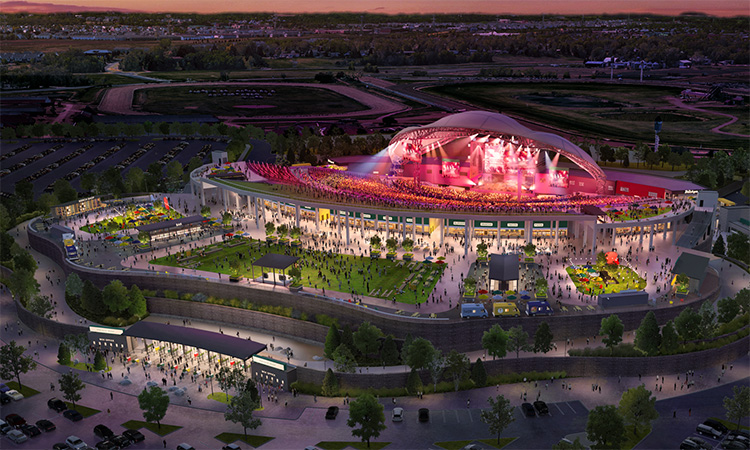
What’s also surprising is that on the precipice of these venues’ emergence, so little is known about them. The first to open will be developer Ned Abdul’s (Swervo Development) 19,000 capacity Shakopee amphitheater near Canterbury Downs, which will open in late summer. Abdul has become a major force in the Twin Cities music scene, renovating the Minneapolis Armory into a thriving venue for EDM and other acts too large for First Avenue’s array of venues. Abdul also renovated the Uptown Theater during the pandemic. Its niche is still evolving but hosts several shows a month.
Abdul is notoriously media averse and has said little about the amphitheater. Swervo recently issued a press release about the project, but Abdul would not agree to be interviewed or let any of his partners speak. (Abdul has sold management rights at Shakopee to national entertainment behemoth Live Nation, which did agree to answer limited emailed questions.)
Shakopee director of planning and development Michael Kerski told TCB that the $50+ million development is notable because its footprint is just over 13 acres, half to a third of the norm for an amphitheater of its capacity. It required an atypical stacked design. He called it “America’s first vertical amphitheater.” The venue, which remains unnamed, shares parking with Canterbury Downs. There is also $400 million in adjacent development underway, featuring housing and entertainment/dining venues on a site known as Canterbury Commons.
The Shakopee amphitheater will offer numerous premium spaces and amenities, much like the Armory. A Live Nation spokesperson said the venue will be weighted toward fixed over lawn seating, which will be elevated at the rear of the venue. Live Nation expects to tap the array of summer acts “specifically designed around an amphitheater setting.” Expect acts being promoted by Live Nation to show up there among others. The city expects the property to receive operating permits in August. No schedule of events is yet available.
The second outdoor venue under development is at what was known as the Upper Harbor Terminal (UHT), a now decommissioned city dock in the Mississippi River in north Minneapolis. It is to be jointly managed by First Avenue and the Minnesota Orchestra and hold 8,000 guests in fixed and lawn seating. The project is roughly two years behind schedule, now anticipating groundbreaking in 2025. Given Swervo’s venue took two years to build, it is hard to imagine the UHT project could open before 2027 or 2028.
The 53-acre, $350 million UHT development, which also encompasses several hundred units of housing, a park, and a health/wellness hub, has been mired in controversy since it was first envisioned 20 years ago, as North Side interests questioned the urban renewal’s benefits to the local community and decried the potential for gentrification. Various community interests have jockeyed for influence and numerous groundbreaking dates have come and gone. The amphitheater is especially viewed with skepticism as its value is seen to be primarily for non-residents.
The City of Minneapolis, First Avenue, and the Orchestra declined to be interviewed for this story. Typically, cities and developers are eager to talk about community assets under development, but the silence here is likely because the stakeholders want to maintain as low a profile as possible until the project is past the point of no return.
Sources in the local music community, who did not want to be identified, say they are wary of oversaturation, believing that for both the venues to thrive, each will need to pull acts from indoor venues as well. They expect some of the Orchestra’s summer season to migrate to UHT (though not all, until the venue’s appeal is gauged), while acts currently being presented at Surly would move north as well. Few believe the project could fall apart at this late date, but neither are observers counting on the current timeline, as this hot-button development rides the volatile waves of Minneapolis politics.