

From Church to Brewery: What’s Next for the Mount Olivet Chapel?
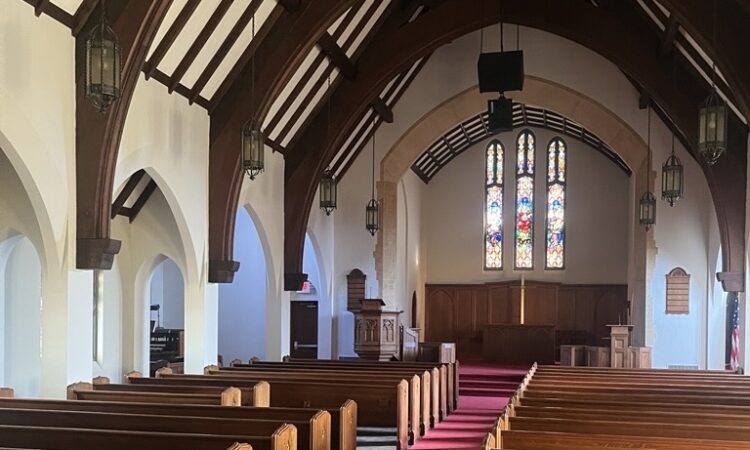
The Mount Olivet chapel, built in 1938 and standing at 1700 West 50th Street, is marked by disuse: asbestos, mold, water damage, a holey roof. Trespassers may be scavenging for copper pipes, senior pastor David Lose says, noting the security cameras. Just the parking lot remains in use.
In the Lynnhurst neighborhood of southwest Minneapolis, it’s across the street from the larger Mount Olivet Lutheran Church, which rose a decade later, in 1948, to house a fast-growing congregation.
Lose wants to tear down the chapel and build a not-for-profit brewery and coffeehouse in its place. He says community feedback has assured him this dense, affluent neighborhood—lacking competition in the brewery market—would support his social mission. That mission is to dispel some of the much discussed loneliness epidemic by means of a new “third space.”
Last month, Lose cleared a regulatory hurdle. The Minneapolis City Council overrode the Heritage Preservation Commission’s denial of the church’s move to demolish the old structure. The HPC, which defends the city’s history, culture, and character by reviewing proposed changes to city landmarks and historic districts, had described the chapel—Gothic Revivalism clad in Kasota stone—as architecturally exemplary, remarkably intact, and prime for other uses.
But the council sided with Mount Olivet’s appeal, written with aid from a commissioned historical review. (The counterargument, in short: The Gothic Revival style wasn’t unique back then, the chapel isn’t a great representation of it, its architects were not Gothic Revival “masters,” and rehabbing the building would be “financially unfeasible.”)
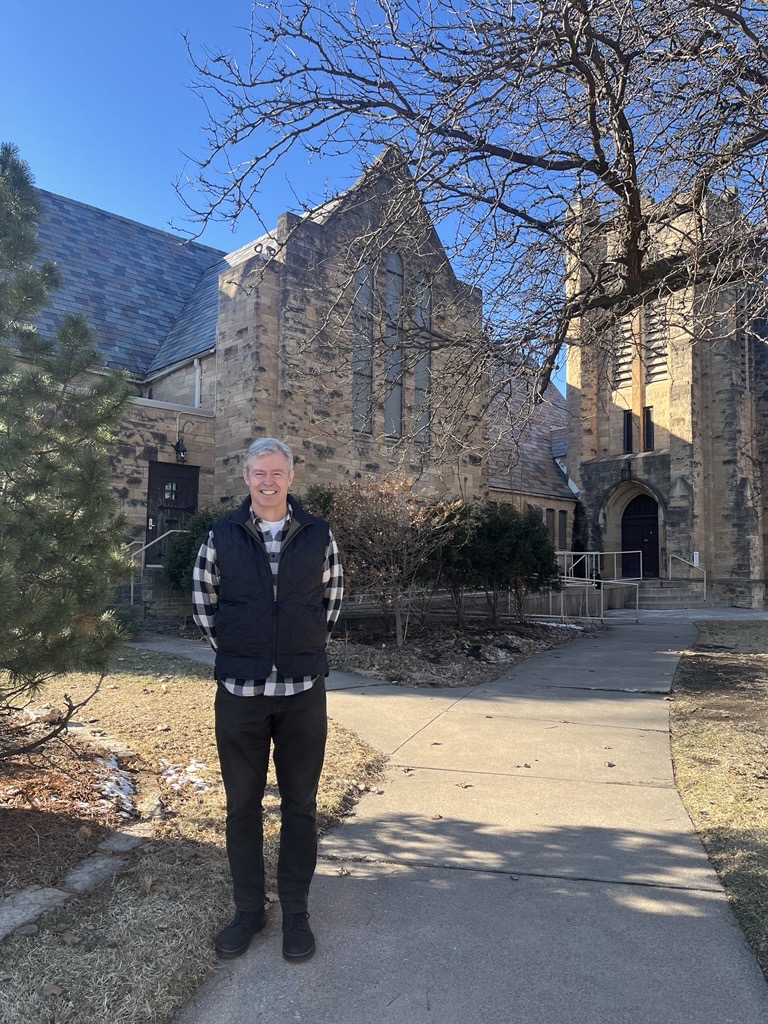
The chapel’s utility faded with time, Lose says: It housed educational programming before Mount Olivet added to its main building in 2017. While it once serviced overflow weddings, couples these days hold ceremonies in their reception venues.
Then, the pastor had an epiphany on vacation in Norway. After beholding stave churches (“ancient, preserved, beautiful”), he dropped into a cidery and thought it, too, seemed “very Norwegian.”
“We don’t need to keep the chapel,” he thought—why not build something that meets the moment? “Could we create a community gathering place, given the pandemic of isolation?” he asks, standing in the nave, not far from a partially collapsed pew.
Restoration and ADA compliance would cost more than $11 million, per a Kraus-Anderson Construction study. As a nonprofit, Mount Olivet can’t apply for tax credits. Lose describes an alternative—partnering with a for-profit entity—as unappealing.
The chapel’s foundation is a bigger issue. For more than 85 years, he says, it has sat atop wood-and-steel timbers sunk into a marshy region near Minnehaha Creek. “About five years ago, we finally figured out how to stop having flooding in our lower level.” (The timbers haven’t received official assessment. “It would cost $20,000 to get down and get samples from that.”)
New construction of roughly equal square footage—15,000—could run $6 to 7 million, per a preliminary estimate cited by the church. “We don’t want to lose a lot of the parking,” Lose says. “We don’t want our neighbors worried about people lining up on the streets.”
Environmental sustainability would likely raise the estimated cost. So would his idea to recycle stained-glass windows into a sort of skylight, inspired by the National Gallery of Victoria in Australia.
Lose mentions several funding options. If not a commercial loan, there’s the Evangelical Lutheran Church in America (ELCA), Minnesota’s largest Lutheran denomination, which has a Mission Investment Fund.
“They function like a bank,” he says. “The rates might be a little better. They’re certainly competitive. The money they generate supports other church-based building projects.” (Mount Olivet tapped the ELCA’s Investment Fund for about half of a $13.2 million expansion of its second campus, in Victoria, he says, which was dedicated in 2019.)
The church wouldn’t own the new space, which wouldn’t have religious affiliation, “and for that reason, I won’t be doing a capital campaign for the church to build this,” he says.
A nonprofit board, separate from the church, would manage it. “It could be that a certain number of board members would be comprised of Mount Olivet members,” he says, but “one of the things I try to stress is that this is not meant to make money for the church.”
The mayor has signed off on the project, per Lose, and the next step is approval on a rezoning application. Then a business plan should come together with help from brewery and coffeehouse consultants. A design phase would follow, then a demolition application. “You wouldn’t normally have to wait for all three of these to be completed before demolishing,” he says.
“Although we’re calling it ‘demolishing,’ we really want to deconstruct it so as to reuse as much of the existing materials as possible,” he continues. Lose doesn’t want to invest in that process until the city totally approves the project. A timeline, given the hoops, is difficult to imagine.
Parish, the thought
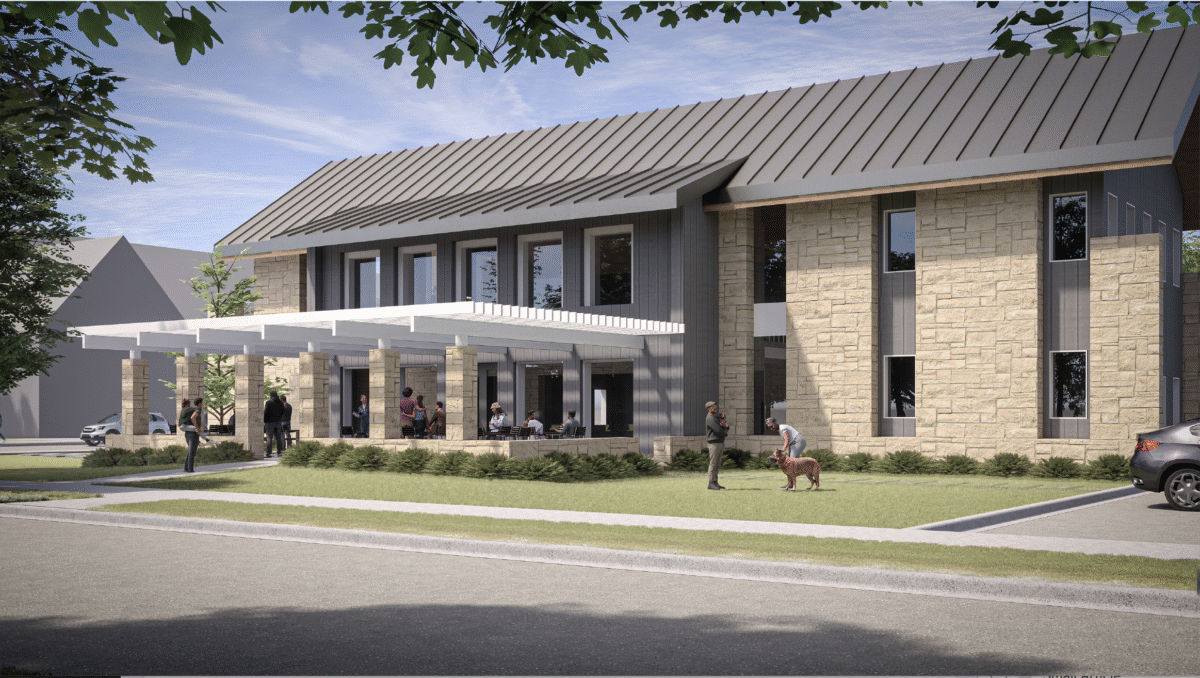
The building would open into a large room, according to a preliminary blueprint—no booths, to encourage mingling. A digital “notice board” would advertise volunteer opportunities. A patio, rooftop seating, a mezzanine level, and several meeting rooms (for book clubs, or tutoring sessions, or other gatherings) would fill out the rest.
To the left, upon entering, would be a small coffee shop and, beyond that, a larger brewery. “I’m less interested in [advertising], ‘We have a space—do you want to operate a shop here?’ I would rather have it be more of a whole,” Lose says, with the brewery and coffeehouse forming in tandem with the new space.
He compares its secular purpose to that of two “affiliated ministries,” also separate from the church: Mount Olivet Home, a senior care community that opened in Minneapolis in 1960; and Mount Olivet Rolling Acres, a disability services organization based in Victoria and founded in 1953.
Lose is aware of market challenges. As his thoughts coalesced, he realized “a lot of breweries are closing.” He looked to Schram Vineyards, which combines a winery, brewery, and restaurant in Waconia, for the coffeehouse idea, to court daytime business in a precarious era for hospitality and as alcohol consumption continues to trend down.
“No matter how noble the mission is, somebody’s got to walk through the door and buy the service,” notes Steve Cramer, now retired, who for years ran Project for Pride in Living, operating several social-enterprise businesses. For patrons, the social mission “can’t overcome a bad business plan or bad business execution.”
Part of the plan will involve earning that 501(c)(3) nonprofit designation from the IRS, which Cramer says typically takes six to nine months.
The one nearby brewery is the small Wooden Ship Brewing Company, about a six-minute drive northwest of Mount Olivet. In Edina, about 15 minutes southwest, there’s also Wooden Hill Brewing Company. (Another nearby brewery-coffee concept, Wild Mind Ales and Wild Grind Coffee, closed last fall, although the space is under new ownership, which wants to keep it a brewery and add food, per Axios.)
Factor in “phenomenal parking,” and Lose feels confident the chapel-cum-brewery can succeed.
“The phrase I’ve been using, both inside the church and to neighbors, is to reclaim that sense of ‘parish,’” Lose says. “‘Parish’ originally was not a designation of an organization that was a church congregation—it was a geographical designation. What I’ve said is, this whole area is our parish. It doesn’t mean they’re all our members. They don’t need to be our members for us to care about them.”