

Q&A: Claros CEO Michelle Bellanca
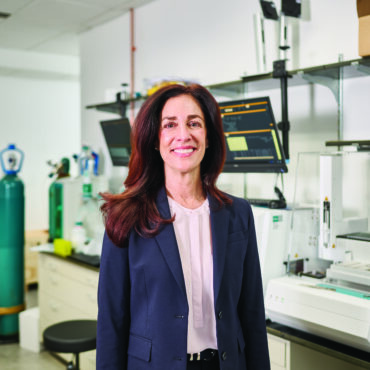
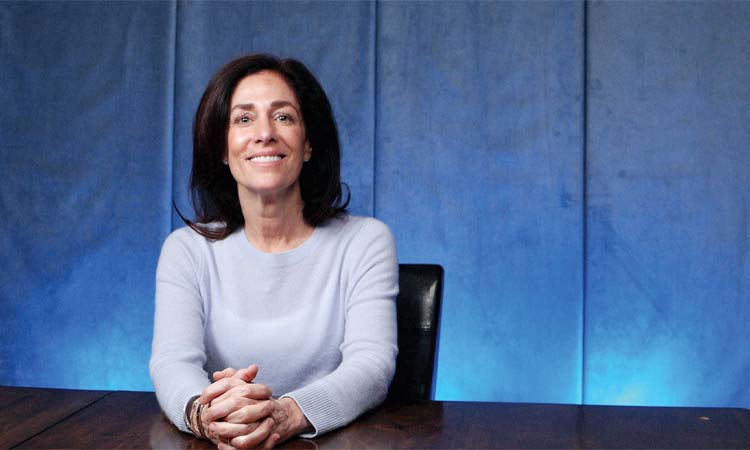
Owning a technology that might just save the world from itself is a daunting burden, but that’s where Claros Technologies finds itself. The Minneapolis-based company is focused on solving one of the most pressing environmental problems of our era, remediating the effect of the “forever chemicals” commonly known as PFAS. Exposure to large amounts of PFAS has been linked to serious illness. Claros Technologies uses a proprietary UV-photochemical process to break the carbon-fluorine bonds that hold PFAS together. I talked to Claros’ CEO Michelle Bellanca for the new Twin Cities Business Show. Bellanca shared her professional journey: a lengthy career at 3M, part of it in Asia, then Claros. Here’s a piece of that conversation, edited for clarity; watch or listen to the full version on our website or YouTube page.
Twin Cities Business: PFAS are chemicals resistant to heat, water, and oil?
Michelle Bellanca: Many people aren’t familiar with the term “PFAS.” They’re more familiar with the term “forever chemicals.” PFAS and forever chemicals are the same thing. What makes them so incredible [is that] in the applications where they’re used, they’re the best. Whether it’s lubrication or heat resistance, these materials are unrivaled in the ability to do that in a very durable way.
Laypeople say, well, just ban them. I thought that early on. But then you learn that 70% of PFAS applications are essential applications—things like heart stents, medical implants, and semiconductors. It’s about how to keep them out of the environment. The way you keep them out of the environment is that you destroy them [before they leave the manufacturing environment]. To do that, you have to have a credible technology that destroys them at high rates and doesn’t break the bank.
We were founded on the mission to economically and completely get rid of the PFAS at the end of the pipe and to allow industrials to continue to use these materials for essential applications where they’re needed.
You grew up in Virginia, ended up in Asia, and later made it to Minnesota. Take us through that arc.
I’m native to Virginia—on the East Coast, not Virginia, Minnesota. At William & Mary, I had this visiting professor. She taught about post–World War II Japan. It was this window into a part of the world that was so different than what I grew up with. She told me about a program working for the Japanese government. I went over there and worked for a couple years. After that, I moved back to New York and had a brief stint with IBM. They transferred me to Caracas. Then I went back and did my MBA in Kyoto.
What parts of Japanese work culture would you like to bring to America?
Many things. They are more patient about financial returns, on average, if they’re also able to see a stewardship component. Much more long-term focused. It goes back to patience.
One thing that fascinated me was about diversity [of perspective]. Your perception is shaped by where you grow up and who you grow up with and how you grow up. It’s what makes you think the way you think. I believe a lot of the best innovation comes out of teams that are diverse in many ways.
What is nemawashi?
It means that we’ve got to cultivate the soil to plant the seed, because if we do that, it will be stronger. I looked at that and said, “People are lapping us. We’ve got to go!” They said, “No, it doesn’t work like that. We will catch up.” And we did! The idea is that proper preparation and buy-in is better than just blowing your way through things.
So how did you end up in Minnesota?
I was at a job fair and saw a big red 3M. I got an interview, and they decided to fly me out to Minnesota. I had never owned a wool sweater. I came out and it was the nice time of year.
That’s how we get you.
Exactly! I spent almost 24 years at 3M across the company in a variety of different positions. I wouldn’t be where I am, and Claros wouldn’t be where we are without my experience at 3M. After a few years at the company, I joined with the top corporate scientists at 3M to scout tech platforms that other companies couldn’t make work, bring them into the company, and see if we could make them work. Some failed, but we had one wild success: multilayer optical film. It’s one of 3M’s largest tech platforms today.
Read more from this issue

We got a big break and brought it into electronics. That sent me back to Asia, where we moved to build out the business in Singapore. At the end of that, instead of coming home, the CEO at the time told me we were starting a corporate venture capital division and asked me if I would stay and run corporate VC for the Asia-Pacific region. I said, “Absolutely!” and I did that for seven years.
How did you go from that to Claros?
[In 2016] 3M wanted to bring me home. There’s so much that’s awesome about living overseas and working for a multinational, but my kids … really didn’t know America. I flew home to hear about my next job. It was a great job—but when I called my husband, he told me I didn’t sound excited. Without a plan B, I resigned. It was hard to explain that I didn’t have something I was going to, it was just something I knew.
I moved back to Minnesota and started consulting. I sat on one of the advisory groups at the University of Minnesota and the professor presented the kernel of the idea that would become Claros. I had the advantage of working at 3M’s [VC] venture and seeing companies that were trying to capture, strip, and destroy chemicals and minerals, including things like PFAS. I threw my hat in the ring to become the CEO. That was the beginning of Claros.
Take us on the company journey.
Half of our seed round closed in December 2019, and the other half closed the day everything shut down for Covid in March 2020. We had two patents—one in PFAS remediation and [a] Department of Defense grant for textiles. The latter allowed us to put very strong anti-microbial, anti-viral properties into textiles. The CDC came to us and said, “Would you make masks?”
We pivoted. We made masks for the CDC. We brought in revenue. Because we were working in health care, we were able to stay open at a lab level. That paid our bills. It [lengthened] our cash runway as long as we could.
What came after?
We had a realization when we went into our Series A that we had to pick a path. There’s a perfect storm building around the need for PFAS remediation, so we picked that. Then, we put the textile business on hold. We bet the farm. We built a world-class analytical lab, which gave us the ability to rapidly innovate.
In 2020, we had a little reactor that looked like R2D2. It could clean about 10 gallons of liquid a day. In 2022, we were confident we could go from doing batches to continuous water flowing 24/7 and destroying 99.99% of PFAS. That’s what we raised our Series A on. We went to the biggest UV maker that does drinking water disinfection for municipalities. We bought one of their reactors and gutted it. We got the best scientists we could get our hands on and built a reactor to use UV light to break apart PFAS.
We debuted that in September 2024 with Daikan, which is one of the largest PFAS manufacturers in the world. We went from 10 gallons a day to 15 gallons a minute. We had been parallel-pathing another reactor at the same time, which we debuted one year later, where we hit hundreds of gallons a minute with 99.99% destruction across all types of PFAS at a very economical cost.
What do the next few years look like?
Claros wants to use our technology to raise awareness about PFAS, because that’s where it starts. We need to stop digging the hole. We have to prove credibility so that industrial [users] trust us. And we have to make the technology affordable enough to get it into as many industrial [users] as we can. Once we do that, we want to move to drinking water, which would mean that we need to be orders of magnitude faster than today.