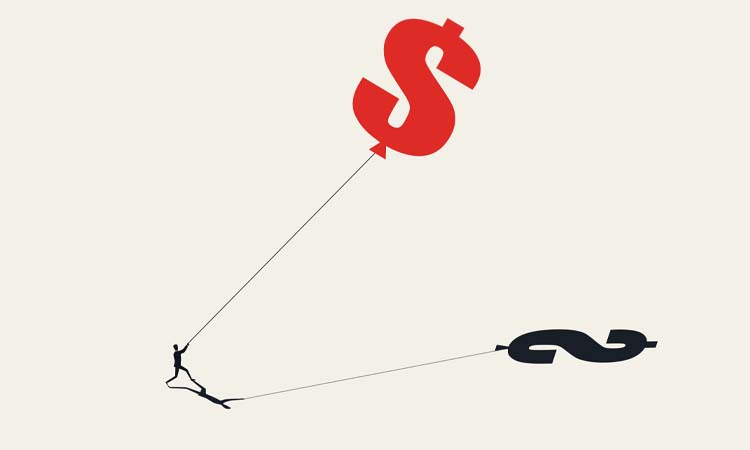
Will Posting Salaries Boost Wages?
Minnesota’s private-sector employers are accustomed to keeping their compensation packages private. When a candidate applies for a job, they typically don’t know what salary they might be offered. That will change dramatically Jan. 1, when Minnesota employers who have 30 or more employees must include a salary range or fixed pay rate on job postings.
Called “pay transparency,” the Minnesota Legislature passed this new provision during the 2024 session with the intent of increasing wage prospects for low- and moderate-income workers as well as closing or narrowing pay gaps between men and women. Should Minnesotans look forward to higher wages?
“It’s likely to boost wages for some employees. That is going to happen,” says Lauryn Schothorst, director of workplace management and workforce development policy at the Minnesota Chamber of Commerce. But she doesn’t expect the new law to lift all boats on compensation. Other labor market experts and employment law attorneys reviewed by TCB share this view.
According to Ryan Nunn, an assistant vice president for applied research at the Minneapolis Federal Reserve, in Europe—where EU countries must implement pay transparency by 2026—there’s some evidence that it does reduce the gender wage gap. The Fed notes that California, Colorado, New York, and Washington started requiring salary postings in job ads over the past five years.
In a 2023 Harvard Business Review article, professors Tomasz Obloj and Todd Zenger reported that salary postings helped women come closer to pay equity. But they said empirical studies suggest that pay transparency lowers overall wages of the broader employee population.
 “By publicly disclosing current pay or pay ranges, employers more credibly commit to not negotiating with prospective or current employees,” they wrote. When pay transparency is in effect, pay for similar job titles becomes more equal, but less performance-based, they said.
“When you enact these policies, they have ‘trickle-up’ effects,” Schothorst says. “You are going to have to address salary and compensation issues for [existing employees who see the postings]. They are going to want to potentially renegotiate.”
For decades, government employers have listed pay ranges based on how jobs were classified. In 2020, the Minnesota Council of Nonprofits started requiring employers to include salary ranges when they posted positions on its job board. Union workers in private-sector workplaces long have had pay transparency in place, but only 7% of U.S. private-sector workers are covered by union contracts.
The new frontier in posting salary ranges is in the private sector, where keeping compensation secret has been a norm.
While Minnesota is part of a trend of states and cities requiring pay transparency, Nunn says that many employers have voluntarily begun to post salary ranges. In the six Midwest states in the Fed’s Ninth District, the percentage increase in posting salary information ranged from 27% to 38% between 2019 and 2023, without government mandates.
John Ella, an employment law attorney with Fafinski Mark & Johnson, says the Minnesota Legislature created a three-link legal chain to increase workers’ wages.
“They passed a law that said you cannot prohibit employees from discussing wages,” he says. That was several years ago; lawmakers took step two last year when the Legislature enacted a law that prohibits employers from inquiring or requiring salary history from a job candidate. “Now we have the third link in the chain,” Ella says.
Leveraging these three laws in combination gives some workers greater ability to elevate their incomes. “If you are or were in a position where you were underpaid, that can perpetuate throughout your career,” Ella says. In 2025, somebody can apply for a higher-paying job and won’t have to disclose their low pay from their existing employer.
While pay transparency helps some workers get paid more, it may limit high performers. “When employers compress or flatten pay in response to transparency, rendering pay less performance-based, top performers are more likely to exit, as they search for organizations more willing to reward their higher performance,” according to the HBR article.
Most employers aren’t excited about the new law, but Amy Conway, a partner with the Stinson law firm, says there are some benefits for them.
The public postings mean companies will learn what their competitors are paying. Plus, she says, “when pay is such a black box,” it can waste the time of companies and job candidates, who go through a lengthy interview process only to later realize their compensation expectations are completely out of alignment.
Read more from this issue

In 2023, the Society for Human Resource Management released research about the effects of posting pay ranges. About 70 percent of employers reported they received more applicants, while 66 percent indicated it had improved the quality of applicants.