Airfares Gone Wild
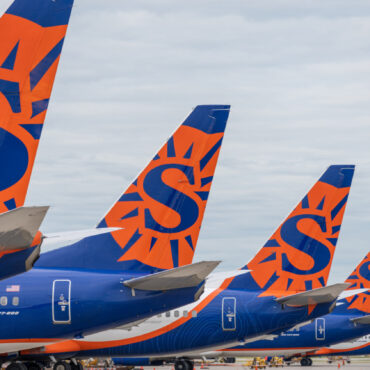
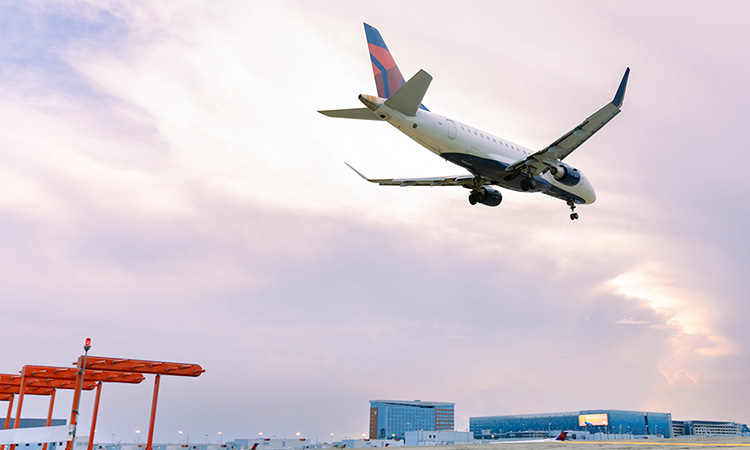
I took a couple trips this winter, one to Phoenix and the other to Fort Myers (dull, I know). I paid nearly $1,000 roundtrip to each place on Delta. Both Fort Myers and Phoenix are high-demand winter airports, but both are also competitive markets where Delta competes with low-cost carriers like Sun Country and Southwest, as well as legacy “network” carriers like American. My travel occurred on off-peak days, and I took flights at less desirable times. It didn’t seem to matter.
I had last traveled in November and fares seemed typical, $300 to $500 to most markets from MSP. But these March prices were double what I expected to pay with two to four weeks’ notice and date and time flexibility. Soon after, I began pricing spring travel to non-vacation destinations and noticed the same phenomena. And you’ve been noticing it, too, judging by random conversations with travelers. (All this was before the conflict with Iran, which has driven fares even higher.)
What’s going on?
“It’s competition, or lack thereof,” says Kyle Potter, executive editor at Twin Cities-based Thrifty Traveler, which monitors airfares and the industry in general.
Until recently, airfares had been the value component in skyrocketing travel costs. United Airlines’ CEO Scott Kirby told attendees at the annual JP Morgan airline conference in March that he expected airfares to rise all year, reminding them that ticket prices had fallen 2% from 2019 to 2025 while inflation rose 25%. Potter agrees that “airfare is a bargain compared to many things in our life,” adding that the cost of a ticket was often “divorced from inputs” like fuel and labor costs.
He points to certain trends in the airline pricing model that explain some of what’s going on. The growth and one-time dominance of “ultra low-cost carriers” (ULCC) like Spirit, Frontier, and even Sun Country prompted the network carriers to purge many advance purchase and length-of-stay restrictions, or penalties for buying one-way. Ticket prices rose merely as flights filled up, so a poorly booked flight could still be cheap for last-minute buyers.
After the pandemic, flyers returning to the skies showed a distinct preference for the amenities of the network carriers, and the ULCCs lost market share and pricing power. Spirit entered bankruptcy twice, while both it and Frontier shrunk. Only Frontier serves MSP anymore, and with fewer flights.
Mojo restored, network airlines are returning to advance purchase and round-trip restrictions, while also incorporating ULCC tactics. Whereas a Delta or Southwest ticket once included free checked bags and seat assignments, today everything comes at a cost. Network carriers have established “basic economy” fares to match the ULCCs, but they price them at what had previously been a fare with amenities.
“The basic fare is increasingly the old economy fare,” Potter says. “It’s not a defensive weapon anymore. Now it’s about charging more for the same thing. With the decline of the ULCCs, [the network carriers] don’t feel the need to compete,” he says. “Delta fares have stepped up quite a bit over the last four to six months and again more broadly in the past few weeks,” after the Iran conflict started.
TCB looked at nonstop airfares from MSP for a Friday-to-Tuesday roundtrip in April, well after Easter weekend, with a two-week-plus advance purchase. We priced a traditional economy ticket on the network carriers, as a business traveler might, which includes the option to buy an assigned seat plus frequent flyer credit. (A checked bag and aisle or window seat will cost at least $60 on Delta, by and large, while an assigned seat and bag add at least $45 to Sun Country fares.)
It wasn’t long ago that such a search would have exclusively produced fares under $500. Now, it’s hard to find a fare that isn’t over $500.
| From MSP to… | Delta Fare | Other Airline | Fare |
| Orlando | $459 | Sun Country | $318 |
| Chicago | $513 | Sun Country | $361 |
| Seattle | $547 | Alaska | $547 |
| Newark | $559 | United | $516 |
| LAX | $599 | Sun Country | $408 |
| Atlanta | $749 | Chicago ORD* | $420 |
| Salt Lake City | $899 | Chicago ORD* | $697 |
| Kansas City | $963 | Chicago ORD* | $451 |
*Delta is compared to Chicago ORD because O’Hare features competition in the Atlanta, Salt Lake City, and Kansas City markets
Analyzing those fares, certain things are evident: Sun Country remains a value alternative, but there were very few of the $250 and under fares we’ve become accustomed to from the airline. Even Orlando, once a hotbed of $99 off-season fares, is nearly $500 on Delta.
Flights to markets where multiple network carriers compete, like Chicago and Newark, were relative values—if you can even call them that. Chicago, on a per mile basis, was shockingly expensive (there was no price difference between O’Hare and Midway airports). Markets where Delta didn’t face nonstop competition, like Atlanta, Salt Lake City, or Kansas City, were egregiously expensive. We included pricing for tickets into these airports from Chicago O’Hare, an airport with more spirited competition, for reference.
Potter says Delta used to set prices in competitive markets to match Sun Country. But today, “it’s harder to understand what’s the baseline and who’s responding to whom,” he says. “Whichever it is, it seems like the MSP market will bear it,” as bookings remained strong throughout the winter, and spring and summer look robust, as well.