Uptown Boutique Les Sól Calls It Quits
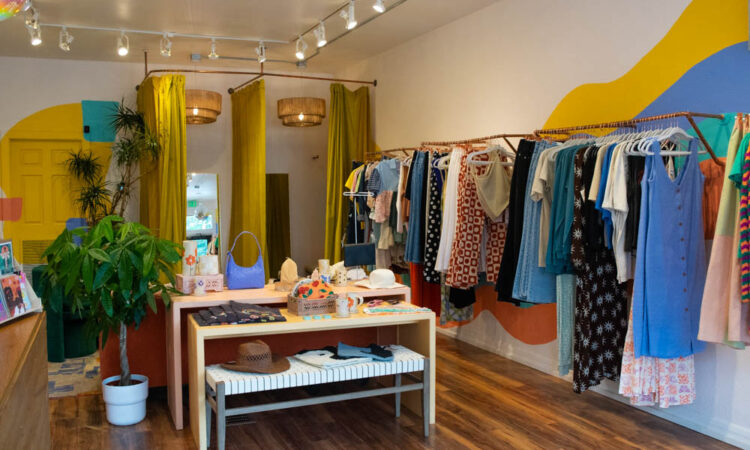
Four years of running a boutique in Minneapolis have cured Mikaela Harrod of wanting to be in retail. The owner of Les Sól says she’s over it. The Uptown shop will close permanently on June 30.
Earlier this week, Harrod announced her decision on Les Sól’s Instagram in a brutally honest post, detailing the many stumbling blocks the boutique has had to navigate since opening in 2020: a pandemic, a tricky economic climate, and now—the final nail in the coffin—major road construction on Lake Street, where Les Sól is located.
View this post on Instagram
“Small businesses in Uptown are hurting. Since 2020 (and even well before that), we feel the city hasn’t done enough to help our little slice of Minneapolis,” said Harrod in the post. “We are sad to close our doors, but in a way, we’re relieved. And, in a weird way, we’re hoping our closing can serve as a reminder to the city that more needs to be done to help other small businesses.”
For instance, the Minnesota Department of Employment and Economic Development (MN DEED) announced the MN Promise Act during the 2023 legislative session, a loan and grant program to support disadvantaged small businesses located in certain neighborhoods around the state.
After looking forward to receiving the grant for months, Harrod found out that Les Sól is three blocks outside of the support zone, and thus ineligible. “Getting that grant would have been nice to be able to support rent through this [economic climate],” she said.
So, at the beginning of 2024, Harrod, along with her co-owner and sister Megan (who works from Utah), came up with two scenarios: a growth strategy and a closing plan. The chosen path would be determined by 2024 results. But when Uptown construction started in February, Harrod said she knew there was no point in waiting out the year. “We were kind of like, ‘okay, well, I feel like the decision has been made for us now.’”
“I haven’t paid myself for a majority of the time we’ve been business,” she said. “So we just decided, instead of going into further debt, we just need to call it.”
Although the Les Sól storefront still had three years left on its Uptown lease, Harrod was able to work out a termination agreement with the landlords. In May, Harrod let go of the boutique’s two employees, leaving her to work the store alone for the rest of its lifespan. “I’m just exhausted,” she said.
It’s tough enough to get people in the door, and then many of them compare prices to fast fashion, or she’ll overhear shoppers say they’re going to search for the same item online. “I’m just at my peak with it. Why force something that’s not working?”
Although Les Sól’s doors are closing, the store won’t disappear completely, said Harrod—between conversations with customers. “I haven’t been able to be away from Minneapolis without being so stressed about the store,” she said. She plans to sell at some summer pop-up events. “We have a lot of debt to pay off, just kind of taking it slow. I am just going to try to recover.”
The 29-year-old is excited to turn a new page in her career to pursue photography and perhaps become a postpartum doula, inspired by her mom who is a nurse midwife. And despite feeling a bit jaded about the retail landscape, Harrod had ample to share about the journey. Here are some of her key takeaways.
E-commerce isn’t exactly the answer
Before Les Sól opened a physical storefront, Harrod launched it as an e-commerce boutique. She and her co-owner had only made a couple thousand dollars in profit before deciding to sign a lease. Lately, Harrod said she is asked with increasing frequency, ‘well, have you tried online?’
“It’s like, ‘yes, we started there,’” Harrod said. But breaking through as a small business online can be even tougher than in a neighborhood, especially if a weaker SEO history makes it harder to show up at the top of Google results. “We haven’t found it super helpful for sales,” she said of e-commerce. “It’s hard to even compete with the brands we’re carrying, let alone other stores.”
Small is not enough
We’ve all seen it. The “Shop Small” initiative flooding social media feeds. This plea to the community to support local businesses was especially prevalent earlier in the pandemic. “The community really wanted to come together and support each other, and it gave me a lot of optimism about the future. But then as we went through it, that idea of community seems so much farther out of reach now,” she said, sharing that there were often long days in the store with no customers.
Since Les Sól announced its closure, Harrod has received many messages from customers who apologized for not doing enough to support the boutique. “But it’s so much bigger than just a few people,” she said.
Although the boutique owner certainly understands the appeal of convenience with faster and cheaper options like Amazon, she pointed out the performatism that can come with “Shop Small” posts, well-intended as they may be. “We just like to post [about a business] and think it’s okay–we don’t put our money where our mouth is. And for a lot of us, we can’t, because we’re broke. But for those of us who can [afford to shop small] … It’s just tough to see that dichotomy.”
The definition of success is relative
A few years ago, being a “girl boss” was the hot persona that Harrod heavily gravitated toward; now, she kind of cringes at that. “I just kind of want to disappear and go off-grid,” she joked.
“[Hustle culture] is glorified so much,” she said, sharing that her retail experience has made her feel like a failure. “There’s that financial pressure of the bills racking up and also the pressure of wanting to show up for my artists who I carry and sell their stuff so we can all benefit together.”
But speaking to the artists and designers that Les Sól carried in store has helped Harrod to reframe what success means. “I did do it,” she said. “I was there to support these people that I really appreciate and admire, and it worked–we did it for four years. It’s just not working anymore.”
“The definition of success is so relative,” she added.
“It’s worth trying”
Despite the bills, the debt, and an all-too-intimate lens into the economic complexities of being a business owner in Uptown right now, Harrod said she’d do it all again. “It’s worth trying,” she said. “I thought about this so much, and I do sometimes regret doing the whole thing, but ultimately, Les Sól was able to create a community that is so special, and that I wouldn’t change for anything.”
Harrod has made countless connections and friendships through the boutique; she’s seen neighbors come and go, but she’s also seen some succeed with their retail business. She also still has high hopes for Uptown, where she and her sister grew up. But she thinks it’s going to take years for revitalization, especially with the construction setbacks.
“I’ve never expected I wouldn’t keep up with Les Sól and keep going for 10 years. I just don’t have it in me to keep going,” she said. “It takes someone really special to keep pursuing this, and I just don’t have the energy. But I do think for the people who really push through, there is hope.”