The Wolves’ Fast Break to KFAN
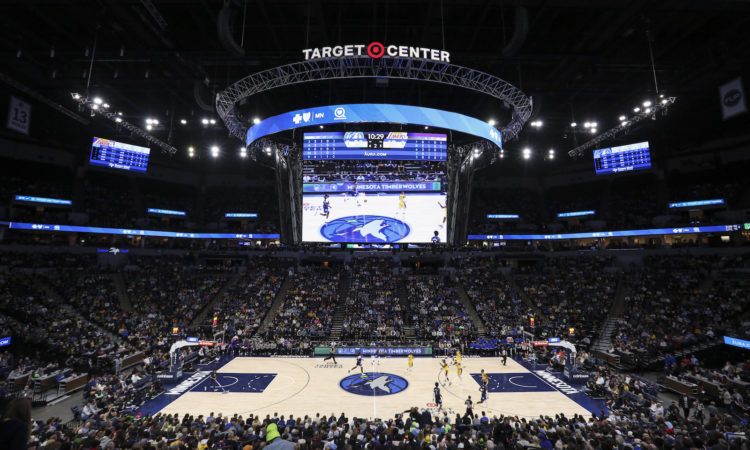
On the last Tuesday in November, the Timberwolves had a marquee home game scheduled versus the ascendant Oklahoma City Thunder. The early season tilt held special interest because a win would leave the Wolves with a chance to advance in the NBA’s new in-season tournament, which was driving high levels of fan interest in a normally quiet part of the season.
On my drive home I turned to the Wolves’ and Lynx new radio home, iHeart Media’s KFXN-FM (dba as KFAN), to hear the game’s first quarter, but the station was airing an inconsequential Wild hockey game in what is looking like an inconsequential season. (The team began the season with a string of losses and had just fired coach Dean Evason.)
The Wolves game broadcast (with longtime voice Alan Horton) was available for streaming through the team’s mobile app, but like a majority of Wolves games this season, did not air on KFAN radio due to conflicts with other team play-by-play partners whose rights transcend the Wolves’. And it’s not just the Wild (with whom there are dozens of conflicts). It’s Sunday and Monday night football and the NFL playoffs. It’s Gopher men’s football and basketball, and March Madness.
Yet the Wolves wanted to be part of “the mothership” (as KFAN calls itself) bad enough to walk away from Audacy owned WCCO Radio, where they were the only winter sports tenant. “We had long been interested in KFAN, but they had a lot of [team] programming,” explains Wolves/Lynx COO Ryan Tanke. When the team’s deal with WCCO expired, “we decided to look at what was possible if we went non-traditional.”
Their arrangement allows for Wolves radiocasts on nights when KFAN is clear of conflicts. Other nights, fans will use a dedicated channel on iHeart Media’s streaming platform (to hear Wolves game broadcasts and other Wolves content) which also lives on the Timberwolves mobile app, that Tanke describes as a “remote control for the game experience. We have wanted to bring our broadcasts under it.”
Included in the deal are cross promotional opportunities on the other eight iHeart stations in the metro area, a few of which are low-power or obscure, but otherwise significant forces (K102, KDWB, Cities 97, Kool 108, News Talk 1130) in the radio market. Wolves players and execs will also have regular appearances on KFAN. Tanke says it’s a multi-year partnership, not one-year as had been reported, and the team is in a “crawl, walk, run” approach to building it out, as the deal came together right before the NBA season began.
iHeart’s station group, the largest in town, with a diverse set of audiences, is key to KFAN’s interest. “We’re excited about those other platforms,” says Tanke, “as our business priority is to double our fan base over the next five years. Each of those stations exposes us to a different [audience] demo.” (Audacy’s group consists of three local stations—WCCO, JackFM, and country station The Wolf.)
Tanke says the team wants its broadcasts on KFAN as many nights as possible, but for the near-term, it’s not going to be a majority by any means. A look at the December schedule shows three of 13 December games on the radio, while in January it’s seven of 17. (iHeart just re-signed Wild through 2028, to a deal that presumably grants the team broadcast primacy over KFAN’s local partnerships.) iHeart market president Greg Alexander would not disclose how the various conflicts are parsed, but presumably the Wolves are the junior partner to every commitment but the Lynx, who play in summer.
Contrary to some reports, Tanke says switching from an AM station to an FM partner was not central to the team’s motivation, “but is a nice plus.”
The deal is traditional in that it follows the pattern of modern broadcast partnerships where there are not rights fees paid (usually by stations, but when interest is low sometimes by teams), but instead the Wolves will sell the bulk of the advertising inventory in their broadcasts and iHeart will benefit by the larger audiences Wolves programming will bring to its platforms plus some cross-marketing. (KFAN airs syndicated national programming on non-game nights.)
Despite the fall/winter gamecast logjams, KFAN was eager to work with the Wolves. “Having the NBA on your air is never not a good thing,” explains Alexander. “KFAN is a monster in this market; being affiliated with KFAN is an advantage.” The station is typically among the top local stations in ad billings and among the most-dominant sports stations in the USA in audience share.
Six weeks into the season, Tanke didn’t have useful data about streaming levels, but expects to have it by early next year. “The streaming data is much better than radio ratings data in your ability to gain insight into your customer,” he says.
As for WCCO, its management declined comment. The station was clearly stung (and puzzled) by the Wolves departure—a blow to the heritage AM’s prestige in the market. Look for WCCO to talk a bit less about the Wolves during Henry Lake’s evening show and for the station to make a run at a new fall/winter team partner, whether it be St. Thomas football or the Minnesota Gophers, or both.
‘CCO retains its broadcast partnership with the Minnesota Twins, which equals the NHL, NFL, and NBA seasons combined in number of available broadcasts and fills the station’s airwaves from April to September. Given KFAN’s groaning buffet of team alliances, it’s unlikely it’d ever have room for baseball. Other than with a highly non-traditional arrangement. The kind of arrangement no one had previously thought possible…