The Fate of Rimarcik’s Restaurants
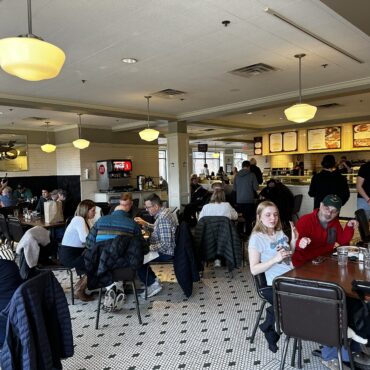
The death of restaurateur John Rimarcik on Monday at 84 left a big question on the minds of the local restaurant community and food fans: what will become of his restaurants? Rimarcik had, by the time of his death, collected an extraordinary group of Twin Cities heritage restaurants: the Monte Carlo, Runyon’s, Pracna on Main, Annie’s Parlour, and Convention Grill, the latter of which was his first “heritage” restaurant purchase in 1974.
Rimarcik was extraordinarily media averse, which meant that his business holdings and their structure was opaque, though friends and associates remember him as a gregarious friend, landlord, and employer, albeit one with an exacting eye for detail and quality. He will be remembered as a conservator, a businessman drawn to assets with historic significance, which he burnished and maintained.
“We know there’s been speculation,” said son Tony Rimarcik, who along with brother Tom Rimarcik, have been part of Rimarcik’s restaurant business since they were teenagers. “But we’re not closing, we’re not selling.” In fact, the company is opening, or at least reopening, several of the restaurants which have been closed since the pandemic.
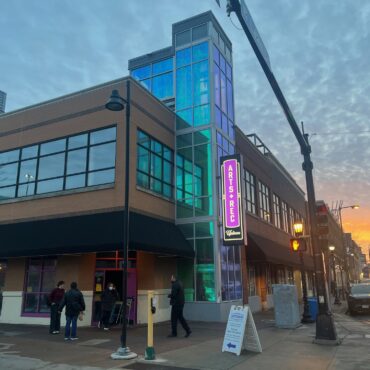
Specifically Annie’s (Dinkytown) and Convention Grill (Edina), which have been closed since the pandemic. Both will open gradually, starting with takeout malt service, ramping up to full operations over an undetermined period of time. Both were heavily renovated and remodeled over the last three years, says Tony, with both material and contractor shortages delaying the projects well beyond that of other local restaurants. Pracna will reopen in summer as an event space. Monte Carlo and Runyon’s are operating normally.
The Rimarcik signature is classic restaurants serving simple, well-executed food. Rimarcik’s restaurant history began when he bought the Peacock on Stinson in 1964. “He primarily considered himself a cook,” says Tom. “He liked to serve people. He was an accidental real estate man.”
He’s referring to the fact that Rimarcik accumulated substantial land holdings in and around downtown over the years, which, at the time of his passing included 450,000-square-feet of office and retail space primarily in Minneapolis, says JoAnna Hicks, CEO of Element Commercial Real Estate, the leasing agent and asset manager for Rimarcik’s portfolio. Among his 14 buildings are some of the oldest in Minneapolis: Pacific Flats and the Lowry Building. He owned what is thought to be last remaining intact historic block in the city, on the west side of Washington Avenue, from Runyon’s to Upstairs Circus. Rimarcik also owned a large portion of St. Anthony Main (including the movie theaters, Aster Café, and the Prince Building).
Hicks says Rimarcik’s heirs are committed to carrying on his legacy: “I think the family is well positioned to operate his real estate at the same level of care. I don’t think anyone can manage it quite the way John did—he was a wildly unique person.”
Many credit Rimarcik for being one of the first to see the potential of the North Loop when it was railroad yards and warehouses in the 1980s. “He saw it long before I did,” says the area’s city councilperson, Michael Rainville.
Rimarcik was drawn to smaller buildings and restaurants with historical significance. “He understood that the buildings, while beautiful, were built on the businesses inside them,” Hicks said. “He invested in and supported small businesses. He believed they were committed to the city and made for a unique neighborhood.”
Rimarcik was not well-known like many restaurateurs, due to his media shyness, yet he developed a vivid reputation among his employees, tenants, and business associates as both generous and occasionally difficult, exacting and charitable.
“He sold shoes, drove a cab,” said Tony, “he was a humble person. People think he was this sly, forward-thinking entrepreneur, but he stumbled into a lot of his opportunities.”
Rimarcik was not a penny pincher. “When he bought Runyon’s he took Paul [Runyon’s] first price and said it wasn’t enough.”
Shortly after moving her company, Lola Red PR, into an office above Runyon’s on Washington Avenue, Alexis Walsko called landlord Rimarcik to ask if one of his restaurants, Runyon’s or Monte Carlo, could cater her holiday party. She had a list of what she wanted, a vision of what she needed, and after Rimarcik heard her out, he told Walsko: “I’m going to give you $1,000 to find someone else to cater this party.” And he did.
“He didn’t mince words,” Walsko said. “It was the anti-Minnesotan in him.” But also, generosity sometimes disguised as gruffness. “He worked with me so my business could grow in that space,” Walsko said. “Any time I talked to him, he wanted to know the status of my business, and my family.”
Rainville echoed that sentiment. “He gave young entrepreneurs a chance, both on the riverfront and in the North Loop,” by signing flexible and favorable leases.
Everyone in Rimarcik’s circle has an anecdote. “John and I had lunch periodically to catch up and he’d always pick me up at my office in his Rolls,” recalls restaurant designer and architect David Shea. “Before lunch, we’d drive around, discuss the state of downtown, and debate where we should go for lunch. We usually ended up at the Minneapolis Club, two blocks from my office, and he would insist on driving me back.” (Rimarcik bought many of the fittings of the late Charlie’s Café Exceptionale and its bar now is in the Minneapolis Club due in part to Rimarcik’s generosity.)
Ken Krutsch is founder and president of KRUTSCH Design, a web development firm that now occupies Lola Red’s former space above Runyon’s. When Krutsch learned Rimarcik was terminally ill with brain cancer, “I expressed my condolences to Tom and he said I should call him…John wanted to talk about Public Domain [his new restaurant on Washington in the old Café Havana space]. What did I think of it. … I told him I ordered a vesper but Stefan [the bar manager] told me he doesn’t serve vodka because the alcohol should lead the parade and vodka has no flavor. So I had something with bourbon instead. When I told John the story there was a long pause. He sounded really tired and thanked me for the call. A day or two later he called back—literally from Mayo Clinic… He wanted me to know he had spoken with Stefan and assured me that Public Domain will have vodka in the back if a customer asks for it. That’s John. I will think of him every time I have a vesper.”
Restaurateur Scott Foster (Hazelwood Grill) said he once aspired to a job with Rimarcik in the 1980s, but Rimarcik passed after looking at his resume. “I didn’t really have enough experience,” Foster recalled. From the standpoint of a peer today, Foster remains a fan: “John loved people who dug down and gave the extra effort. He loved passionate people with fire because that was him.”
“We need more John Rimarciks,” said Rainville. “Successful business people who care so much about our city.”