Slow Economic Growth Threatens Minnesota’s Future Prosperity
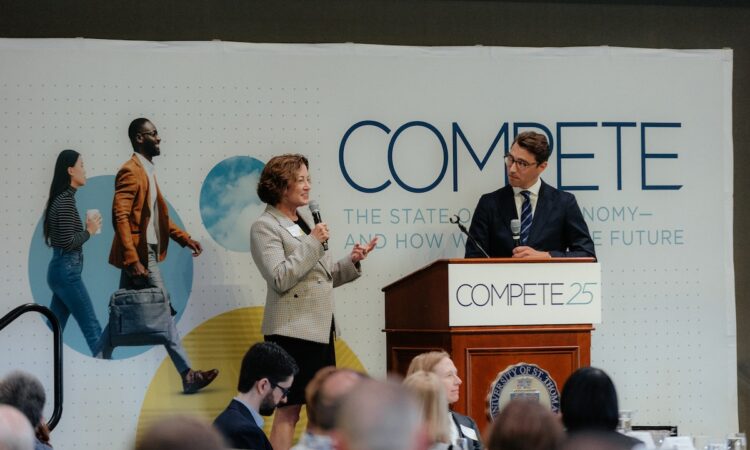
The phrase “treading water” wasn’t uttered Wednesday morning at a community leadership gathering at the University of St. Thomas, but multiple leaders warned that Minnesotans need to ramp up efforts to accelerate economic growth.
Greater MSP, a regional economic development partnership organization, unveiled 58 economic indicators to show how the Twin Cities metro stacks up against 11 peers, including Atlanta, Boston, Chicago, and Seattle.
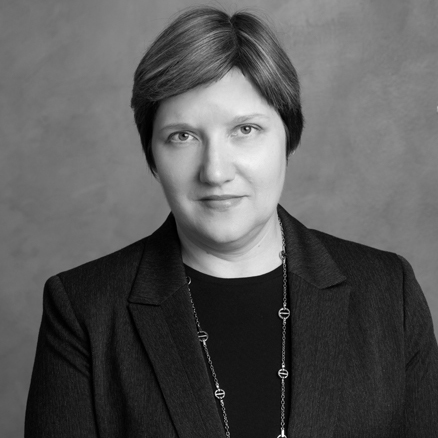
“Economic growth and innovation in our region’s economy has slowed over the past 10 years, and we’re losing position against our peers,” said Natalie Volin Lehr, head of government and community affairs at Carlson. “In fact, the region’s rate of economic growth has slowed to just under 2%, which puts us at number nine among our peers.”
Volin Lehr was among several leaders who spoke at the event on the St. Paul campus, and urged civic leaders from the private, nonprofit, and public sectors to work together to create a more robust economy.
“If we stay on this low growth path, it’s unlikely we’ll be able to maintain the quality of life we’ve enjoyed,” she said.
She called out the fact that the 2.9% annual job growth in the Twin Cities metro ranked 11th among the dozen metro areas studied. “Regions that aren’t creating a lot of good jobs don’t retain and attract many young talent either,” she said. “That’s likely why we rank 10th out of 12 in net migration of 25- to 34-year-olds.”
Volin Lehr was representative of the speakers Wednesday, who recognized that Minnesota has benefited from having a diversified economy and being home to many large public companies. But she and others urged the audience to acknowledge the worrisome metrics and take action to increase the Twin Cities’ ability to compete with other major metro areas.
“Through both Carlson and the Carlson Family Foundation, we are making large investments in the economy of the future here and around the world,” she said. “Community investments and civic commitments are directly tied to economic innovation and growth.” She emphasized Carlson’s support of startup initiatives.
Shawntera Hardy, former commissioner of the Minnesota Department of Employment and Economic Development, stressed that the economy’s condition isn’t simply something that’s a concern of businesses. “Whether you work for local government, a private manufacturing company, a housing nonprofit, or a university, you are part of this economy,” said Hardy, who now is CEO of Amethyst Advisory Group.
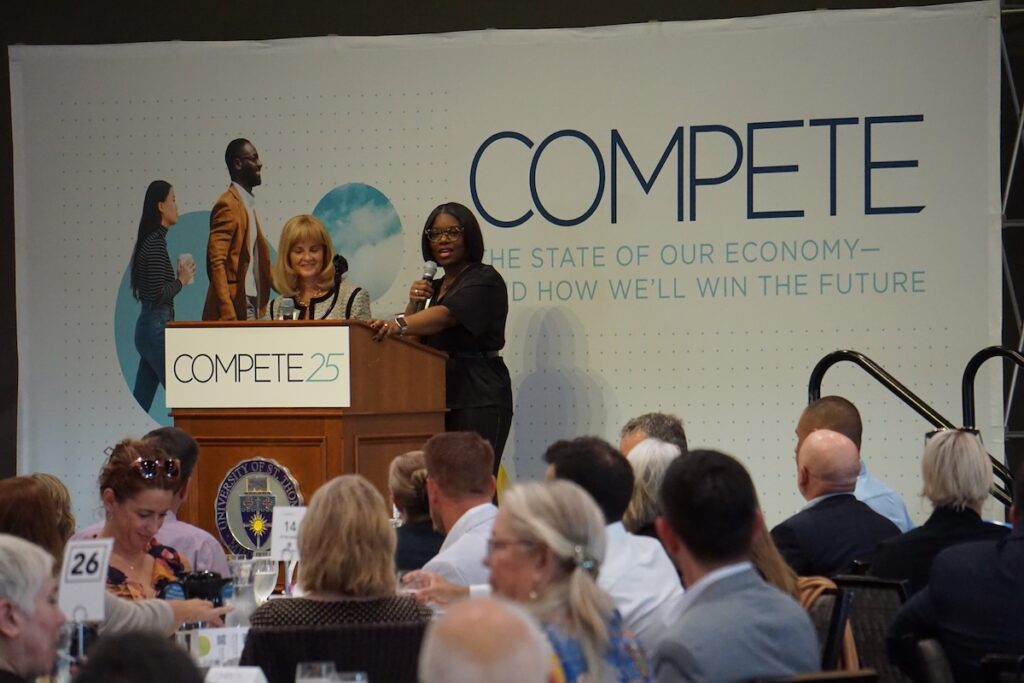
To build a strong economy, Hardy said, “we need the world’s best talent, breakthrough ideas, and lots of investment capital.” To achieve those goals, she said Minnesotans will need to take risks and make changes. “There’s no time or space to be complacent,” she said. “We need to intentionally start having different and maybe even difficult conversations. Old ones won’t get us where we need to be.”
Peter Frosch, president and CEO of the Greater MSP Partnership, said that breaking free of old patterns was a topic that arose at his table during the small group discussion portion of the event.
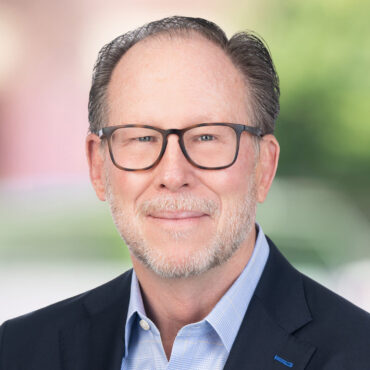
“If the collective mindset has been things are fine and will be fine, you’re going to get a certain set of behaviors and a certain outcome,” Frosch said in a TCB interview following the event. “We’re saying that’s not the right mindset. The right mindset is we can make an economy and a community that is better than we have today, and we need to make it right now.”
Frosch said that Wednesday’s event was focused on building a shared awareness about the challenges that the Twin Cities and Minnesota face, even though many people might think the state’s economy is doing well in the present. “As we look around the corner to some of the leading indicators related to technology and innovation and growth, we know we are not on track to be competitive with our peers,” he said.
After getting a better handle on where the Twin Cities metro stands in the national economic landscape, Frosch wants Twin Cities leaders to ask themselves two key questions: “What could I be doing? What could my organization be doing differently to help accelerate growth and innovation in our economy?”
Frosch closed out Wednesday’s event in a co-presentation with Andrea Walsh, president and CEO of HealthPartners.
Walsh noted that the Twin Cities has a “strong and rich history of collaboration,” and added that public-private partnerships have had a positive impact on issues that include transportation, housing, and racial disparities.
But she challenged the audience to move beyond past collaborations that often were successful. “We need to acknowledge we don’t know everything,” Walsh said. “We need to not fight the data but be informed by the data and stay curious.”
Frosch said it will take a “portfolio of actions” to supercharge the Minnesota economy. That could include some changes in state laws. Frosch asked: “Is our state policy framework competitive, so we can win the investment and jobs we need to create the economy we want?”