Rochester Rising: Housing
Talk to Rochester community and business leaders about the challenges they face, and you’ll consistently hear the word housing. This challenge isn’t unique to Rochester, of course. Other communities throughout the state (and the country) are struggling to build enough homes for their burgeoning workforce and to attract additional needed talent. Affordable housing options are particularly needed.
What is unique is how this region is tackling the problem. In 2017, a group of partners—including the Rochester Area Foundation, the city of Rochester, Mayo Clinic, Olmsted County, and Destination Medical Center—launched the Coalition for Rochester Area Housing, with the Rochester Area Foundation providing office space and operational support. What makes this partnership distinctive, says JoMarie Morris, the coalition’s executive director, is that “it allows us to combine all of the tools in our individual toolboxes to enhance our collective impact.”
The coalition’s mission is to collaborate, invest, and lead on innovative solutions to address the community’s housing needs, based on the Housing Needs Analysis report released in 2020. According to the report, Rochester will need 18,000 units of additional housing before 2030 to meet the projected demand. Over the past few years, Morris says, the city has been producing about 1,000 units annually. “We really need to double that,” she notes. The categories where “we’re not keeping pace” are owner-occupied residences, affordable housing, and options for seniors across all categories. “Those are the three areas the market isn’t taking care of for us,” Morris, says, adding that “we have a very low inventory of entry-level homes right now.”
In response, the coalition is funding initiatives to build housing across “the whole spectrum” of demand. Its four-year goal from 2023 through 2026 is to create and preserve an additional 1,000 homeownership and rental options. It’s encouraging more construction by “leveraging our financial tools and policies in partnership with community housing organizations,” Morris says.
One of those tools is a revolving loan fund program, which offers construction loans at zero-percent interest to builders of owner-occupied housing.
An example of collaboratively developed housing is the Trailside Apartments, a 36-unit project that will break ground next year. This low-income senior residence is the first housing project spearheaded by the Olmsted County Housing and Redevelopment Authority (HRA). The county donated the land and the city waived a substantial amount of the development fees. Coalition partners are providing gap funding.
This April, the Rochester City Council approved the Homeownership Creation Program, which will offer fee waivers to encourage residential construction. This will be coupled with coalition-offered zero-percent construction loans. In addition, the city’s new Economic Vitality Fund will offer $40 million in money for residential projects.
Rochester will need 18,000 units of
additional housing before 2030 … the city has been producing about 1,000 units annually.
One of the fund’s objectives is to encourage the city to make its fee reimbursement program permanent. This program reimburses developers of eligible owner-occupied housing for up to $20,000 in city infrastructure fees such as water and electricity. According to city administrator Alison Zelms, the pilot version of the program spurred development of 35 units of housing in 2023.
Meanwhile, the Coalition for Rochester Area Housing is pursuing additional strategies. One of its goals is investing additional dollars in First Homes Properties, Rochester’s community land trust, which provides affordable homeownership opportunities. “These homes remain affordable in perpetuity,” Morris notes. Olmsted County HRA is currently working on a development for 10 single-family entry-level homes that will be placed in the land trust.
In addition, the housing coalition recently helped launch a BIPOC homeowner mentorship program in partnership with nonprofit Three Rivers Community Action. The coalition has also created accessory dwelling unit (ADU) designs in collaboration with the City of Rochester and the Lake City Port Authority. ADUs are small dwelling units built on the property of an existing single-family home.
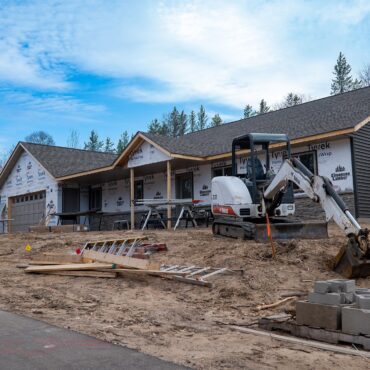
Developers also are exploring new ideas and approaches to residential development. North Rock Real Estate, a Rochester-based, full-service real estate development and management firm, is currently at work on the Preserve at West Circle, which will comprise 118 single-family houses offered for rent rather than for sale.
“It’s bringing a new product type to the Rochester market,” says North Rock partner Jeff Brown, who adds that the single-family rental model has been successful elsewhere. “There’s a growing movement of people who are renters by choice. They appreciate the flexibility of a lease and the maintenance-free lifestyle.” At the same time, single-family residences provide more privacy and square footage than apartment buildings.
The Coalition for Rochester Area Housing will soon be requesting an update of the Housing Needs Analysis report, which will allow the organization to study housing needs data through 2035. This is especially crucial, Morris says, given Mayo Clinic’s ongoing expansion.
Currently, there are about 1,500 units of housing in the pipeline downtown alone. While Rochester will need even more units to continue on its growth path, “there have been a lot of great things happening,” Morris says. “It’s been joyful to see how the community has come together to work on this issue.”
Explore the following pages to learn more about Rochester: