Rebecca Noecker’s Presidential Agenda
St. Paul’s City Council attracted glowing national media coverage following the 2023 city election. Seven women—young, progressive and mainly of color—were elected to the seven council seats.

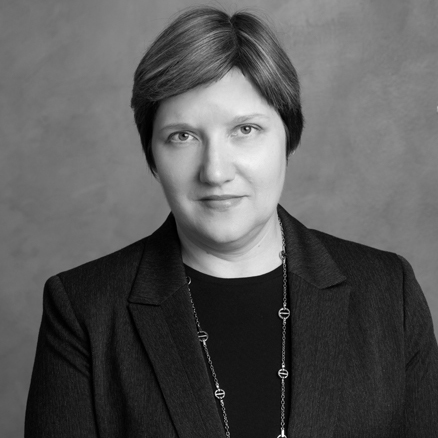
Less than two years later, the state of Minnesota faces a large projected deficit, and economic and electoral realities are affecting local politics in St. Paul. Rebecca Noecker, the longest-serving council member, first elected in 2015, became the council president Feb. 12 after the unexpected resignation of Mitra Jalali.
Chosen by her fellow council members, Noecker sets priorities for the council’s work, presides over meetings, and speaks on behalf of the council in public settings.
One of Noecker’s first big moves is to try to narrow the rent control ordinance approved by voters in 2021.
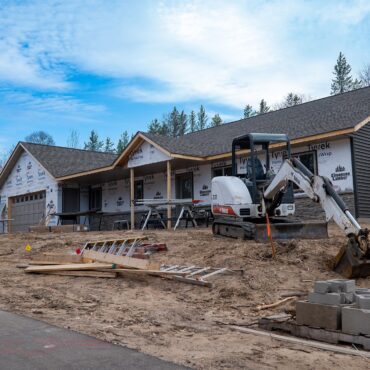
“We’re not seeing building happen at the pace we needed to compared to peer cities,” Noecker said in a March TCB interview. “When you talk to developers who are trying to get financing from out-of-state investors to bring [projects] downtown, they can’t do it. I’ve heard that described as sort of a black mark on St. Paul. That’s not just from big developers. That’s from small, local developers who want to do small infill housing projects that we desperately need.”
When TCB’s print magazine went to press in mid-March, Noecker was working with Ward 3 Council Member Saura Jost on language for an amendment. “The plan is to propose that the rent stabilization ordinance doesn’t apply to buildings built after 2004,” Noecker says.
That provision is in line with what Mayor Melvin Carter recommended in August. It’s an acknowledgment by Carter and Noecker that mitigations to the rent control system made by the city in 2022 didn’t go far enough. Noecker says the amendment could be approved as early as April, but timing isn’t certain: “I don’t think we’ll be introducing it until we feel confident that we have the votes.”
This issue is a big one in the ward represented by Jost, which includes Highland Park. The current rent control measure stalled Ryan Cos. development of the Highland Bridge project on the former Ford plant site.
For 2025, Noecker says, the council is focused on five priorities—economic development, climate, housing, fiscal resiliency, and public safety.
Noecker, 41, a St. Louis Park native, is the daughter of retired VA Medical Center physicians, who raised her to be involved in community service as a dimension of the family’s Jewish faith. A Harvard College graduate, Noecker and her husband are raising two sons on St. Paul’s West Side. She represents Ward 2, which includes downtown St. Paul.
Noecker was a major advocate of a 2024 ballot measure that asked St. Paul voters to raise property taxes over a 10-year period to subsidize early education and child care for low-income families. The measure would raise $2 million in year one and $20 million by year 10. A majority of St. Paul residents typically support Democratic candidates at the state and national levels, but they turned down the child-care subsidies tax hike with a decisive 60% of the vote.
“I was very disappointed with the outcome of the election,” Noecker says. “I’m convinced the data is so clear that getting kids off to a good start is the best economic development strategy we can possibly invest in with the greatest return.”
The feedback Noecker got from voters against the measure was that the “city is so cash-strapped and doesn’t have the resources to do the basics” on city services, so it doesn’t make sense to raise property taxes even more to fund a new program. “I take that to heart,” Noecker says, so she isn’t rushing to try to put the child care issue on another ballot.

The rate of property tax increases has been a thorny issue in St. Paul, and the City Council ended up reducing Mayor Carter’s request for the 2025 levy. Frankly, Noecker says, “bringing the levy down [in a vote] last year was in direct response to what we were hearing from businesses and residents—that they were just struggling with the rising costs and that it was unsustainable.”
A healthy portion of Noecker’s time is spent on economic development. She and Securian CEO Chris Hilger have been chairing a downtown commercial real estate committee within the Saint Paul Downtown Alliance. The office vacancy rate for St. Paul’s central business district was 28.8% in the fourth quarter of 2024, according to a Colliers report.
The Saint Paul Downtown Development Corp. was recently created by the Downtown Alliance. “I want that entity to be the vehicle that brings together all the different flavors of capital that we need to completely transform downtown,” Noecker says. “We now have an opportunity to reimagine how those commercial spaces are used.”