Minneapolis Dangles $250K for Artist Studios in Vacant Storefronts
In their latest bid to revitalize downtown, Minneapolis city leaders will subsidize artist studios in vacant storefronts.
At a Wednesday press conference, Mayor Jacob Frey unveiled plans to allocate $250,000 to help artists and art organizations pay rent in unused storefronts along Harmon Place downtown. The effort targets eight separate sites along the road. Applicants can get annual grants of up to $50,000 apiece over the next two years.
Frey hailed the effort as “money well spent,” and said it will help “stabilize” the corridor. He’s optimistic that the program will help bring more visitors downtown.
“People are drawn to art,” he said. “People are drawn to creativity.”
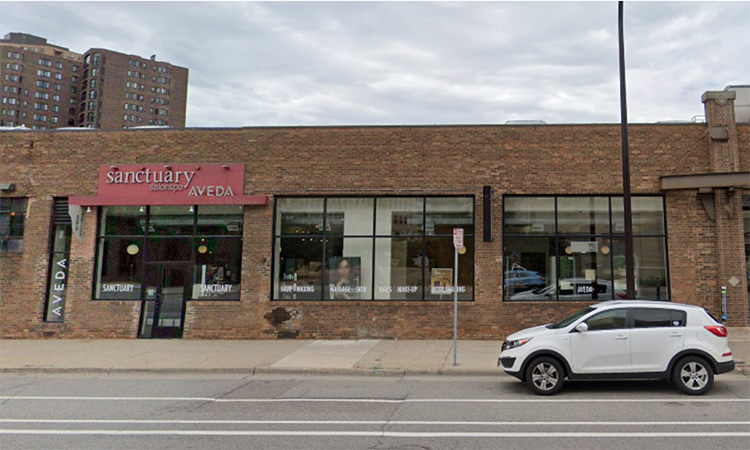
City officials held Wednesday’s press conference inside the shuttered Aveda Sanctuary Salonspa at 1201 Harmon Place, one of the sites that will eventually become a city-subsidized art studio.
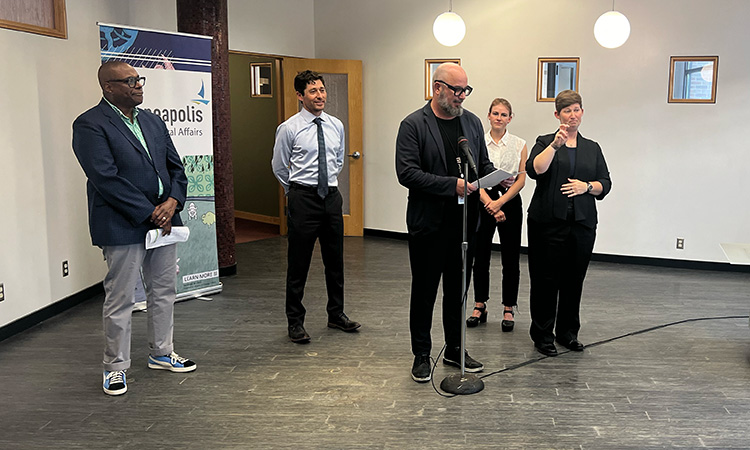
Ben Johnson, director of the city’s arts and cultural affairs department, emphasized that the goal is to create community-oriented “galvanizing spaces,” not just closed-up studios.
Grant awardees will be required to hold public gatherings in their spaces on a quarterly basis, he said, though the city expects that to happen on a more frequent basis. “Just putting artwork in windows is a Band-Aid to a bigger problem,” Johnson said. “We’re trying to solve that problem, and that’s about having active engagement and activity always within [these spaces].” He said the city also aims to solve an “affordable space crisis” for artists.
Katie Cashman, a city council member who represents Ward 7, said that area has been home to artists and creative “for generations.”
“This initiative really builds on that energy and that history,” she said.
Applications for the program are due Aug. 30, and a panel of city staff will review them. Award notifications are expected to go out Sept. 20.
The program emerged from the mayor’s “Vibrant Downtown Storefronts Workgroup,” which Frey convened in late 2022. City officials first unveiled the workgroup’s proposals last summer. Minneapolis leaders have been mulling several of those ideas, including plans for a bus-free Nicollet Mall and looser open container laws during major events.
The effort unveiled Wednesday represents a stark contrast to another city policy announced this week: On Monday, city officials met at an abandoned Burger King on West Broadway Avenue and hailed an amended ordinance that triples the fine for abandoned properties to up to $24,000 annually.
“Those who have been here for extended, prolonged periods of time, your time is up,” Minneapolis City Council member Robin Wonsley told reporters on Monday, MPR News reported.
It’s worth noting, of course, that the policy unveiled Monday is limited to properties that the city has deemed “hazardous.”
“The empty storefronts that the Vibrant Storefronts initiative wishes to fill aren’t considered hazardous,” city spokeswoman Jess Olstad said in an email. “These are simply empty storefronts that will now have occupants that will stimulate local economic activity, aid in public safety through increase foot traffic, and help beautify the neighborhood. Some of the buildings may not be fully vacant either; some may have other tenants either upstairs or elsewhere.”