Mall of America Rolls Out Facial Recognition Tech
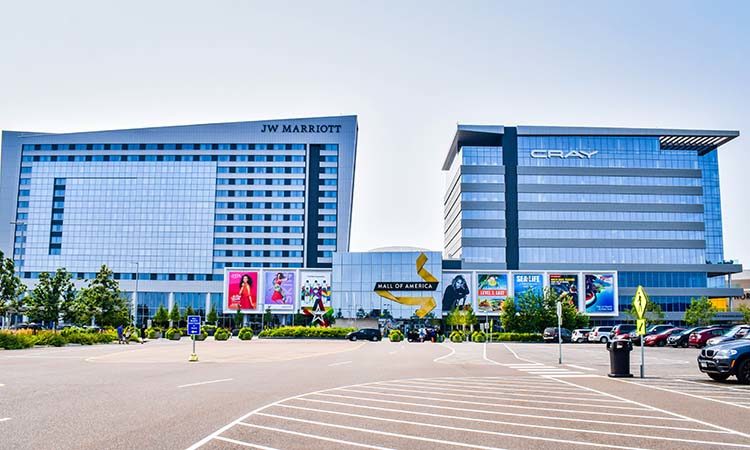
Cameras at Mall of America have begun using facial recognition technology to spot potential criminals and missing persons.
On Wednesday, the nation’s largest mall announced that it has rolled out facial recognition technology developed by Israel-based firm Corsight AI.
In an interview with TCB, Mall of America VP of security Will Bernhjelm emphasized that the technology will only be used to find “persons of interest,” or POI. The mall described these individuals as those “who are currently on a trespass at Mall of America, those who may be a threat to our environment, persons identified to us by law enforcement, or individuals who are missing or may be in danger.”
Bernhjelm said that Corsight’s technology is a “closed loop, one-to-one” system, meaning that it only compares one image of an individual to another photo on file. That contrasts to a “one-to-n” system, which compares an individual’s likeness to virtually every image available on the internet.
Photos of “persons of interest” are uploaded into Corsight’s system. If an image of an individual does not match a POI photo, the technology immediately discards it. “This technology does not track or keep any information on non-POIs,” mall officials said in a press release issued Wednesday.
But, if the technology detects a match, it flags the image for the mall’s security team, which then makes the call on whether to investigate further. Bernhjelm noted that there’s “still up to three layers of human verification that go on behind the scenes” to ensure the tech has flagged the right person.
A mall officer will approach a potential person of interest and follow “standard security procedure” only after “human review determines with sufficient confidence that the alert is accurate,” according to the mall.
Should shoppers be concerned about their likenesses getting uploaded into Corsight’s database? Bernhjelm says no. “It doesn’t care about regular shoppers coming here,” he said. “It only cares about people on the POI list.”
Bernhjelm likened the technology to facial recognition on an iPhone: “If I try to unlock your phone, it’ll scan my face, but it won’t unlock. It doesn’t care. That image isn’t stored.”
The algorithm that powers Corsight’s technology has “undergone rigorous independent testing by the National Institute of Standards and Technology and the Department of Homeland Security,” Bernhjelm said. The department’s testing correctly identified the right individuals “99.3% of the time,” according to the mall.
The mall officially began implementing the technology Wednesday.
Mall leaders also brought in Ravi Bapna, Curtis L. Carlson Chair professor of business analytics and information systems at the Carlson School of Management, as a third-party expert to evaluate the technology. Bapna said he looked more closely at the pair of studies done by NIST and DHS.
Based on his evaluation, Bapna said that false positives — i.e., instances where the technology flags the wrong individual — are extraordinarily rare. He put it at about 1 in a million. Still, for a mall that says it welcomes 40 million visitors each year, that means false positives could indeed happen, albeit infrequently.
Conversely, the “miss rate” of the technology — times when it fails to identify the right individual — was about 5 in 1,000, per Bapna’s evaluations. He ultimately described the tech as “not perfect, but pretty good, and certainly a step up from the next best solution, which is manually checking.” Given the large number of visitors at the mall, manual checks aren’t really feasible, he added.
And, since Corsight says it does not store data, privacy concerns are “minimal in this case,” compared to the security benefits, Bapna said.
In March, The New York Times reported that the Israeli military had begun using a facial recognition program in Gaza that “relies on technology from Corsight.”
Bernhjelm said that the mall vetted multiple vendors before landing on Corsight. He declined to share the financial value or length of the mall’s contract with the company.
In his view, the new technology only supplements the mall’s existing security protocols.
“We’re not solely reliant on the tech; that would be irresponsible,” he said. “When we get a prompt, all that’s telling us is that this person of interest may be here.”
Over the years, the Mall of America has tested various security measures to varying degrees of success. Two years ago, the mall began experimenting with weapon detectors at some entrances. Bernhjelm said the mall has since ended that project.
“At the end of the day, we decided that’s not necessarily the best measure just because of our number of entrances, operating hours, and operating days,” he said.
In early 2023, the mall took members of the media on a tour of its latest security measures.
Whether the Corsight technology ultimately improves security at the mall remains to be seen, but Carlson’s Bapna thinks it’s a step in the right direction.
“I think as long as the mall uses it for this particular use case, everybody will be better off,” he said.