Leveraging Small-Town Minnesota Nice
“Hi, is this Brenda?”
Jayne Dick makes her final call of the workday from the spare bedroom that doubles as an office at her home in Wabasha, a town of 2,500 along the Mississippi River. Her office, about 100 miles southeast of her employer’s headquarters in Hopkins, is decorated with antique family photos, dried roses from her 25th wedding anniversary, and a needlepoint stitched by her great-great-great-great grandmother.
“I’m calling from GrandPad,” she tells the woman on the other end of the line. “I’m just reaching out because your GrandPad hasn’t been connecting to our network, and I wanted to make sure it was working for you.”
GrandPad, a platform designed to simplify technology for people over 75, provides live, around-the-clock customer service—no automated loop of numbered options. Not only do human beings answer every call, but as company agents they proactively reach out to subscribers when the system indicates they might need help. Dick handles customer outreach on the member experience team.
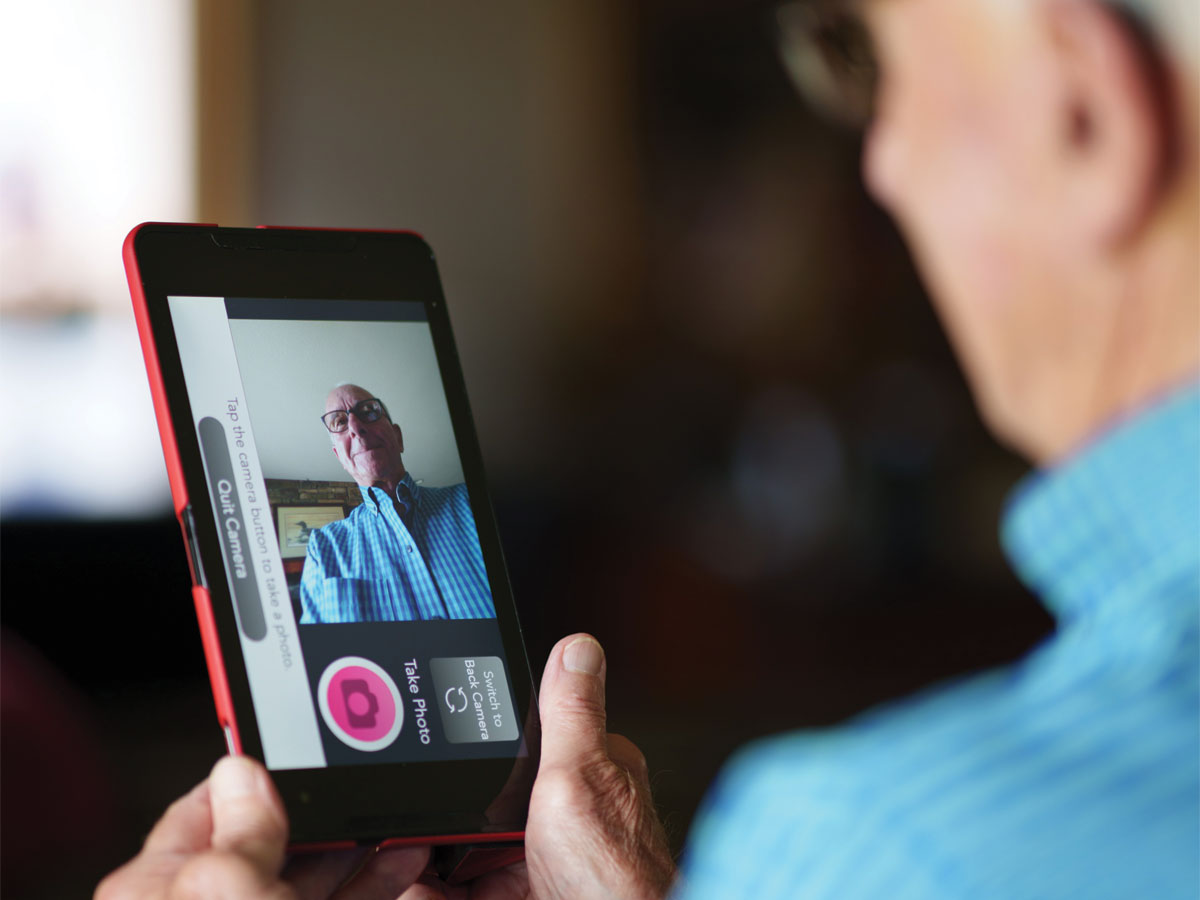
GrandPad’s mission is to make it easier for seniors to connect with family, friends, and caregivers. The company refers to its target market as “super seniors,” and says the inevitable effects of aging—diminished dexterity, eyesight, hearing, or cognitive issues—can make the average smartphone or tablet challenging to use. Isaac Lien got the idea for GrandPad as a college student, when he struggled to connect with his own grandmother, whose poor hearing prevented her from talking on the phone. He and his father, Scott, a veteran corporate technologist, developed their own tablet and launched a subscription service to support it. Now in business for a decade, GrandPad says it has connected more than 1.7 million people in 120 countries. The company employs 165 and, to date, has raised $31 million to scale its technology, both hardware and software.
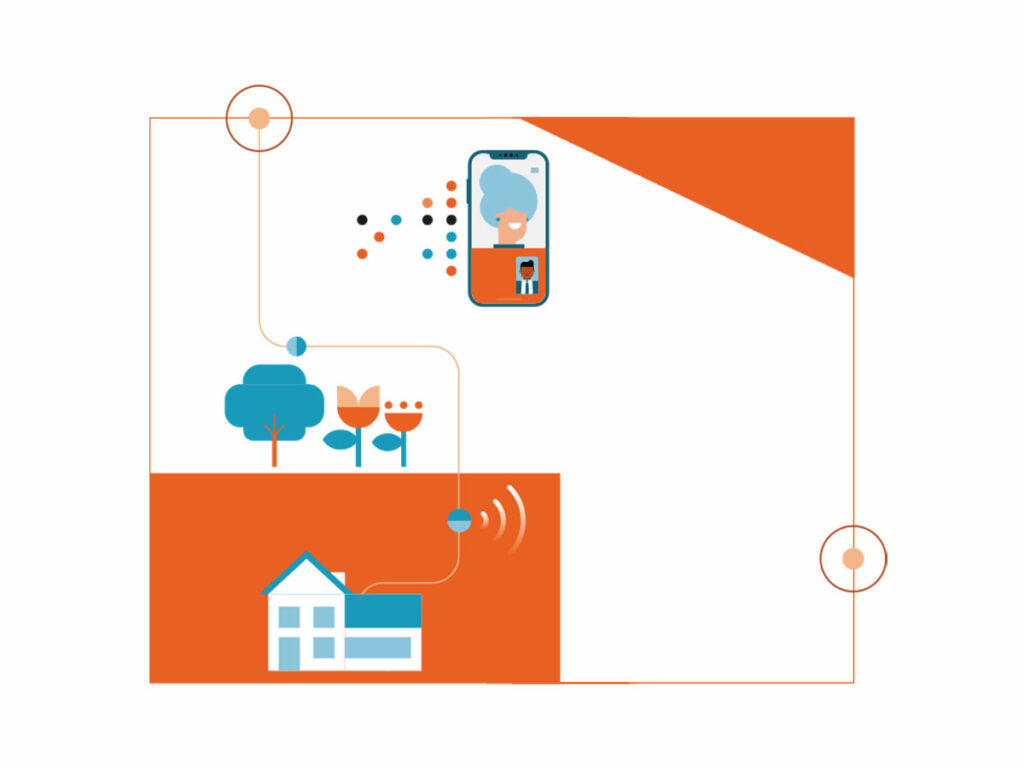
Illustration by Fernando Volken Togni
Larger buttons, enhanced sound, and simplified navigation make the GrandPad tablet easier for the tech-challenged to maneuver, but the secret sauce is customer service agents like Jayne Dick, who patiently work with GrandPad subscribers. Sometimes, her calls involve checking a connection or guiding a user to the right button; but often, it’s about taking the time to listen. She exchanges recipes with customers and plays games. Dick has even held up her phone screen so a senior who was having trouble logging on could watch her great-nephew play the marimba at Carnegie Hall.
“It’s like being a teacher all over again,” Dick says. “With older people, it’s having patience and appreciating where they come from.”
For GrandPad, it’s about where the customer service comes from, and that’s small towns. To consistently deliver the personal service their platform demands, the Liens decided to hire talent exclusively from rural towns with populations of 1,000 to 10,000—like Wabasha, where Scott Lien and his wife raised Isaac. After years of moving around for work, they’ve recently settled back in Wabasha. Small-town living is how Scott Lien grew up, on a farm in Decorah, Iowa.
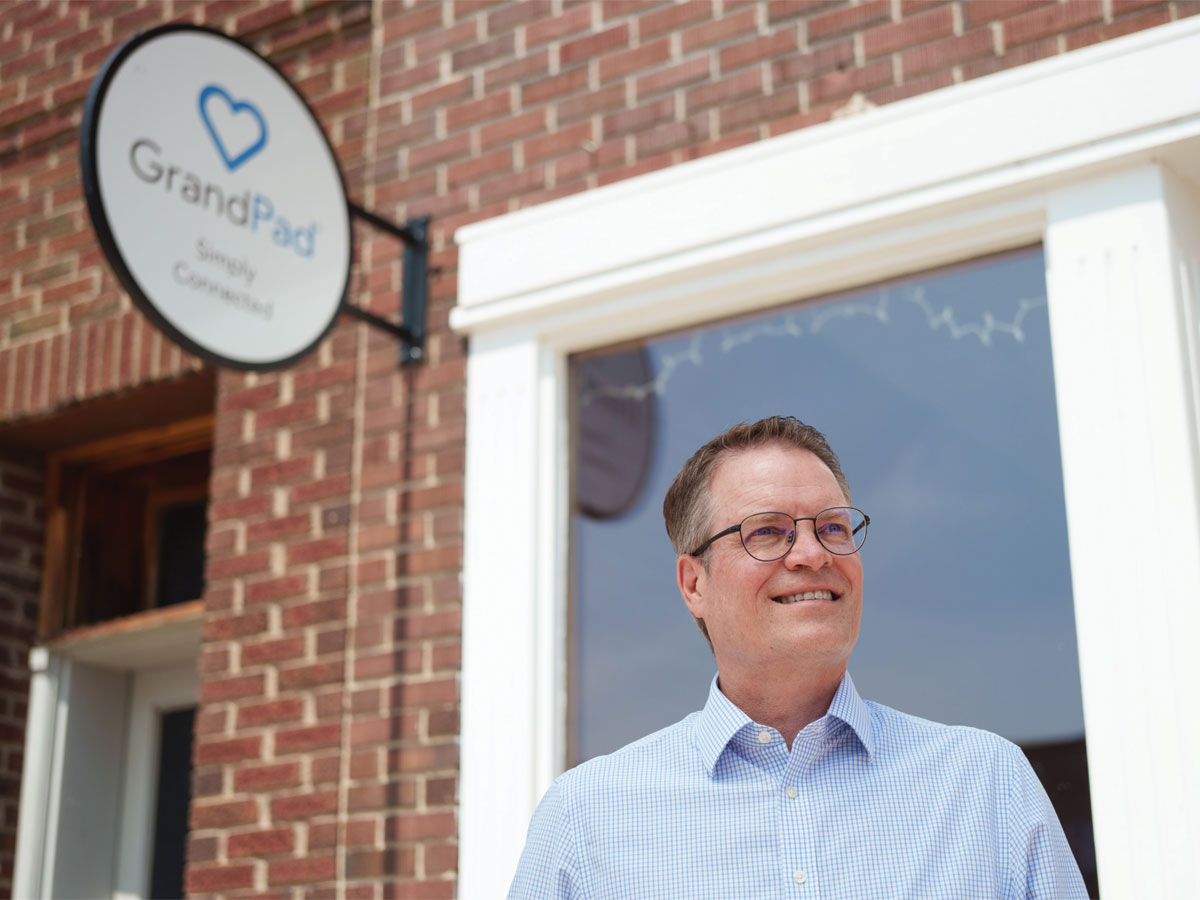
“I first started hiring my friends and family who I knew in these small towns in rural Iowa, and thought, ‘Wow, this is great,’” says Scott Lien, GrandPad’s CEO. “So I said, well, how can we tap into this great labor force that’s in these smaller towns and rural areas?”
Wabasha, like many small Midwestern towns, welcomes the opportunity.
“Everybody feels good when they have equitable access to the dignity of work.”
—Wendi Safstrom, president, Society for Human Resource Management Foundation
Hidden talent pool
A longtime resident of Wabasha, Dick is a former teacher who then worked in insurance for 22 years. She was itching for a career change but felt limited. “I didn’t want to leave town for work, and there wasn’t much available in Wabasha that interested me,” she says. Then a friend’s daughter referred her to GrandPad. She could work from home and connect with people who needed the help. Dick joined the company in October 2021. Her only complaint is occasionally having to take service calls over the whir of her husband’s lawn mower, she says with a laugh.
Dick is hardly alone in working a remote customer service job. When call center operators got sent home during the pandemic, the majority stayed there. As of 2021, 87% of call center agents work remotely, according to software company SQM Group.
Read more from this issue
Hiring exclusively from rural communities, however, is more unusual. In a recent report on the state of tech employment in rural America, the Center on Rural Innovation found that 60% of rural Americans are interested in tech jobs and careers, but the two most significant barriers for companies training rural workers are time commitment and cost.
“Sadly, in some companies, customer care is treated as an [unavoidable] expense, like something you want to reduce,” says Scott Lien. “We treat it as, ‘Wow, what a valuable asset to the company.’” Besides, he says, GrandPad’s member experience team is considered entry level, which doesn’t require extended training. The idea is that employees can work their way up in the tech company—longevity is the goal, he says.
Wendi Safstrom is president of the Society for Human Resource Management Foundation, a Virginia-based professional organization for HR leaders. She says there’s often a mismatch in terms of what prospective employers think rural employees are looking for.
“If your organization has roles that can recruit for hybrid or remote work, that’s a terrific solution [for small-town employment],” Safstrom says. “There’s something to be said for feeling like [a rural resident’s] skill sets are desired or the contributions that they are making are valued. Everybody feels good when they have equitable access to the dignity of work.”
Safstrom describes rural residents like Dick as untapped talent—people who are often overlooked because of employer misconceptions, such as thinking small-town residents don’t want to work in remote customer service. Untapped talent also includes those who come to a job with nontraditional preparation—think veterans, people with disabilities, individuals with a criminal record, and seniors.
When it comes to hiring “untapped talent,” the key is intentionality, Safstrom advises companies: Make it clear to employees that their life experience is an asset.
Why rural?
We’ve all tried to get through to a customer service representative. Pressing 1, then 9, then 0, only to be looped back to the same recording or left on hold with maddening background music. You hang up feeling more frustrated than when you called for help.
GrandPad can’t afford for its customers to have that negative experience. That’s why, even though the company’s member experience team now tops 80 and continues to grow, Scott Lien still interviews every prospective hire. He describes the process as a very slow and careful one, where staff constantly reiterate GrandPad’s mission of improving the quality of life for seniors through connection.
“At my age, you don’t think you have too much to accomplish anymore, but it’s a [good] feeling that somebody really can use you, and that we, at our age, are not worthless.”
—Dr. John Ochsner, Grand Advisor, Grandpad
One of his top requests for member experience candidates is, “Tell me about a super senior or someone over the age of 75 who’s been important in your life.” If the candidate replies with an emotionally driven answer, sharing personal stories about their grandparents or another person they look up to, they’re likely a good contender for the role, he says.
Nice people can be found anywhere, he acknowledges, but Scott Lien—who’s lived in Minneapolis, Los Angeles, and Charlotte, North Carolina, in addition to small towns— says the slower pace of life in rural towns and the camaraderie among neighbors increases the odds of finding workers who are a good match. Besides Wabasha, GrandPad’s member experience employees live in other small towns throughout Minneosta, Wisconsin, and Iowa, as well as South Carolina, Florida, Ireland, and the latest addition, Hawaii. Even though customer service reps work from home, the company strives to create employment hubs to build culture and lean into referrals. It plays to the “everybody knows everybody” dynamic typical of small-town living.
“We’re always asking our employees to refer people, and they get a referral bonus for doing that,” he says. “So they’re selecting people they know—friends, family, neighbors—that have the right stuff and are trustworthy.”
GrandPad also taps into what Scott Lien calls the “latent workforce”—individuals who are close to retirement or are not looking for a full-time job but want to keep working. This has helped create a more productive and helpful team, he says.
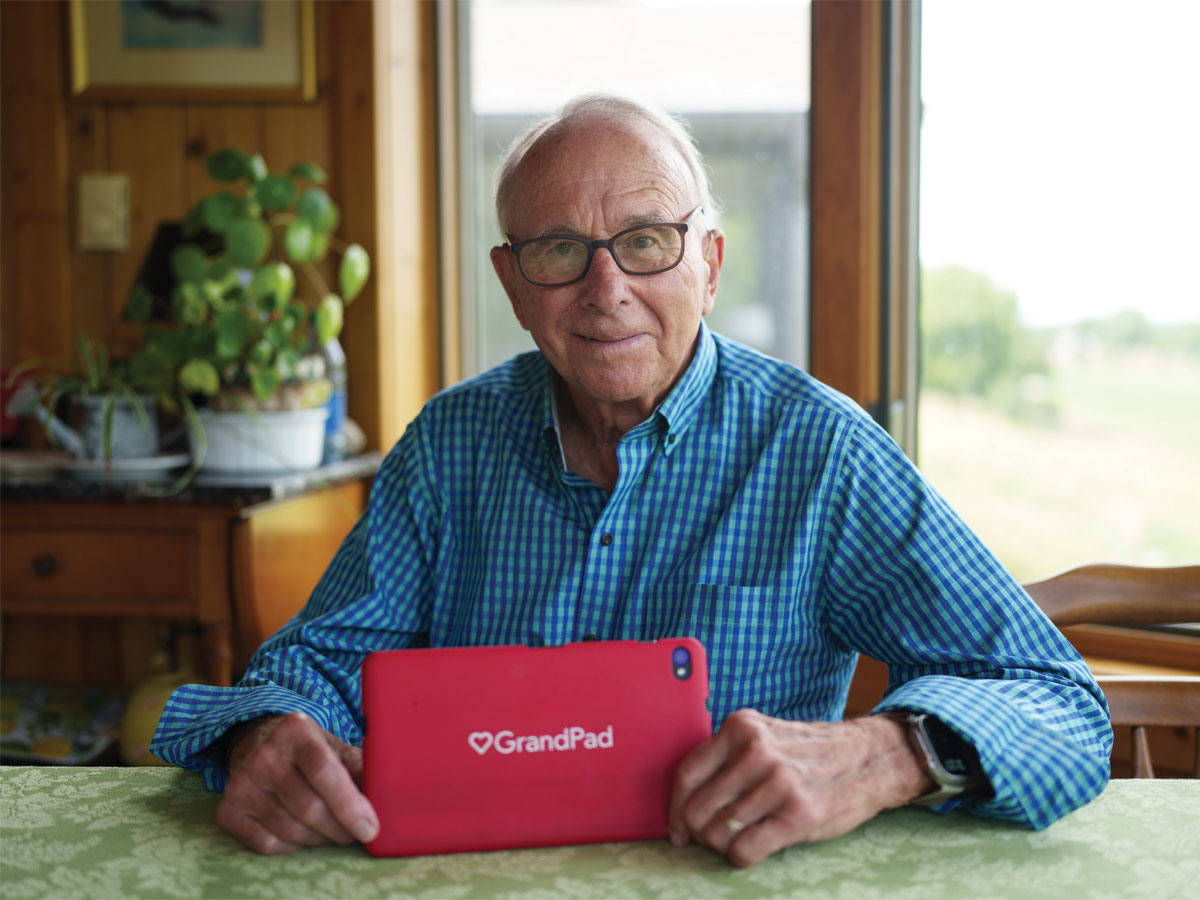
Retired doctor John Ochsner checked both of those boxes for the company. Born and raised in Wabasha, he became an avid user of GrandPad about three years ago. He was attracted to the tablet’s simplified Zoom app, making it easier for him to connect with his children. Two years ago, Scott Lien tapped him to join GrandPad’s council of Grand Advisors, a group of seniors who use the product and can share advice and feedback on the device. At the time, Ochsner was 86 and was unsure of the role. “At my age, you don’t think you have too much to accomplish anymore, but it’s a [good] feeling that somebody really can use you, and that we, at our age, are not worthless.”
After years of caregiving as a physician, Ochsner says he had missed the satisfaction of knowing that he had something to contribute, compounded by the recent loss of his driver’s license due to poor eyesight. “I really hit the crossroads, not being able to drive,” he says. Being a Grand Advisor “sort of helps get over that.”
Part of the community
Wabasha is a town straight out of a movie—literally, as it was the setting for the 1993 romantic comedy Grumpy Old Men and its sequel, Grumpier Old Men. The town is also home to the National Eagle Center, which sits on the banks of the Mississippi River and bills itself as the world’s premier resource for eagle education and experiences. This draws tourists to the town. Health care and manufacturing are big employers.
“It’s an incredibly competitive workforce just like everywhere else. … People are not sitting around doing nothing in rural communities.”
—Emily Durand, mayor of Wabasha
You can feel GrandPad’s presence. On a drive along the river, Scott Lien excitedly points out a professional fisherman whom the company sponsors, and his boat, which displays a GrandPad ad on its side. He drives past his former home and nearby current home. He waves to neighbors here and there, including Dean Meurer, who is a Grand Advisor and DJ for GrandPad Radio, an app available on the tablet. Meurer is quadriplegic, so GrandPad offers connections that help him overcome his physical disability.
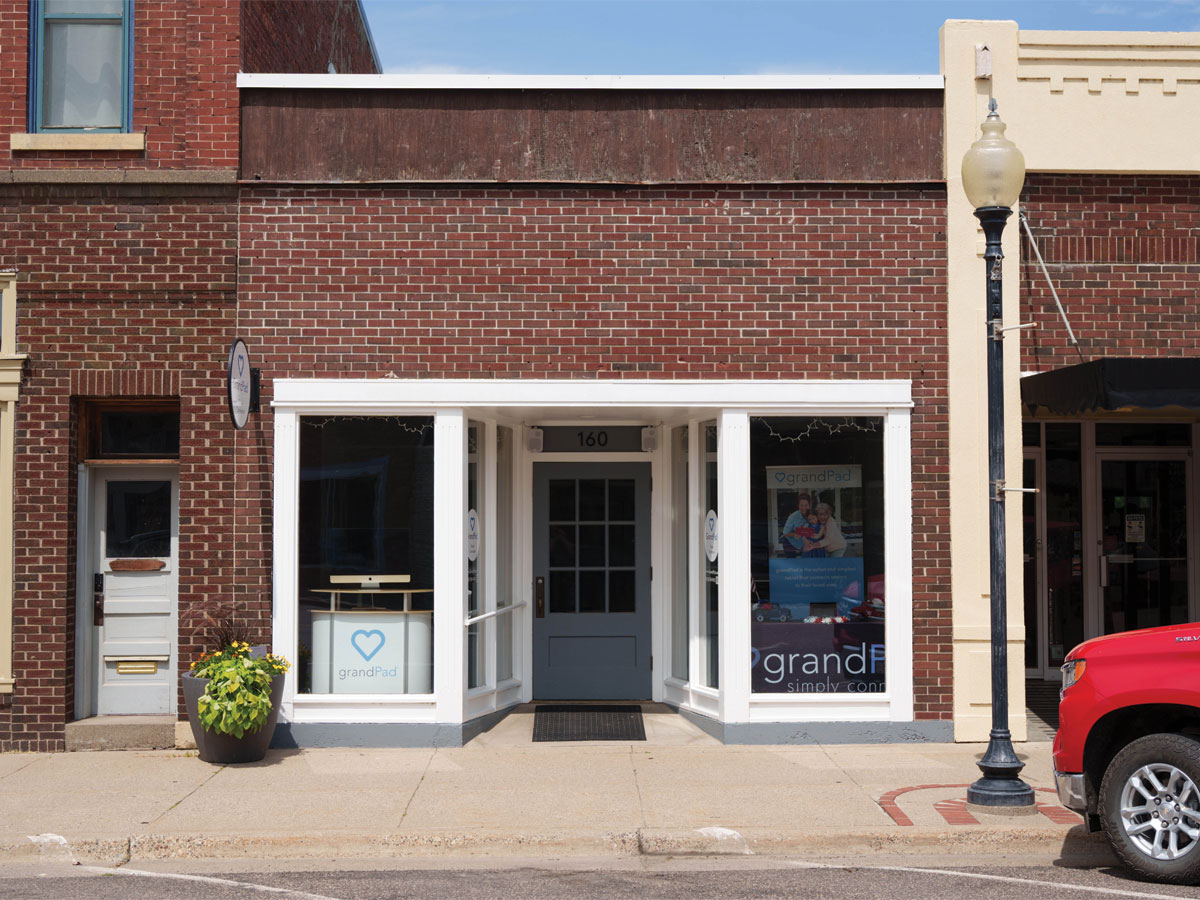
GrandPad is active in the Wabasha-Kellogg Chamber of Commerce and is also involved in the town’s Age Friendly Alliance, which works to bring more services to older residents in the community. And with the 2020 addition of GrandPad’s office, a brick-and-mortar building on Wabasha’s Main Street used as a training and supplementary office space for its 15 local employees, the tech platform is committed to putting down roots in the area.
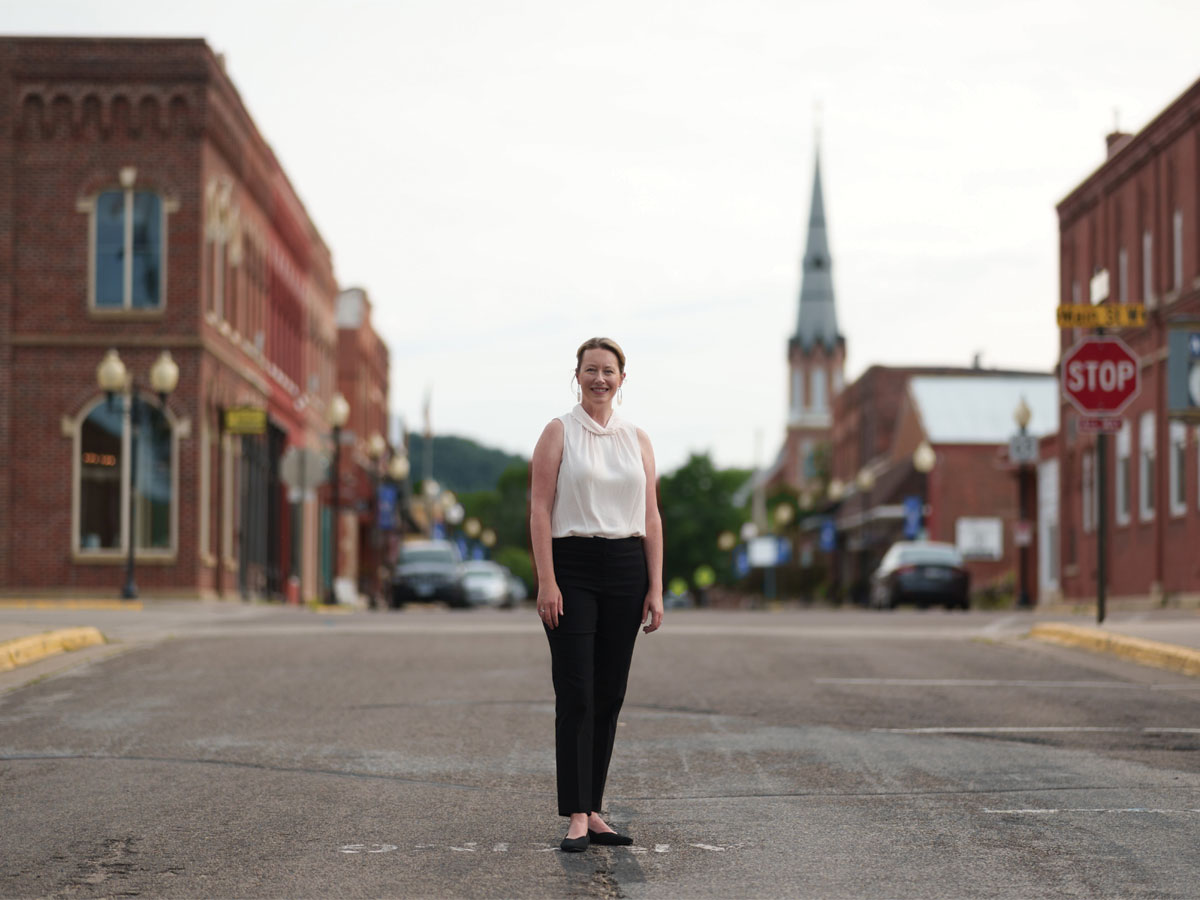
Wabasha mayor Emily Durand sees great potential for other tech companies in a town like hers. She points out that Wabasha residents are there for the lifestyle.
“They’re not going to move [for work], so the opportunity to take the next promotion doesn’t always occur—sometimes over the course of someone’s entire career,” Durand says. “It’s an incredibly competitive workforce just like everywhere else. Scott has really done a good job building his team, because people are not sitting around doing nothing in rural communities.”