Leading in the Human + Machine Future
Something interesting is happening in HR right now.
It’s not a new payroll system or shiny human capital management upgrade. It’s something bigger, louder, and—let’s be honest—impossible to ignore.
Yep, you guessed it: AI.
AI “co-pilots” are everywhere. They’re writing job descriptions, scheduling interviews, summarizing feedback, and predicting who might quit next quarter. Not long ago, HR leaders begged for systems that could give them better people data to inform decisions and spending. Now? We’re drowning in it.
But here’s the question that will define 2026: How will HR balance AI with instinct and experience?
Because HR’s real power has never come from perfect data; it comes from human judgment—the ability to see what the spreadsheet misses.
AI offers enormous potential. Recruiting systems can build diverse slates faster. Predictive analytics can flag burnout risks before people leave. Engagement tools can summarize hundreds of survey comments in minutes. It’s tempting to believe we’ve finally found a shortcut to better hiring and development decisions. But the more we automate, the easier it becomes to outsource empathy.
I can’t tell you how many people reach out asking how to “beat” the AI system that keeps rejecting their resume. An algorithm might label someone a “low retention risk,” but it doesn’t know she’s caring for a sick parent and quietly burning out. A chatbot might write your coaching feedback, but it can’t read the look on someone’s face when you deliver it. AI can see patterns; only people can see the person. Think of it as a partnership—both bring something
essential to the table.
Here’s my prediction: By next year, nearly every HR platform will have AI embedded somewhere—hiring, learning, compensation, engagement, performance. The technology won’t be optional anymore; it’ll be built in. At the same time, regulators are catching up. The EEOC is tightening rules around AI in hiring and promotion. Transparency has always mattered, but now it’s not just about trust, it’s about compliance.
Speaking of trust, that will remain the currency that matters most. Employees will stay or leave based on whether they believe their organization uses AI fairly and responsibly.
Let’s be clear: AI won’t replace HR. But HR leaders who don’t understand AI will be replaced by those who do. The real value of HR will shift from doing to interpreting—from running processes to making sense of what the data means. And as a former engineer, I’m all in for that.
We don’t need every HR professional to become a data scientist. But we do need people who ask the right questions:
- Where will data actually help us execute our HR and business strategy?
- What tools best support the work we do?
And once tools are selected:
- What data trained this model?
- Could bias be hiding in the patterns?
- Who’s accountable when the algorithm gets it wrong?
Because make no mistake—AI will get it wrong sometimes. The organizations that win will ensure that humans stay firmly in the loop.
HR’s playbook should include these guidelines:
- Stay curious. Challenge the tech. Ask AI vendors how their models work and how they test for fairness or bias. Curiosity is the new compliance.
- Keep humans in the conversation. AI should support decisions, not make them. The algorithm might flag a red light, but the follow-up conversation builds understanding and trust.
- Educate everyone. Be transparent about how AI touches the employee experience, from recruiting to performance reviews. Silence breeds suspicion.
- Re-skill for interpretation. The next frontier isn’t analytics; it’s determining what works. HR pros who connect data, context, and empathy will be indispensable.
- Guard the ethics. If HR isn’t the ethical gatekeeper for how AI is used in people decisions, who is?
Here’s what I remind executives: AI can help you see your people more clearly, but it can’t help you care about them. The best HR leaders will use AI not to replace the human element, but to elevate it—to free up time for deeper conversations, catch trends earlier, and act with more thought and less bias.
Read more from this issue

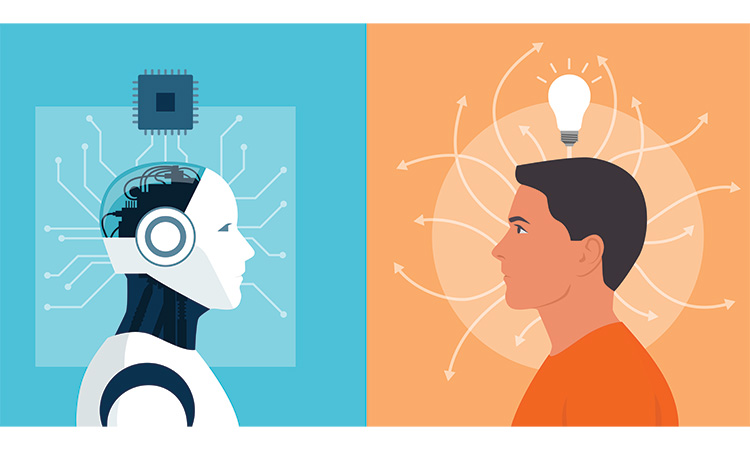
The future isn’t people versus machines. It’s about designing systems where technology does what it’s best at—processing—and humans do what we’re best at—connecting. That’s how HR, organizations, and employees will win.