Leading as a Fierce Antiracist
“Accompliceship is necessary for leading in the twenty-first century and beyond!”
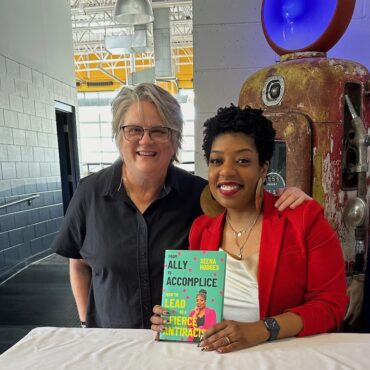
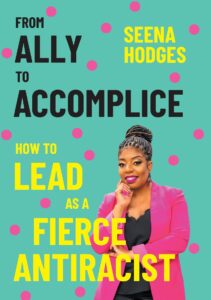
In the spirit of gratitude and to thank you for going on this newsletter journey with me, this month, I am providing a treat. Below find an excerpt from my book From Ally to Accomplice: How To Lead As A Fierce Antiracist.
 A few months ago, I was sitting in a group leadership session with one of my clients, James, a white vice president of fulfillment for a large multinational corporation, as he faced a situation that challenged how he understood his role in making change. A day prior to our meeting, Thomas, a Black warehouse employee, had gone to a nearby café to grab lunch during the workday. The café was a common destination for many of the warehouse employees, and the people working there knew Thomas by name. On this particular day, as Thomas was choosing what to order, a white man walked into the store and asked who was parked in the handicapped parking space out front. Thomas had parked with all the proof that he was allowed to use the space (his permit was visibly displayed), and he told the other customer so. Somehow that wasn’t enough. The gentleman challenged and questioned Thomas again and would not stop. During the extensive back and forth, Thomas had to continually defend his right to be in the parking spot while the other man continually chastised him, and no one in the store did anything to shut down the absurd line of questioning. Thomas sped up his ordering, paid, and exited the store. But it didn’t end there. The accoster followed him out to his car, harassing Thomas and making monkey gestures.
When Thomas got back to his shift, he told his supervisor that he wasn’t in the right frame of mind to keep working and asked for the rest of the day off. When the supervisor asked if he was okay, Thomas—who was visibly upset—explained what had happened over lunch. Understandably, the supervisor agreed that Thomas should take space and go home. The supervisor immediately went to his boss, my client James, and relayed what happened.
So here we were in our leadership coaching session, with James sitting at a conference table and telling all the other executives Thomas’s story. As he finished sharing, everyone around the table expressed sympathy with Thomas. They nodded and acknowledged the difficulty of just letting go and getting back to a to-do list after such a jarring incident. After I listened to their conversation, I reminded them of why they hired me and that engaging as an accomplice means doing the work of changing situations and circumstances, not just talking about situations and circumstances. Heads nodded. Then I asked, “What are you going to do, now that you know Thomas went through that at a business that many of your employees patronize?”
The executives looked at each other, and one said, “Can we do anything?” They started listing excuses that many leaders use to avoid taking action, like “Well, it didn’t happen at our place of business” and “We don’t know anyone at the café!” I followed with, “Here is what you can do. You can call the café, tell them what happened to Thomas, and explain that you will discourage your employees from going there if the café’s management doesn’t do something about this.”
Now, I realize this was a terrifying proposition for a handful of white leaders. They weren’t accustomed to addressing a racist experience on someone else’s behalf; in fact, they likely had never had to discuss race or a racial assault directly. As fledgling accomplices, they were just learning how to take intentional and purposeful action as it related to race. They were scared. They didn’t want to mess up. But I knew that, as leaders of a global company, they had gone through difficult times before. They built a multi million-dollar business from scratch. They scaled and pivoted several times to carve out a place in their market, and they did all this in just twenty years. None of that was easy; it required learning and action along the way. Twenty years in, all of them were still highly competent individuals who could learn new skills and talents as needed. But this kind of tough conversation was unique and risky to them. I empathize with that, but I was also clear about what needed to happen.
This was a defining moment for James and the entire team. Out loud, they asked themselves, “Can we go as far as Seena is suggesting?” But the quieter question they asked themselves, and that raised a little bit of fear in each of them, was, “Am I an ally or am I an accomplice?”
In our next session, I followed up with the team. James had talked to Thomas about what happened and made it clear to him that the company was going to have his back. James then picked up the phone and called the café. James said to the manager, “We feel very serious about antiracism as a company, and recently one of our employees was accosted by another customer at your place of business. While it happened, no one said anything or supported our employee, so now we have an obligation to get involved. My expectation is that you do more when things like this happen on your premises.” The manager apologized and even acknowledged that he himself was there when this all went down. James said, “I am going to bring Thomas over, and I want you to apologize to him.”
When Thomas and James arrived, the manager said, “The business should have done more and been more proactive. And as an individual, I should have done better.” Thomas and James then grabbed lunch (on the house) and headed back to the company. They ended up having a two-hour conversation in which they shared their personal life stories and also discussed other incidents like this. Thomas explained, “This may seem extraordinary to you, but things like this happen to me all the time.”
My guess is that placing that first call to the café was hard for James: not knowing exactly what to say, how it was going to all turn out, or even if he was going to do any actual good. But that call didn’t nearly equate to how hard it was for Thomas to be racialized and confronted while simply trying to buy a soft drink.
In the end, the rewards for engaging as accomplices, for speaking up and taking action, far outweighed the initial fear and risk. When I reflect on some of the outcomes, these come to mind:
- The leadership team used their power and privilege on behalf of someone with less power and showed Thomas (and other employees) that they actually had his back.
- They risked their comfort and business relationships to make their work environment more equitable for Thomas and the rest of the staff.
- They modeled empathetic, antiracist behavior within their team and for another business in their community.
- The episode spurred more and deeper team conversations among James, Thomas, and their colleagues about lived experiences and how to support each other at work and beyond.
- It catalyzed discussion between leadership and staff about the ways individuals can shape the culture of the organization.
- James moved beyond the fear he experienced when faced with the prospect of moving to action around the circumstance.
- James expanded his capabilities around unfamiliar and difficult conversations. In fact, he reported feeling more willing and able to have career-risking conversations if that’s what it took to support others around him.
This story illustrates what we are working toward: Inclusive environments in which BIPOC can be their whole selves at work and white colleagues are not afraid to act when it comes to inequities and know how to be effective accomplices at work.
James and Thomas didn’t dismantle everything that’s wrong in our world in one fell swoop, but their situation did demonstrate an honest, challenging, and hopeful look at what being an accomplice requires and its impact on real-world circumstances across an organization.
To learn more about how to lead and live as an effective accomplice, read my book.