Why Jungle Theater Is Putting Its Season on Hold
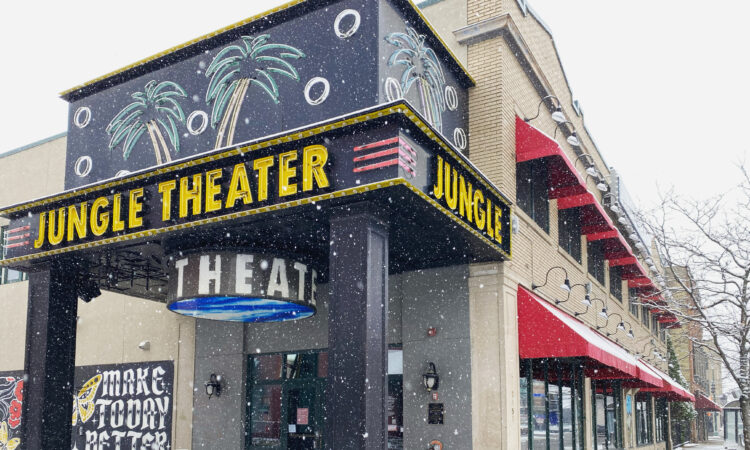
Jungle Theater, the performing arts venue on Lake and Lyndale, announced a temporary pause to its programming, cancelling its remaining season and citing financial troubles.
The decision comes halfway through the 2025-2026 season, which typically runs September through July, and mid-production of Wolf Play, which had a full creative team assembled.
“This hurts right now at this time in our community in big ways,” says artistic director Christina Baldwin, describing the Jungle as “a small theater with a large impact.” Six full-time employees and one part-time employee have been furloughed. In addition, she says, “a lot of our contracted artists and artisans, designers, directors, carpenters, and technicians have had to be laid off.”
The Minneapolis company is unclear when productions will return to the stage. The Jungle’s leadership plans to use the hiatus to assess business strategies.
Financial hiccups have resulted from several factors, says Baldwin, who became artistic director in 2020. Although Baldwin has seen growth in contributions from individual donors during her time at the Jungle, she has also seen a sharp decline in corporate support.
“When we build these communities, we also need the investment of corporations and foundations,” Baldwin says, describing a noticeable (and unanticipated) dip in this type of investment. “The more support we have from our community, the better our chances are.”
Shannon Fitzgerald, former managing director at Theater Mu, says that while the Twin Cities has in the past had a supportive arts ecosystem, a worrying trend of corporate funders ceasing support of arts organizations seemed to begin around the time she moved to the Twin Cities in 2014.
“When you lose that grant funding, that’s significant,” Fitzgerald says, noting the problem affects small theater companies across the state. Balwin also points to recent cuts to National Endowment for the Arts (NEA) grants. “All the trickle-down chaos [from the Trump] regime has been making changes at the NEA, and all of that is felt throughout the nation,” she says. (In May 2025, the Trump Administration announced it had begun canceling NEA grants. Since its founding in 1965, the NEA has awarded $5.5 billion in grant money, and it is the largest arts funder in the United States, per NPR.)
Ticket sales, meanwhile, make up a small percentage of revenue. “In most years, ticket sales account for anywhere between 25-35% of our revenue,” says Rachel Murch-D’Olimpio, the Jungle’s managing director.
The live theater business model does not make sense to Fitzgerald, who says that it is not sustainable without the support of donors and funders. “And you can only go so far with individual donors,” she says.
“Direct income for most theater companies is not paying the bills. You can’t make it up in ticket sales for what you spend on any particular production,” Fitzgerald says. “When you have a building of that size that you have to take care of, and then you’re not making money on the main job that you do, there’s just no way.”
Rising material costs and the theater’s commitment to providing its staff with a living wage added to the company’s expenses. Baldwin says the operating budget at Jungle Theater has fluctuated between $1.2 million to $1.7 million over the last few years.
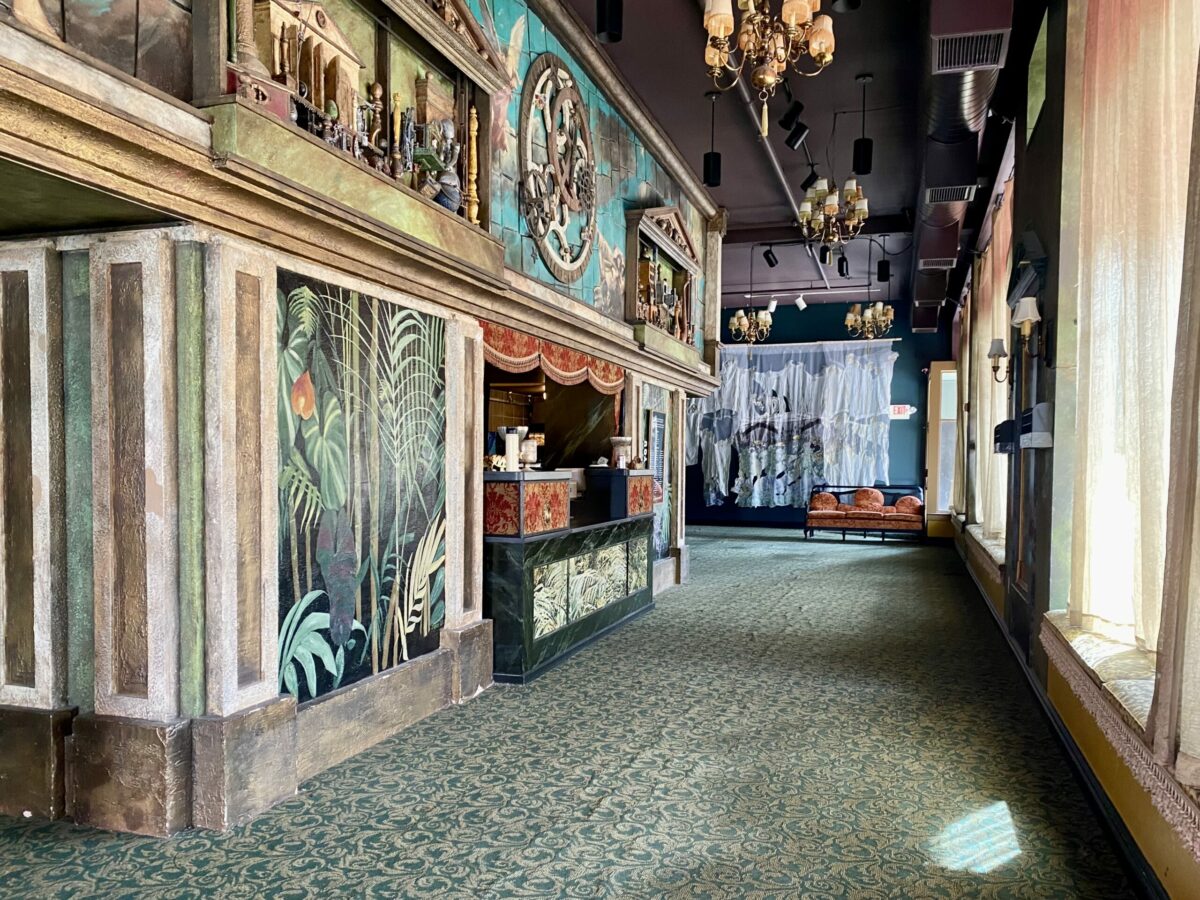
What has made things even trickier for the Jungle, she says, is that it owns and operates the building. “And that is a huge cost that is on our budget every year,” she says, noting the building costs about $250,000 per year to keep and maintain. “And we’re also in an old building, and there are many things and upgrades that need to happen.”
Many of these issues are not entirely new but were enhanced in the aftermath of the Covid-19 pandemic.
“Coming back from Covid was hard for every single theater,” says Addie Gorlin-Han, director and associate producer at the Guthrie Theater. “People got used to not coming into the city. People got used to not coming back to theaters.”
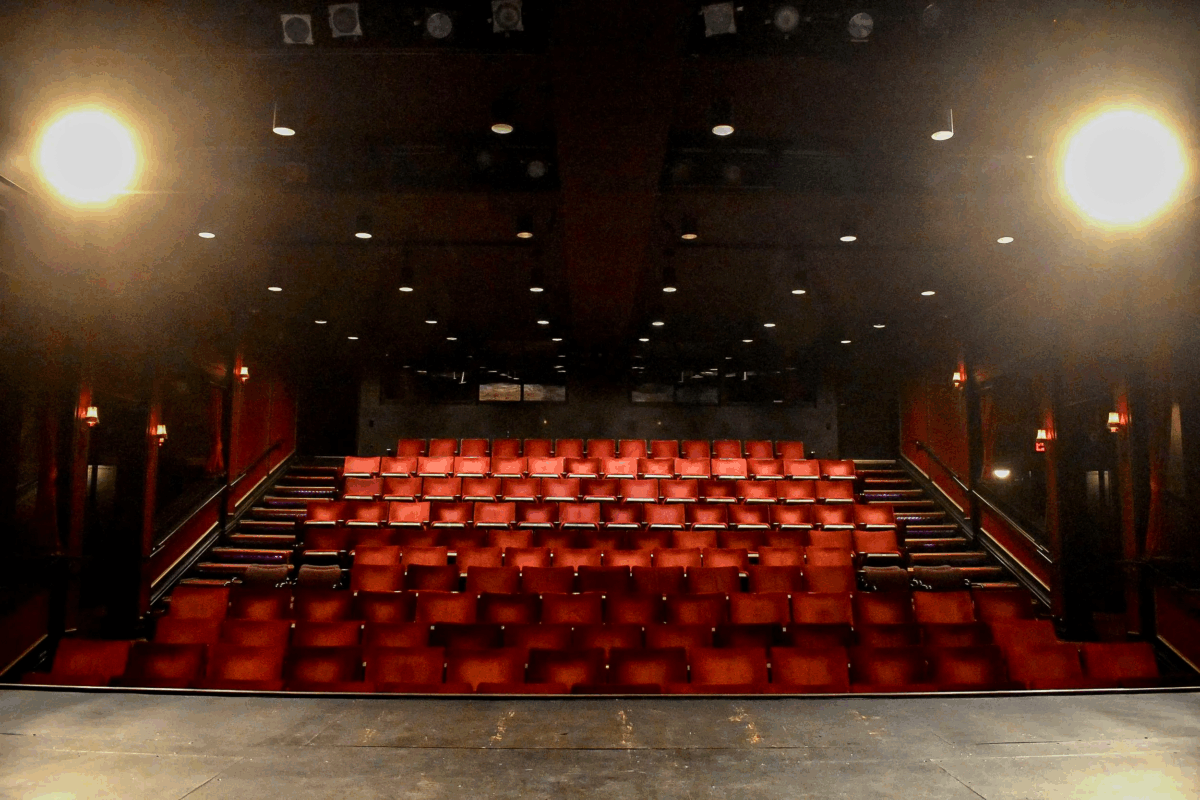
“The day I found out I would be stepping in was the day we shut down for Covid-19,” says Baldwin. Pre-pandemic, the Jungle had five to six shows per year on the calendar. Post-pandemic, the number went down to one co-production on top of one or two solo productions.
Before the pause this season, “we were trying to be ambitious and get four shows in total,” she says. The first two shows took off as planned, but the recent decision brings an end to the rehearsal of Wolf Play, as well as to the pre-production of Letters from Max, the planned fourth show.
Gorlin-Han says Baldwin did a commendable job with programming during challenging times, adding, “It’s not easy for any theater in terms of recovering from Covid-19.”
“We’re concerned not only for us but for the future of theater in our country, in our community,” Baldwin says. “We also just ultimately want to make sure that people get the work that was promised. So that is, first and foremost, on our minds.”
The Jungle will take time to explore options, she says.
“It’s my job to talk to as many people [as] I can and learn from them and see [not only] a well-rounded, diverse group of stakeholders but what they see in our market and what they will support,” she says, noting she believes there are “many different methods for that to happen.”
“There’s a collective solution here,” Gorlin-Han says.
Fitzgerald is thinking about how theaters can collaborate more. “We don’t need 600 theater companies, but what does that look like? Because everybody deserves to make art,” she says.
“I’m looking into how we get out of the mode of competition [and into] real cooperation,” Baldwin says, “because I see this as a threat to our whole theater system, and we have too many good people for this to be something that we are encumbered by.”
Gorlin-Han says live theater, as a form of the community getting together, is more important than ever. “It’s about normalizing coming back together in space with one another and doing really good work that excites people.”
“Theater will always survive,” Baldwin says.
“The product is solid,” Fitzgerald concurs. “The business model just needs to match it a little better.”