Inside the Minnesota State Fair’s $10.2M Maintenance Plan
Maintenance work at the Minnesota State Fair doesn’t typically generate the same headlines or excitement as, say, new food or drink lists, but fair leaders know it’s an important endeavor.
Earlier this year, the Minnesota State Agricultural Society – the entity that runs the fair – set aside $10.2 million for maintenance and capital work. Last year, the fair spent $9.6 million on it. Renee Alexander, who completed her first year as fair CEO last year, says spending on that budget item is finally returning to normal after the pandemic.
“I would say we’re getting back to standard,” Alexander said in an interview with TCB. “After the pandemic – in 2021 and 2022 – we did very little work at all because we were broke, essentially.”
Indeed, in 2021, after the onset of Covid-19, the fair spent just $123,000 in capital improvements as part of a wider $7.6 million budget for fairgrounds plant operations and maintenance. In its 2020 fiscal year, the fair invested $1.3 million on capital work, though several projects were paused due to the pandemic. The fair also reported losses in both of those years.
In a typical year, the fair spends between $8 million and $10 million total on maintenance and capital improvements, Alexander says.
View this post on Instagram
Much of the work done this year might not be immediately noticeable to visitors, but Alexander said it was all needed. As she puts it: “Guests would notice if we didn’t do it.” Some of this year’s projects were essentially “catch-up work” after pandemic-induced pauses.
This year, thanks to a donation to the Minnesota State Fair Foundation, workers replaced windows and doors at the Fine Arts Center. The 117-year-old-building also got a new exterior paint job and some landscaping. Dan Patch Park also had some “permanent shade structures” installed, according to fair officials.
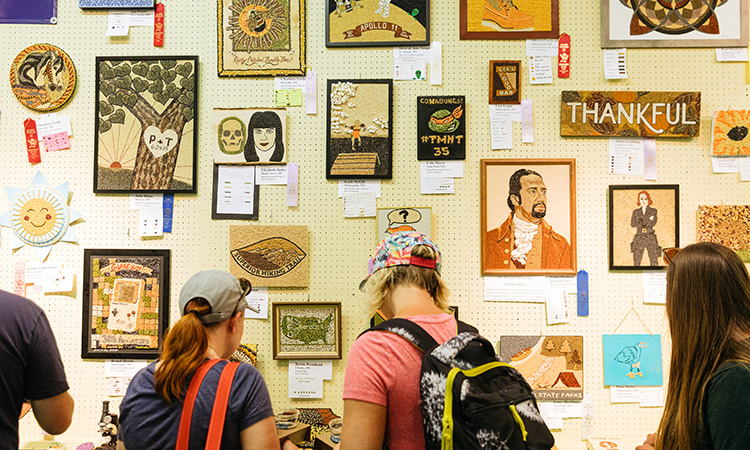
This year’s round of capital work does include one notable update to a popular – and often crowded – exhibit: the crop art display in the Agriculture Horticulture Building. Where past displays were primarily hung just along one wall, the new one will intersperse crop art pieces along three walls, Alexander says. “We just kind of opened up the space and reimagined the traffic patterns in there,” she notes.
The fair is waiting until opening day to release more details about the upgraded display.
Though the Minnesota State Agricultural Society is technically a state entity, it gets no money from taxpayers. The fair is an entirely financially self-sufficient organization. As the fair’s annual report writers often note: “The Society operates with no public subsidy of any kind, for any purpose. The costs to produce the annual State Fair and all capital and maintenance improvements to the historic State Fairgrounds are financed with revenue earned by the Society and State Fair Foundation donations.”
That means making careful decisions about what and when to upgrade infrastructure, some of it over 100 years old.
And, to be sure, the fair has already spent tens of millions repairing and improving over the years. That’s part of the reason why the fair could even afford to take a little bit of a break over the first two years of Covid.
During former CEO Jerry Hammer’s almost three decades in the top job, the fair spent more than $180 million in capital and maintenance work. In an early 2021 meeting, Hammer noted the fair’s extensive maintenance history over the years, which put “the fair in good position to limit capital and maintenance projects for the time being,” according to the fair’s annual report at the time.