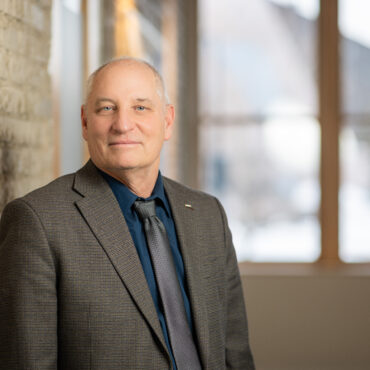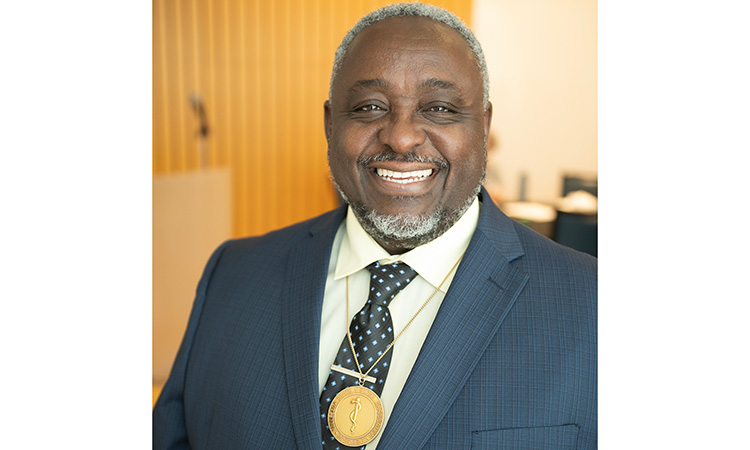
First Take: Dr. Edwin Bogonko, Minnesota Medical Association
The post-pandemic story for the health care industry has been one of major workforce shortages, as it’s been for many other industries.
The situation remains dire, and is likely to get worse in the near future: In Minnesota, about 20% of physicians plan to leave practice within the next five years, according to Dr. Edwin Bogonko, an Allina Health hospitalist who was recently named president of the Minnesota Medical Association.
Labor concerns are, of course, just one challenge facing the health care industry, in Minnesota and around the nation. As president of MMA, Bogonko is keenly aware.
Appointed to a one-year term beginning Oct. 1, the Lakeville doctor recently sat down with TCB to talk through his priorities for the organization.
The following interview has been edited and condensed for clarity.
You were born in Kenya and obtained your medical degree there. What brought you to Minnesota?
I migrated from Kenya at 1999 to advance my career. If you’re familiar with African politics in the ‘90s, we were part of an authoritarian regime. Coming to the U.S. was a chance to not only advance my education and my career, but also give my family better opportunities. I was lucky to come here to make a new life for me and my family.
We’ve heard lots about an inevitable switch to “value-based care.” What’s your take on that?
The U.S. health care system is probably one of the most complex because the government is the largest payer for health care. But we also have a very vibrant private insurance market, as opposed to other developed countries where the government is really the backbone of health care. You think of places like Canada or the United Kingdom, where the government underwrites health care so that everybody gets care. In the U.S., we have different incentives. The advent of value-based care is an attempt to move away from what I think is a very entrenched fee-for-service system. Even though we have a very strong fee-for-service orientation, I think many health systems have tried to create incentives that shift us from that model to care with more value. The industry is still trying to figure out: How do we reward good care as opposed to rewarding frequency of care?
We’ve reported on the fraught nature of hospital finances more than once. We’ve also seen hospitals close, especially in rural areas. How do you think hospitals can get to a more sustainable financial model, and what role might MMA play?
Hospital finances are a very complicated issue because not every hospital is the same. If you’re a hospital in a region that’s higher socioeconomic status, for example, your payer mix might have more commercial insurance than government plans, and your reimbursement rates would be higher. In that case, you could mitigate lower payments from the government, and you can survive. But today, rural hospitals are closing at an alarming rate because they are serving a majority of people receiving care on government programs, which haven’t seen an increase in any sort of reimbursement for more than 20 years. I think a national conversation has to be had. If we are committed to providing care close to home, then we need to protect our rural health networks. Otherwise, a lot more hospitals are going to close. As for MMA, we as an organization represents physicians, not hospitals, but it’s extremely important that our hospitals remain strong.
When you were named president of Minnesota Medical Association, you said you would work to limit abuse of prior authorization. Why is that a priority for you?
When we looked at the data, we found that 95% of requests of prior authorization end up being authorized. Insurance companies and pharmacy benefit managers do have reasons why a small percentage of requests get denied. Still, we’re taking physicians, hospitals, and clinicians through this big bureaucratic cycle only to approve most requests. Delays can harm patients, especially seniors. With Medicare being the largest purchaser of health care and medications, we should find a way to make it easier for seniors to access life-saving medicines. I feel strongly that we need to protect seniors by reducing this bureaucracy and rationalizing the cost of medicines.
The pandemic exacerbated labor shortages in health care. Where do things stand today?
If you care about the health of our state, we need to pause and have a relentless call to action on this: We’re not heading in the right direction. Twenty percent of all physicians–including one in three rural physicians in our state–plan to leave practice in the next five years. If we look at our current utilization of the health care system here, Minnesota is going to need almost 1,200 new primary health care physicians by 2030. That would constitute a nearly 30% increase in our workforce. We don’t have the infrastructure nor the data to suggest that we are matching that need. We’re behind the eight ball. In addition, for us to invest in our workforce, we need better reimbursement, and increased investment in training programs. The other piece is that some people who would want to join the workforce look at the cost of medical education and think about how much debt they’ll have when they finish. They just choose other careers. To fix this, we need to have a targeted educational loan forgiveness program.