First Take: Atomic Data’s New CEO
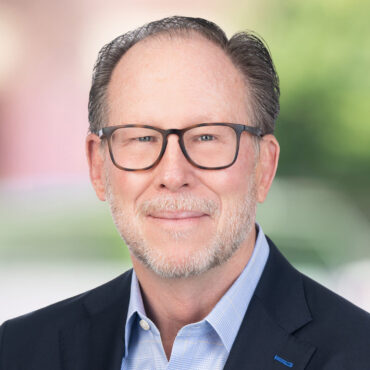
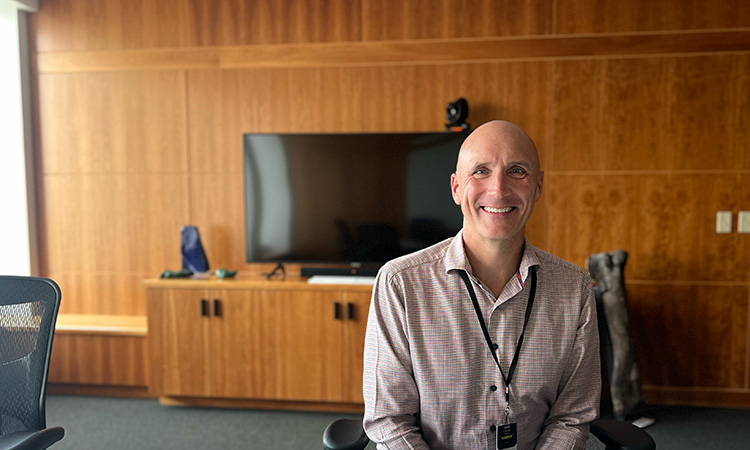
Chris Heim occupies a relatively rare space among executives: a CEO who’s also an elected official.
Minneapolis-based IT firm Atomic Data announced Wednesday that Heim has been picked to serve as CEO. He’ll also serve as chief executive of Foundation Technologies, Atomic’s sister company.
That’s in addition to his volunteer role as mayor of Medicine Lake, a small Minnesota city of less than 400 people where he’s served on the city council for six years. “I kind of view my role as mayor as filling that bucket of giving back, as if I were serving on a nonprofit board,” Heim told TCB in an interview on Wednesday.
Before signing on at Atomic, Heim honed his tech leadership chops as board member and CEO at Rogers-based IT services firm AbeTech. Most recently, he completed a stint as CEO of South Dakota-based Dakota Granite.
Heim knows he has big shoes to fill at Atomic Data. Former CEO and founder Jim Wolford’s passing more than a year ago left a big hole in the Twin Cities tech scene. Heim says he’s humbled and honored to take the baton.
Founded in 2001, Atomic has landed a number of high-profile clients in the Twin Cities, including Minnesota United FC, the Walker Art Center, Great Clips, and more. As CEO, Heim aims to land a few more, and double down on Atomic’s “Game Day Technologies” platform for big sports and entertainment venues.
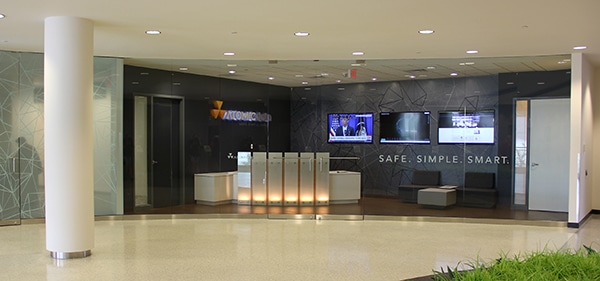
In an interview at Atomic Data’s office at the Marquette Plaza high-rise in downtown Minneapolis, Heim talks about his approach to leading tech companies, finding balance, and honoring a tech titan’s legacy.
This interview has been edited and condensed for clarity.
Jim Wolford is renowned in the local tech community. Did you know him personally?
No, Jim and I hadn’t met, but I’ve known of him, and Atomic Data. And I have gotten to know Larry Patterson [Atomic Data co-founder] quite well. Larry and Jim were partners and co-founders, and now I feel like I knew Jim because I spent so much time learning about him. He made a huge impact. His team is still really hurting from him not being here.
How are you feeling continuing Jim’s legacy at Atomic Data?
I’m really honored to be here, and humbled. I walk through the halls and I think about this man and this group that formed this business. He had a vision and a life dream. This was his life. It’s very humbling to be stepping into that role. We’re going to take good care of that legacy. Jim passed away about 15 months ago, and there’s been a lot of mourning. The team needed time to heal. We also need to give ourselves permission to take all the great things that we loved about the business and carry forward in a way that would make Jim proud. That’s an important message for me, because I’m not here to replace Jim at all. I’m here to help carry the business forward.
What drew you to the CEO job at Atomic?
In a way, this role is the coming together of my whole career. I’m a servant leader at heart, though I like to call it “people-first leadership.” Hardware, software, and service combined have been the theme of my whole career. I wanted to be part of an organization that was very tech-first and tech-enabled, but very heavy on service. I just firmly believe that if you take care of your team and empower them, then they bring the best version of themselves to work every day.
You’re the CEO of essentially two companies while also serving as mayor of a small town. How do you find balance?
Well, I like to stay busy, for sure. I have struggled with the term “work-life balance,” and I kind of gave up on that specific term. Balance takes work; I use “work-life integration” for myself. I’m working when I need to work, and I’m enjoying life when I want to enjoy life. They aren’t always “balanced.” I’m pretty plugged-in all the time, but I love what I do, so it just rarely actually feels like work. It’s also about empowering other people. Part of how I’m able to juggle so many things is that I try not to have so many things land on my desk; it’s more about being a good source of asking questions, providing guidance, and having people walk out with clarity to make good decisions. I’m not saying that work-life integration is right for everybody, but it’s right for me.
Your term as Medicine Lake mayor ends in January, but you’re running again.
Our city was facing a really serious financial crisis, and that’s why I’ve gotten really involved. It’s a small city. We have a $600,000 budget, and we had a $9 million capital project. Our roads were beyond repair. We don’t have city water. Our sewers had leaks in them, and our sewer lift station was more than 50 years old. All that total was like $9 million of work for 140 homes, you know. So, it was was unviable. I’ve spent the last six years working with the team. We we got $3.5 million from Gov. Walz through Minnesota state bonding funds. [U.S. Rep.] Dean Phillips helped us get federal money, and then we borrowed $3 million of a municipal bond and worked all that into a budget. I’m really proud of that, and we’re almost there. So I wanted to run one more term just to make sure we landed safely on the other side. I would feel terrible if something wasn’t quite finished at the end of my term and my successor would have to deal with that.
You’re taking over a tech company based in downtown Minneapolis, which has had its own share of struggles. What are your thoughts on the future of downtown?
This is my first job working downtown – that’s always been a goal of mine. I love the energy being downtown, and it feels like it’s recovering. To whatever degree I can help breathe life back into it, I’m there.
Are your employees working in-person, hybrid, or remote?
I would say it’s mostly in office. I mean, we are 24/7 operation, so there are employees here all the time. I would say Tuesday, Wednesday, and Thursday are very active in the office, but it’s not like a ghost town Mondays and Fridays. We also have employees outside of Minneapolis, as well. I think people like to come to work here, and it’s not necessarily mandated. It might be for certain positions, but I think it’s just that we want to be together.
What’s your overall approach to leadership?
I’ve more than once been brought in to shepherd companies to the next level. I’m not a startup founder, or the type of person starting a business from scratch. But I love being brought in to a company that’s had good success and is primed for growth, and helping it grow to the next level. During my time at AbeTech, we essentially doubled revenue. We made some acquisitions. We matured quite a bit. And that’s my sweet spot.
AbeTech made five acquisitions under your tenure. How do you think about buying other businesses?
I have a couple philosophies on that. I think you can get kind of lazy with an M&A strategy of just buying a bunch of companies and bolting them together, but I don’t view it that way. I want to first make sure that the company that I’m part of has good organic ability to grow. I’d love if 50% of growth came from organic growth and 50% came from acquisitions. But you also have to earn the right to bring somebody else into your ecosystem. We have to make sure we can run it better than it did as a standalone company. I think of M&A as a way of bringing more people into our family because we think we’re doing something special.
When Atomic Data announced your appointment this week, the company said you aim to grow revenue and headcount, in part, through investments in”AI capabilities.” Artificial intelligence is the topic du jour in tech these days. What’s your approach to it?
We’ve been meeting quite a bit on AI. It’s important to note that AI is very dependent upon data. It’s awesome technology that accelerates your ability to find and interpret data. Whatever we end up calling it, it’s data science at the end of the day, so we’re well-positioned to lead on it; it’s in our name, right? We don’t exactly know what AI does or doesn’t mean for our businesses or clients, but whatever it means, it’s going to come down to the ability to leverage the data within your business. And you’ve got to have clean data. We’re seeing that already with ChatGPT; whatever you feed into it is what you’re getting out of it. So, we already have a role in helping our clients get better leverage out of their data. We see that as a fast-emerging practice within the business. We’re already housing their data. We’re taking care of all the technology that’s creating all the data.