Creative Vision vs. Client Demands: Ashley Fox on Brand Integrity
For as long as we’ve had creative professionals, we must have had this conflict: the artist versus the financier. Such strife has lately been dramatized in Oscar winner The Brutalist and satirized in Seth Rogen’s Apple TV+ show The Studio. In short: How can creatives retain artistic integrity while appeasing the wealthy powers bankrolling their work?
Or, in the words of floral designer Ashley Fox: “How do I keep that precious, the brand experience?”
On April 24, that’s the question driving this year’s speaker event at Art in Bloom. It’s the Minneapolis Institute of Art’s largest annual fundraiser, this year running April 24–27: a museum showcase of more than 100 florists’ fragrant interpretations of selected works from Mia’s permanent art collection. Fox is this year’s featured speaker, and she’s zeroing in on branding and creative control.

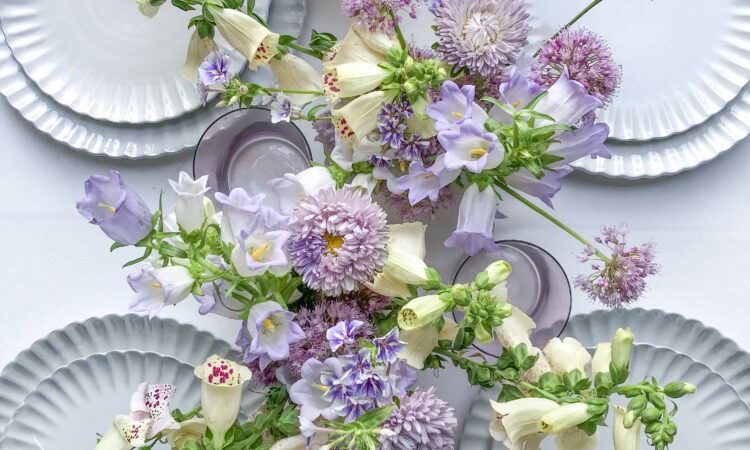
From her Woodbury studio, Fox has created floral displays for weddings and events since 2008. You may have seen her work in local media (Artful Living, Minnesota Bride) or across national platforms (VOGUE.com, Martha Stewart Weddings). Her reputation is for seasonal local blooms. There can be wildness to her touch—“dancing angles or gestures,” as she puts it—defined, at least in part, by her time working in a flower shop, when she realized the typical mass-market style isn’t her gig.
If clients seem tempted by unfitting trends, she says, they may find that age-old clash. From a business standpoint, she doesn’t want clients to revisit wedding photos and see dated florals. “That’s where I stand pretty firm.”
In Mia’s Pillsbury Auditorium at 6 p.m. next Thursday, Fox will discuss five “turning points” that have shaped her career. “Who are we targeting when we are doing this conversation? It’s definitely people who love flowers. It’s definitely people who love art. But it’s also the creative business owner who wants to ensure they have longevity in their business and that their clients keep coming back.”
As a preview, we chatted with Fox about compromise, how to say no, and the time she turned down the biggest check she’d seen as a floral designer.
This interview has been edited and condensed for clarity.

Do any moments stand out in your career where you were in that tough spot, navigating client demands but not wanting to do something that was, creatively, just not you?
I’ll give away the very first point of the [April 24] lecture. … One of those instances happened very early on. A client saw my name in a magazine and started writing a check almost right there on the spot, without us really getting to know one another. She was really excited to get a vendor who she felt could fulfill her daughter’s [wedding] vision. And what her daughter’s vision was, was something that wasn’t really—even in the early stages—my brand’s aesthetic. It was big, large orchid sprays in a ballroom. That really wasn’t my direction. And I’ll be honest: It wasn’t my wheelhouse. I wasn’t technically ready to do that sort of event.
So, I took the check home with me, and I looked at it for two days. It just made me nauseous. I could feel the anxiety building hour by hour, the longer I held onto that check. I called her and said, “As much as I am very grateful for your trust and wanting to work with me, this isn’t going to work. I think this designer over here—a friend of mine in Minneapolis—he will accomplish this wedding because of his understanding of this sort of style of design work.” And so, I gave away the biggest check that I had ever seen up to that point. … I didn’t budge, and I was so glad that I didn’t, because as soon as that check was out of my hands, it was just a feeling of relief.
The lesson here happened three years after that day, because they called me back for daughter number two, who was getting married. Daughter number two wanted a garden aesthetic, and she remembered what I had said to her. She goes, “We would be really, really excited if you could do her wedding.” That, right then and there, really supported and validated the choices that I had been making. Just because the opportunity’s there doesn’t mean you reach out and grab it. You have to make sure you’re ready for it.
You had the connections, knowing someone in the industry who would be a good fit. Did that work out thanks to networking?
I did not have a business background, so that’s where I was lacking. But for some reason, I felt like I understood the marketing game. I was always fascinated by it, just the psychology of it all. Also, I come from a family of talkers—people chatting a lot and poking fun at each other, or just discussing movies and books or whatever. So, I was motivated to get out on a regular basis. Even though my children were super little at the time, I carved out one to two times a month to go to a networking event, no matter what it was, for the wedding industry—just so people started to see my face and understand, OK, that girl? She does flowers.
I wanted to ask about this idea of compromise. When you get a project, is there a percentage in your mind? Or a feeling, when compromise reaches a breaking point?
When clients or planners are asking for something that I either haven’t done before or that I’m not sure of straight off, I make sure that I step back and give myself time to think on it before giving a straight answer. So, that’s step one. I’ve learned that, before I make a face or say no, you want to be a team player, because that’s what this whole wedding business is about: It’s a large team of people making a thing happen for one day, and you only get one chance to do it. So, you better take time and think on your response before you have a knee-jerk reaction.
I think on it, and if I find that something is definitely not going to work for me, I try to find examples online of reasons why their idea won’t work in their space. I’m taking it away from my opinion and making it factually based. That’s where I—oh, I don’t even want to say the words “get my way,” but there we are.