Biggest Season Yet for Holiday Pop-Up Markets
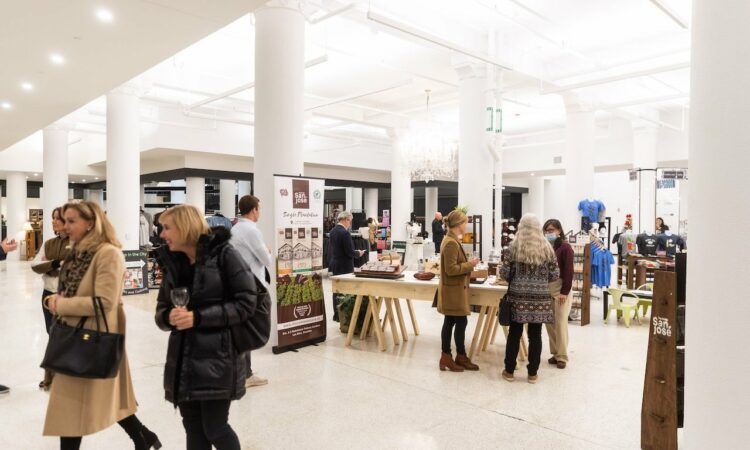
Three years ago, the Dayton’s Project Winter Maker’s Market launched with 28 featured vendors; in 2022, the market grew to 47 local brands. On Thursday, the downtown Minneapolis holiday market in the iconic Dayton’s building will open for the season with a whopping 78 brands. If it seems like holiday pop-ups are bigger than ever this year, producers of the seasonal events say it’s true. Around the Twin Cities, dozens of pop-up shopping events are scheduled to take place over the next six weeks, from recurring weekend events like the European Christmas Market at St. Paul’s Union Depot to one day markets at local breweries, food halls, hotels, and even garden centers.
“People crave good old fashioned holiday shopping, the way we used to do it at department stores,” said Mich Berthiaume, who is at the forefront of the post-pandemic pop-up explosion as curator of the Dayton’s Project Winter Maker’s Market, the Nordic Village Market at Four Seasons, the Winter Markets at Viking Lakes in Eagan, and others. “People want a holiday experience, and pop-ups have really filled that void.”
Makers seem to be seeking that same face-to-face connection. “During the pandemic, most small businesses had to think about how to generate business without being face to face with people. We had to change our business structure to focus on online sales and custom orders,” said Nikki Hollerich, co-founder of wood products brand Hagen and Oats, which is returning to holiday markets for the first time in several years with a booth at Dayton’s Project. “Another fun part of small business life is being able to constantly pivot. We are glad to get back to being in front of people again. We grew up going to Dayton’s, and it was our mom’s favorite place to shop. So joining the Dayton’s Project Winter Market was a nostalgic choice for us.”
For artisan brands like Hagen and Oats, there’s no shortage of opportunities to get in front of shoppers. But the question for those small upstarts, with even more markets to fill, is whether the work of setting up shop for a day, a weekend, or a six-week run pays off.
Several small businesses that regularly participate in pop-ups shared their experience.
Beyond dollars
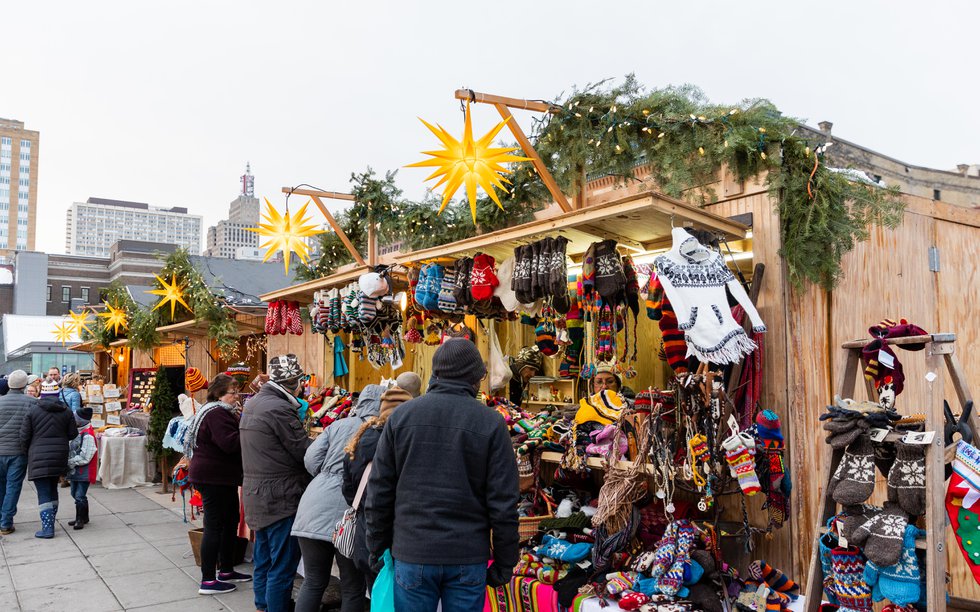
The resounding consensus among makers: profit margins at pop-up events throughout the year are unpredictable. But holiday markets tend to be among the most successful—coming at a time when consumers are focused on gift buying and seeking festive experiences. The National Retail Federation expects consumers to spend $875 dollars on average this year on gifts, decorations, food, and other seasonal items for the holidays—and nearly a quarter of these sales are expected to come from small businesses. Weekend markets tend to see strong success, said Berthiaume, because they add a sense of urgency for customers to buy now, before the vendors are gone. It’s not unusual for a brand to do $2,000 to $3,000 in sales at a weekend market, which, Berthiaume said, is significant for a small company.
At Dayton’s Project, one of Berthiaume’s biggest and longest-running markets during the holiday season, vendors can make as much as $100,000 to $200,000 over the season, she estimated.
Profitability becomes easier to predict the longer you’ve been in business, said Sairey Gernes, founder/owner of Urban Undercover, a travel-focused apparel and accessories brand. Urban Undercover has a permanent store at the MSP airport and a presence within Six For Good boutiques at Rosedale Center and Shops at Arbor Lakes, but Gernes still pops up her brand for the Dayton’s Project and other holiday markets.
Gernes said she’s learned through trial and error which markets work best for her product assortment and price point. “When I first started, some weren’t huge money makers, but they were great exposure. Some, we just didn’t do great, due to the cost of our clothing being a little more than your typical gift items,” she said. “Now we generally know what works for us.”
Mahogany Ellis-Crutchfield is earlier in her entrepreneurial journey as the founder of GiftyWrap, a specialty wrapping paper line. She has an e-commerce site, but during the holidays, markets are her main sales vehicle. The benefits, she said, go beyond product sales.
“For the price of [selling] at the market, you’re getting branding, consumer feedback, building your small business network, and you’re making sales all in one. There’s no other place to do that, especially when you’re first starting,” she said. Markets afford small businesses a chance to find and attain a loyal consumer base before committing to a permanent brick and mortar storefront, she said. Plus, she added, the face-to-face interaction opens the door for consumer feedback, which is extremely valuable as a new business finds its rhythm.
For Haley Matthews-Jones, founder and CEO of Minneapolis Craft Market and Minneapolis Vintage Market, this immediate feedback straight from consumer to seller gives businesses the opportunity to test everything from new products to different price points before committing to a permanent storefront.
“It’s a great way to get your product in front of customers, get feedback, see what sells and what doesn’t… so I see markets as a testing ground for vendors,” said Matthews-Jones.
And it’s not just customer relationships that come out of pop-up markets. Ellis-Crutchfield said one of the biggest benefits she’s experienced from popping up at local venues including Dayton’s Project, Malcom Yards and Four Seasons, is the chance to network with fellow vendors. In her experience, making connections with other small businesses has been essential to growing her brand.
The cost of vending
Every market is different when it comes to the cost of participation, according to Matthews-Jones. Registration can range from $50 for a one day event to $300 or more for some larger or extended markets. While some charge a flat fee for brands to reserve their space, others collect a percentage of sales. That’s not the only expense; typically, vendors are expected to supply their own materials to create a “shop,” and in most cases, staff it. They also have to establish their own payment system and create marketing materials.
“There is always the cost of sign printing and displays, but after time you don’t need to repeat for every new event,” said Gernes, who, after years on the circuit, has a temporary Urban Undercover storefront—complete with signage and display racks—ready to go.
“It’s a lot of work, which the average consumer might not realize,” said Gernes. “There is prep time, packing the car, doing the event, tear down, and then putting it all away at the office.”
The costs can add up fast, she said. And for brands that work at multiple markets per season, it’s easy to get spread thin with their small teams.
That’s why the Dayton’s Project Winter Market added centralized checkout so individual vendors aren’t obligated to staff their own displays every day. Dayton’s Project takes a percentage of sales to cover the cost of centralized checkout.
Retail pipeline
The expense is worth it for many brands, as the growing number of participants suggests. Ellis-Crutchfield advises other small brands to focus less on the immediate payoff, and think of markets as a stepping stone to bigger business goals.
“I would say that a market should be a part of your ladder as you grow,” Ellis-Crutchfield said. “Once you grow to a certain level, you don’t go to markets as often or you’re more picky about it.”
Thirteen years ago, Michael Sedlacek launched Worker B at Twin Cities pop-up markets. He eventually built up enough of a following for his locally made honey and honey-based skin products to open a store at Mall of America in 2016. Today, Worker B’s model has flipped from majority-market run to majority-retail, but he had a booth this year at the Minnesota State Fair and he still shows up at the occasional holiday market. One of the biggest draws of the market scene that keeps him coming back is the publicity.
“Whatever you sell, you sell,” Sedlacek said. “But with markets, you’re never short on publicity.”