As Egg Prices Soar, Egg Substitute Makers See Market Opening
Americans have seen the prices of eggs skyrocket within recent months. In the Midwest, wholesale prices for large, white shell eggs delivered to warehouses have recently ticked up to $8.30 a dozen, according to Feb. 28 data from the USDA.
For consumers, that’s translated to higher prices in grocery stores. But there are, of course, alternatives to the standard poultry egg. Puris, a Minneapolis-based alternative protein maker, sells a line of plant-based eggs under the AcreMade banner, for instance.
Are high egg prices driving customers to shift their consumption patterns? The answer is complicated.
Jake Achterhoff, executive director of AcreMade, notes that his company often sees bumps in sales when avian flu hits. It’s cyclical.
Puris created the AcreMade egg substitute in the middle of the avian flu outbreak in 2022, Achteroff says. He said he’s seen the demand for egg substitutions fluctuate over time.
“When eggs are easy to find, the demand of egg substitutes diminishes pretty significantly,” Achteroff says.
Achteroff notes that Puris’ main focus isn’t on AcreMade; the company is also a major pea protein supplier for meat substitute makers.
Today, AcreMade’s products are only available online.The product used to be available in stores, but Achteroff says AcreMade couldn’t support being in the retail setting.
“When eggs are running short, people at the grocery store don’t necessarily seek out egg substitutes, they just don’t buy eggs,” he says.
Instead, Achteroff says the business is largely targeting vegans and people who are allergic to eggs. To those seeking an egg substitute, he says AcreMade is, of course, always an option.
It’s a bit of a different story over at Eat Just, a California-based egg alternative maker with significant operations in Minnesota. The company’s facility in Appleton, Minnesota, is the world’s largest manufacturer of plant-based egg substitutes, says spokesman Thomas Rossmeissl. Just Egg leaders say that plant has been very busy within recent months.
The facility, located in the small Minnesota town about 150 miles outside Minneapolis, has been in operation since 2020 and employs just about 30 people.

Just Egg, the company’s egg alternative, is made from protein in mung beans, which Rossmeissl says is a sustainable and nutrient-rich legume. It allows the product scramble like an egg.
Rossmeissl notes the Just Egg product sold five times faster this past month compared to the same period last year, keeping the Appleton facility busy.
“Millions of consumers are being exposed to eggs from plants for the first time because of this crisis,” Rossmeissl says. “The key ingredient, the mung bean, is not susceptible to bird flu and other inflationary pressures disrupting the chicken egg market.”
Breaking down Just Egg by numbers, Rossmeissl said 56% of Just Egg buyers return for a second purchase, 91% of Just Egg consumers are neither vegan nor vegetarian, and over 500 million eggs have sold since the launch of Just Egg in 2017
“We are not only seeing an increase in sales from consumers, but we’re also seeing a major uptick in interest from restaurants, distributors, manufacturers, colleges & universities, and even the military,” Rossmeissl says.
But egg substitutions aren’t the only way to go. Organic Valley—the La Farge, Wisconsin-based farmers cooperative— maintains that its organic eggs have an advantage during bouts of bird flu. Spokesman Minh-Quan Huynh says the company’s eggs have been less impacted by avian flu compared to conventional eggs.
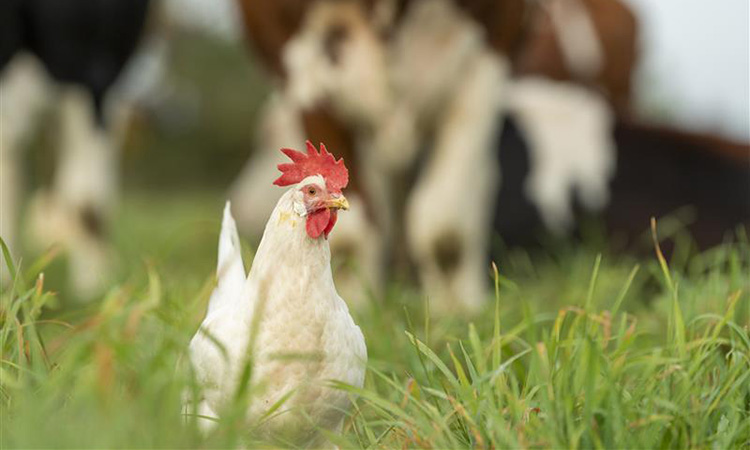
“While conventional egg producers typically have flock sizes of over 75,000 hens, Organic Valley’s average flock size is about 6,000 hens per barn,” he says. “Our organic egg-laying hens live in smaller flocks with more spacious conditions, reducing the risk of disease spread.”
Huynh says conventional egg prices fluctuate based on supply and demand while organic egg prices remain more stable, which he says benefits both farmers and consumers.